
- January 9, 2026
- Categories: Digital Marketing
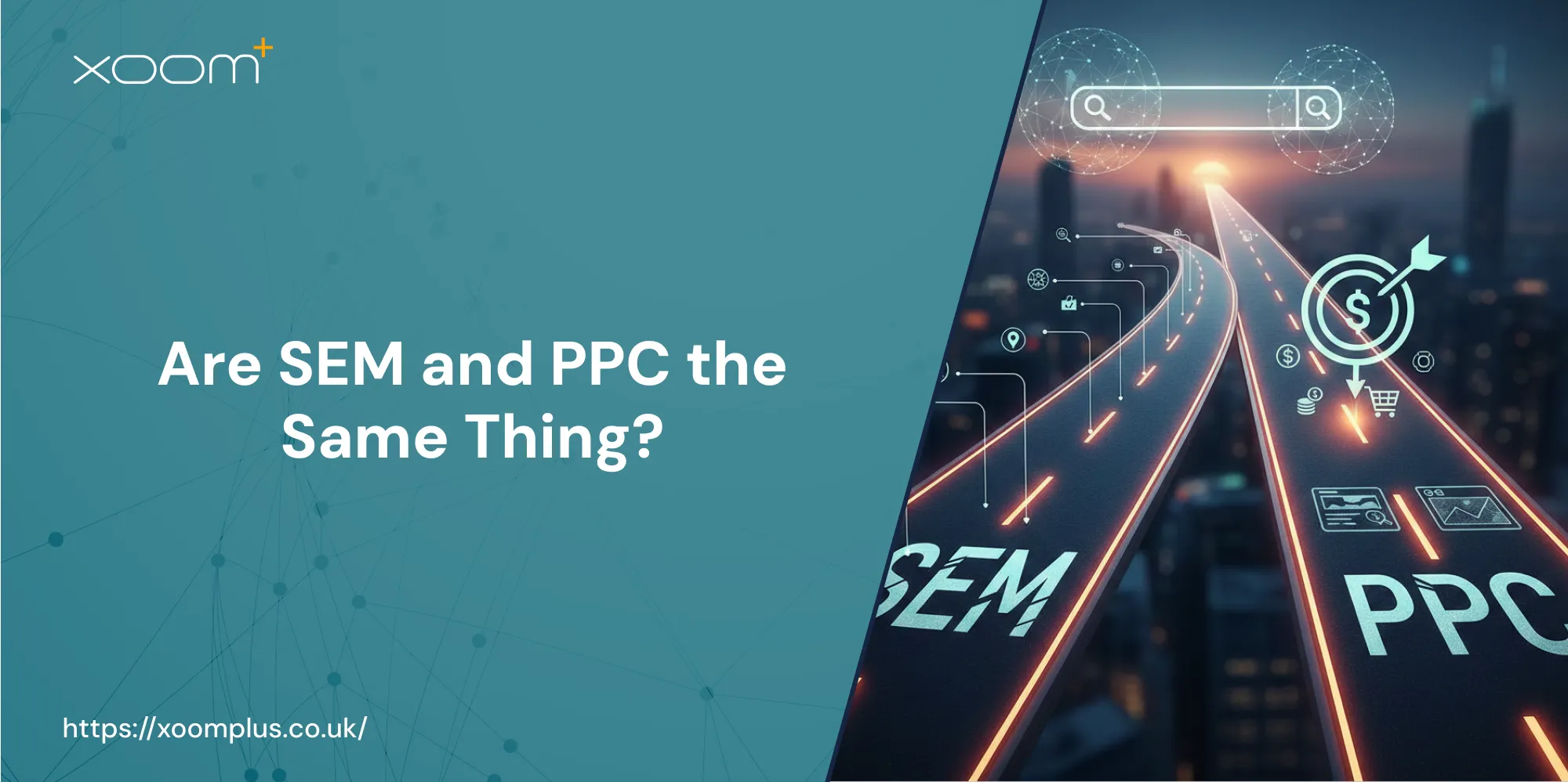
Are SEM and PPC the Same Thing?
People often conflate SEM and PPC. This makes the subject confusing. Several blogs use the same words differently. The truth is simple. Although comparable, SEM and PPC are not always the same. PPC advertising charges you per click. Some say SEM means “all search marketing,” others “paid search only.” Let’s discuss in detail, “What is SEM and PPC?”.
Quick Answer!SEM and PPC are comparable but not always the same. PPC is a way of pricing ads that makes advertisers pay when someone clicks on one. Search engine marketing (SEM) is paid search, but it can also include SEO. PPC is usually just one part of SEM, not the whole thing.
What Is Search Engine Marketing (SEM)?
SEM uses paid Google and Bing ads to help people find your website quickly. These ads appear when people search for your product or service. SEO is free but slow, while SEM is paid and fast. Your small “Ad” label at the top of search results helps more people notice and click your website. You can set your budget and change ads. You can easily track clicks, visitors, and sales. SEO and SEM work best together to increase traffic and results.Components of SEM
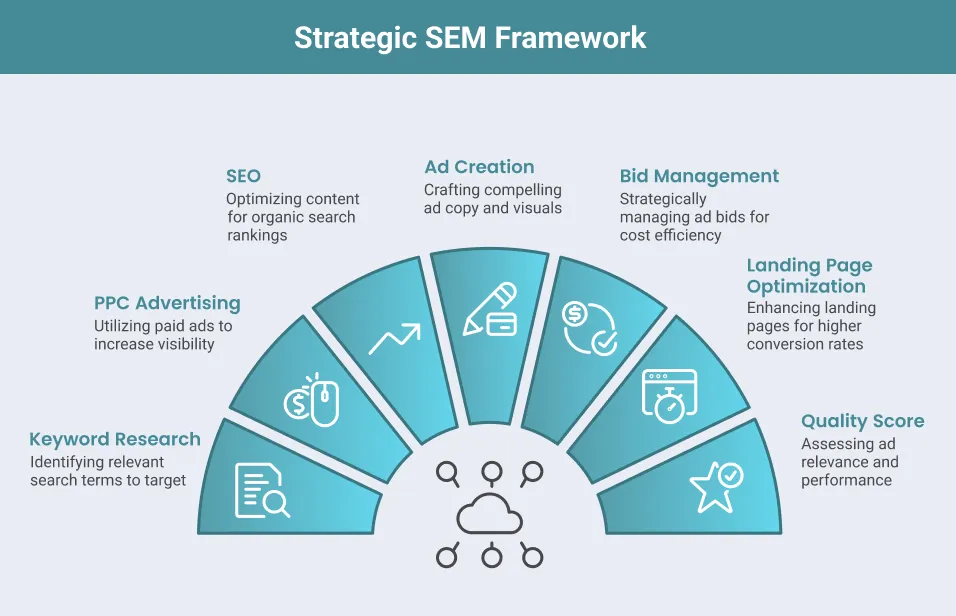
If you look at SEM in a broad way, it goes along with SEO and PPC. Here are the most important parts.1. Keyword
The first step in Research SEM is keyword research. You can see what people search for on Google or Bing when they need:- A service, like “emergency plumber London.”
- A thing, like “running shoes size 9.”
- An answer, like “how to get rid of mould in the bathroom.”
- Are they ready to buy or are they still learning?
- Do they want a provider in their area?
- Are they looking at different brands?
- For PPC, it tells you when your ad can run and how much it will cost.
- For SEO, it tells you what pages and content to make.
2. PPC Advertising (Paid Search)
Paid search is the part of SEM that shows ads in search results. You usually:- Pick out some keywords.
- Write ads.
- Set your budgets and bids.
- Send people to a page where they can land.
3. SEO (Organic Search)
Search engine optimisation (SEO) is the work that gets you clicks without having to pay for them. It has:- Making pages useful and up-to-date.
- Making the site faster and better organised.
- Writing good content.
- Getting links and authority over time.
- PPC for faster visibility.
- SEO for long-term stability.
4. Ad Creation
Making ads sounds easy, but it’s a big part of how well SEM and PPC work.You usually write the following for search ads:- A headline that fits the search.
- A brief description that makes people trust you.
- A clear next step, like “Get a quote.”
- Match the keyword’s purpose.
- Tell us what makes you unique.
- Before the click, make sure you have the right expectations.
5. Bid Management
Bid management is the process of deciding how much you are willing to pay to win an auction. Google runs an ad auction and uses a lot of different things to figure out Ad Rank. The amount you bid, the quality of your ads and landing page, the auction’s competitiveness, the search context (like device and location), and the expected impact of ad assets and formats are all factors. So, in SEM and PPC, the highest bidder doesn’t always win. Quality matters.6. Landing Page Optimisation (LPO)
After someone clicks on your ad, you do landing page optimisation.A good landing page usually has the following:- A strong match between the ad promise and the message.
- Easy to use and loads quickly
- One choice: call, form, book, or buy.
- Trust indicators: reviews, certifications, and guarantees.
7. Quality Score
Quality Score in Google Ads lets you rate keyword quality from 1 to 10. It lets you compare ad quality to other advertisers.Google says Quality Score has three parts:- Expected CTR.
- Relevance of ads.
- Landing page experience.
What Is Pay Per Click (PPC)?
Pay-Per-Click (PPC) advertising helps businesses get website visitors by paying per click. On Google, Facebook, and other websites, the ads appear as sponsored links above search results. PPC is popular for its fast traffic. Results are clear and show what works. Keywords help you target the right people so you only pay for clicks.Components of PPC
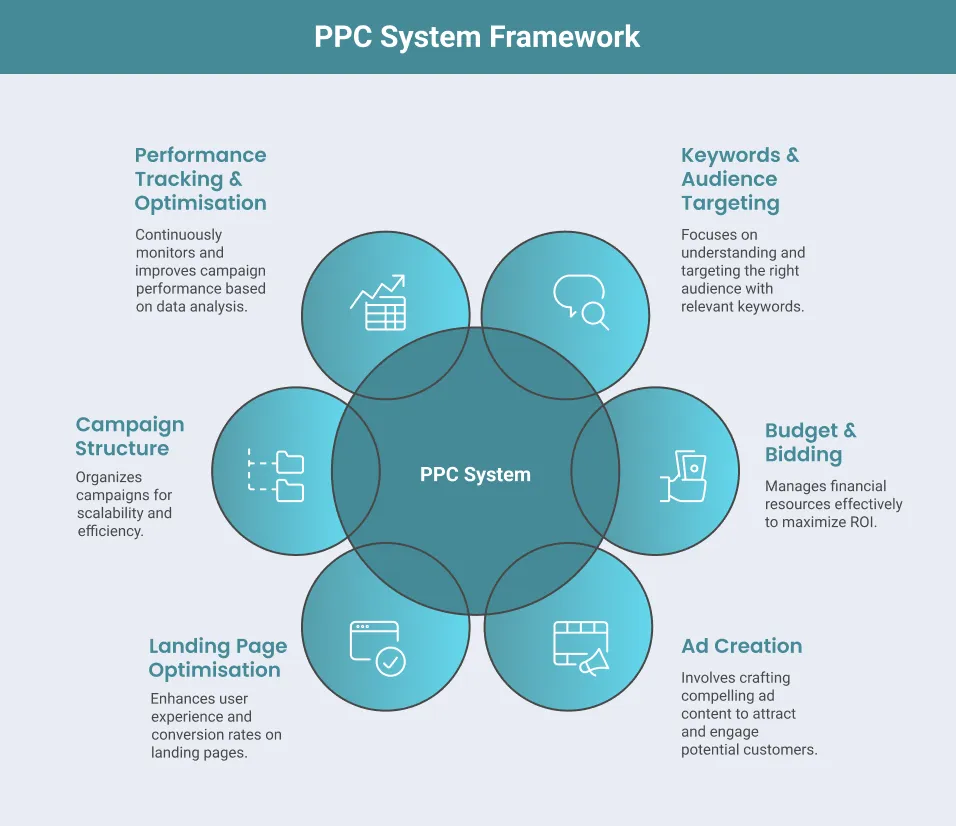
Now let’s look at PPC by itself. PPC is the paid part of SEM and PPC that you can turn on and measure right away.1. Keywords & Audience Targeting
You can target in PPC by:- Keywords (what they look for).
- Location (cities, radius, or regions).
- Device (desktop or mobile).
- Time (business hours, weekdays).
- Depending on the platform, audiences can include remarketing, interests, and in-market groups.
2. Budget & Bidding
You can set a budget and choose how you want to bid on most PPC platforms. Google says that PPC means paying when someone clicks, and you can change your ads to reach certain groups based on where they are and other signals. Salesforce also says that PPC is only paid for when someone clicks and that you set the budget. A lot of businesses like SEM and PPC plan for this reason. You can start small, try things out, and grow what works.3. Ad Creation
Your ad is your “first impression” in PPC.Strong PPC ads often have:- The main keyword idea (to make it seem relevant).
- A clear benefit (what the user gets).
- A clear action (what to do next).
4. Landing Page Optimisation (LPO)
Paid traffic comes from PPC, so every weak landing page costs money.A simple checklist for SEM and PPC difference landing pages:- The page loads quickly.
- The headline matches the ad.
- Form is quick and easy.
- It’s clear how to get in touch.
5. Campaign Structure
A clean structure makes it easier to handle PPC.A common campaign structure includes:- Account.
- Campaign (targeting, budget, and goal).
- Ad group (a small group of related keywords).
- Ads and landing pages.
6. Performance Tracking & Optimisation
When you keep track of the right things, PPC gets better:- Impressions and clicks (how many people saw and clicked).
- CTR (how interesting the ad is).
- CPC (what each click costs).
- Leads, calls, and purchases are all conversions.
- CPA stands for “cost per lead” or “cost per sale.”
- ROAS (return on ad spend) for online stores.
- Stop using keywords that don’t work.
- Add bad things.
- Try out new ad copy.
- Make landing pages better.
Key Processes of SEM & PPC
This part shows how SEM and PPC work together in real life.1. SEM Process
In a broad sense, SEM combines SEO and paid search.i. Website Optimisation
This is what you need to build on:- Repair pages that are broken and load slowly.
- Make it easy for crawlers to get to and understand pages.
- Make it easier for important pages to link to each other.
- Make the mobile experience smooth.
ii. Content Strategy
Planning pages that match real searches is what content strategy is all about:- Pages that tell people what your service does.
- Location pages if you only serve certain areas.
- Helpful guides that answer frequently asked questions.
iii. Link Building
Links are still a sign of trust online. The goal is not to have random links. The goal is relevant mentions from real sites.You get links by:- Publishing content that is useful.
- Digital PR.
- Partnerships and local listings (where relevant).
iv. Paid Ad Integration
Paid ads can help with SEO. For instance:- While your new SEO page is still growing, run PPC ads.
- Before writing a lot of content, test which keywords lead to sales.
- Keep brand searches safe with a branded campaign.
2. PPC Process
PPC is quicker to start, but it still needs a good process.i. Campaign Setup
You pick:- Goal (calls, leads, sales).
- Targeting by location.
- Budget.
- Tracking conversions.
ii. Ad Creation
You write ads that fit:- The intent of the keyword.
- Your offer.
- Your landing page.
iii. Bidding
You set bids or choose automated bidding based on what you want to do.Keep in mind that bids are not the only thing that affects Ad Rank.iv. Real-time Monitoring
Regular checks are needed for PPC:- Search terms (to stop traffic that isn’t useful).
- Spend pacing (to keep from wasting money).
- Conversion rates (to find problems with the landing page).
- Performance by device and location (to change targeting).
If budgeting is your main concern, our Pay Per Click Cost guide will help you plan to spend more confidently.
Comparison Table: Key Process Differences
Here is a comparison table for the SEM and PPC difference: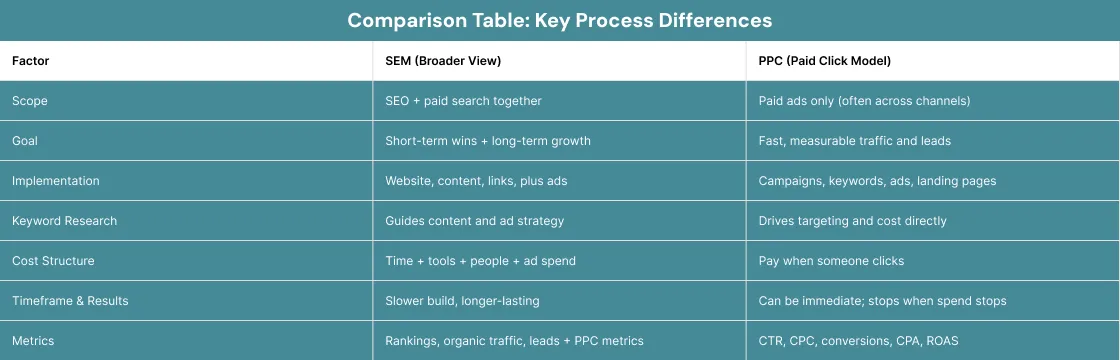
If you want a simple breakdown of organic versus paid, read our guide on SEO vs PPC.
Making Decision
It’s easy to choose between SEM vs. PPC. First, think about what you want to do.- Choose PPC if you need speed. You need leads right away. You want results right away. You have a short offer. It could be seasonal. There may not be enough stock. You want to test quickly. You can quickly test keywords. You can quickly test messages.
- Choose a broader SEM method. This means both SEO and PPC. Pick this for steady growth. You don’t want results that only show ads. You want leads that are more stable. You want costs to go down over time. You want leads that cost less later. You want people to believe in you. Pages that are helpful build that trust. Good content also helps with rankings.
Conclusion
SEM and PPC are related, but they are not always the same thing. PPC is the model where you pay for clicks. SEM is a broad term for search marketing, and its meaning varies. Some define SEM as paid search and SEO. Some call paid search “SEM.” Thinking about these, clarifies SEM and PPC difference. You can then choose the best mix for your goals, timeline, and budget.Want to stop guessing and start getting consistent results from SEM and PPC?
At XoomPlus, we plan, build, and manage campaigns that focus on real leads, not just clicks. Explore our PPC ads services to see how we can help.
Faqs
PPC is a pricing model where you pay when someone clicks your ad. SEM is search engine marketing, which can mean either “all search marketing” (SEO + paid) or “paid search only”, depending on context.
Sometimes people use SEM as another name for paid search and PPC. But other people use SEM as a wider umbrella that can include SEO as well.
Not always. If someone uses SEM to mean “paid search”, then yes, it often runs on a PPC model. But if someone uses SEM in the broad sense, then SEM includes SEO too, which is not pay per click.
Many businesses and agencies use SEM to mean paid search today. But the term can also be used more broadly to include SEO. Always check how the speaker is using the term.
It depends on your goal. PPC can bring visibility quickly, while SEO usually takes longer but can help you build long-term presence. Google suggests thinking in terms of “SEO and PPC” because both can help in different ways.
SEO has some technical parts, like site structure and speed, but it is not only an IT skill. It also involves content, keyword intent, and user experience. Many teams treat it as a mix of marketing, content, and technical basics.
PPC is a paid ad method. You pay only per click. SEM is broader search marketing. It can include PPC and SEO. Some teams use SEM for paid only. So always check the context.
PPC services include keyword setup, ads, bidding, and tracking. SEM services can include PPC plus SEO. That means content, technical fixes, and links too. Both aim to grow search traffic and leads.