

- January 14, 2026
- Categories: Digital Marketing
The Importance of the 7 Ps of Marketing in Today’s Business Landscape
One bad moment can lose a customer.
It might be a slow website on mobile. It might be a confusing price. Or maybe there are no clear reviews, so people do not feel safe buying from you. They click back and choose someone else.
This is not a small problem. PwC found that 32% of customers would stop doing business with a brand they loved after just one bad experience.
And online, people judge even faster. Google has said it uses the mobile version of a website for indexing and ranking. So if the mobile experience is weak, you can lose visibility before people even reach your page.
That is why the 7 Ps of marketing still matter. These parts of the marketing mix cover trust, service and the real buying experience from start to finish. Let’s break it down.
What Are the 7 Ps of Marketing?
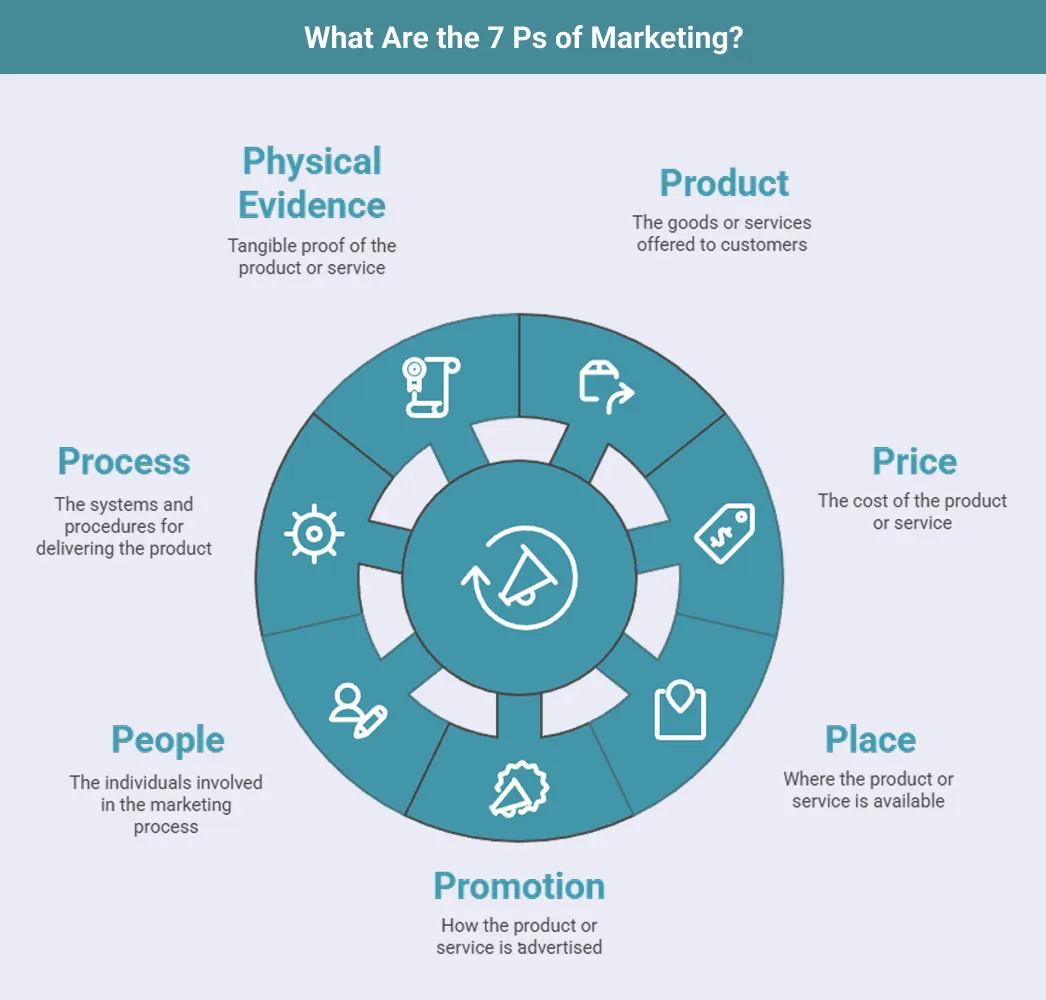
The 7 Ps of marketing are the ‘ingredients’ of your marketing mix 7P. They work together. If one part is weak, the whole plan suffers.
The 7 Ps are:
- Product.
- Price.
- Place.
- Promotion.
- People.
- Process.
- Physical Evidence.
Now let’s go one by one through 7s of marketing.
| 7 Ps of Marketing | What It Means? | Examples |
|---|---|---|
| Product | What you sell | Offer, features, support, website experience |
| Price | What people pay | Pricing tiers, discounts, shipping, subscriptions |
| Place | Where people buy | Store, website, app, marketplace, delivery |
| Promotion | How you market | SEO, ads, social, email, PR, offers |
| People | Who represents you | Sales, support, delivery, live chat, review replies |
| Process | How you deliver | Checkout flow, booking, returns, updates, onboarding |
| Physical Evidence | Proof you’re legit | Reviews, testimonials, case studies, awards, trust badges |
1. Product
Your product is what you sell. It can be a physical item, a service, or a mix of both. But here is the key. Customers do not buy a ‘thing’. They buy a solution.
So ask:
- What problem do you solve?
- What outcome do people really want?
- What makes your offer different?
If you do the 7 Ps of marketing, your product also includes:
- Your website experience.
- How easy it is to browse.
- How clear your information is.
- How well your pages work on mobile.
2. Price
Price is not just a number. It is a message.
It tells people:
- If you are premium or budget.
- What quality they should expect.
- How confident you are.
So pricing needs both logic and research:
- Costs.
- Profit margin goals.
- Competitor pricing.
- What customers are willing to pay.
- Shipping costs.
- Payment plans.
- Subscription tiers.
- Free trials and guarantees.
3. Place
Place means where customers find you, buy from you and receive your product.
This includes:
- Physical shop location.
- Website.
- Apps.
- Marketplaces (like Amazon).
- Delivery and fulfilment partners.
Also, ‘place’ is not only the channel. It is the experience inside that channel. For example:
- Is your website easy to use?
- Is your checkout smooth?
- Is your mobile site strong?
4. Promotion
Promotion is how you communicate your value.
This includes:
- Branding.
- Content marketing.
- SEO.
- Paid ads.
- Social media.
- PR.
- Email marketing.
- Offers.
In 7 Ps of internet marketing, promotion often means:
- Search visibility (SEO).
- Paid search and paid social.
- Remarketing.
- Email flows.
- Influencer partnerships.
- Community building.
5. People
People are everyone who represents your business.
ThIs includes:
- Sales staff.
- Support staff.
- Delivery staff.
- Social media managers.
- Even the founder on LinkedIn.
Online, ‘people’ also includes:
- Live chat responses.
- How you reply to reviews.
- How you handle complaints.
- How helpful your support articles are.
6. Process
Process is the step-by-step flow of how you deliver.
It answers:
- What happens after someone asks a question.
- How long do they wait?
- What happens after checkout?
- What happens if something goes wrong?
In 7 Ps of marketing, process includes:
- Page speed.
- Checkout steps.
- Return process.
- Delivery updates.
- Onboarding emails.
- Booking confirmations.
7. Physical Evidence
Physical evidence is the proof that reassures customers. When people buy a service or a new brand, there is risk. They cannot ‘touch’ the experience before buying. Physical evidence reduces that risk.
Physical evidence can be:
- Reviews and ratings.
- Testimonials.
- Case studies.
- Awards.
- Certificates.
- Packaging quality.
- Store layout.
- Website design and trust signals.
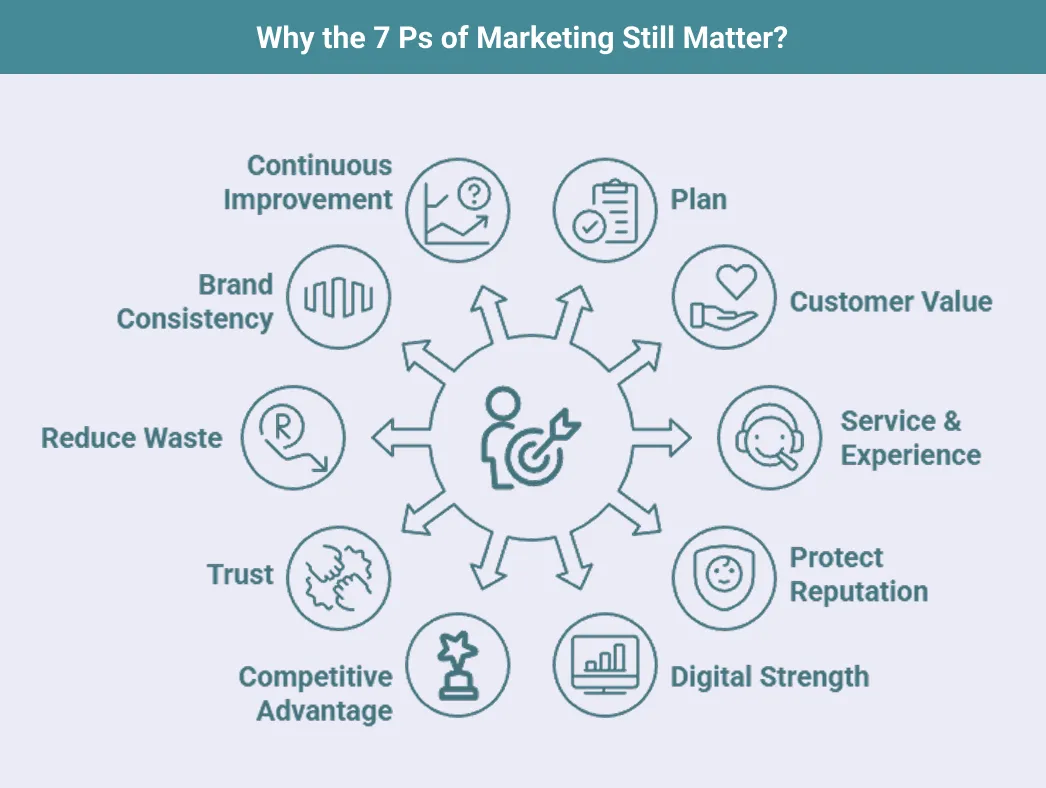
Why the 7 Ps of Marketing Still Matter?
This is the part that most businesses need. Because a lot of teams ‘do marketing’ without a detailed plan. Business Queensland calls the model useful and popular, and says it may help you with auditing, improving your value offering, and analysing your competitors. These are the reasons why the 7 Ps of marketing are still important.1. They Turn Random Marketing Into a Clear Plan
Marketing is just guess work if you don’t have a plan. You post on social media because you feel like you have to post it. You run advertising because your competitors do. You modify prices when sales are slow.
The 7 Ps make you see the whole picture:
- Is the offer right?
- Is the price right?
- Is the buying journey easy?
- Are we building trust?
2. They Help You Build Real Customer Value
It’s not enough for marketing to get attention only. Marketing involves planning, pricing, distribution and promotion to satisfy customer needs.
So, the actual question is:
- Are you providing people anything that is useful?
3. They Fit Today’s Service and Experience Economy
A lot of businesses sell services as well as goods:- Agencies.
- Clinics.
- Restaurants.
- SaaS.
- Consultants.
- Trades.
If you don’t pay attention to these three Ps, you would end up with:
- Great ads.
- Decent pricing.
- But poor delivery and weak trust.
- Then customers do not return.
4. They Protect You From ‘One Bad Experience’ Damage
A single unpleasant encounter might make a customer leave for good.
That goes straight to:
- People (how you treat customers).
- Process (how easy it is to deliver).
- Physical Evidence (how much trust you build upfront).
5. They Make You Stronger Online (7 Ps of Internet Marketing)
Businesses that make things easier for customers online get more business. CIM says that if you solely sell online, you need to put greater focus on the website because there are less ways for customers to interact with it.
Google also used mobile-friendliness to rank mobile searches. Google ranks and indexes mobile-first. If your website is slow or hard to use on mobile, your ‘place’ is weak. If ‘place’ isn’t strong, your 7 Ps of marketing plan falls apart. This is why the 7 Ps of internet marketing are no longer optional.
6. They Help You Compete Without Racing to the Bottom on Price
A lot of firms go into a panic and lower their prices. But discounting is not a plan. It is a sign of something else.
The 7 Ps can help you add value in better ways:
- Better product bundle.
- Better process.
- Better proof.
- Better service.
7. They Build Trust Faster (Which Matters More Than Ever)
People are careful. They make comparisons. They look at reviews.
CIM says that buying things or services you don’t know about might be scary, but proof can help customers feel safe. And once again, behaviour supports this: only 4% of people never read reviews online. So tangible evidence is not ‘nice to have’. It is a conversion tool. One of the main reasons the 7 Ps of marketing are still important today.
8. They Reduce Wasted Spend in Promotion
A classic mistake is to spend money on advertising before improving the essentials.
For example:
- Your adverts get people to come to your site.
- But your checkout is hard to understand.
- Or your updates on delivery are bad.
- Or your help is taking a long time.
9. They Keep Your Brand Consistent Across Channels
Customers can find you in a lot of places:- Google results.
- Social media.
- Your website.
- Emails.
- Reviews.
The 7 Ps help you get in line:
- Product promise.
- Pricing message.
- Channel experience.
- Tone of voice.
- Service delivery.
- Proof.
10. They Help You Get Better Over Time, Not Just When You Start
To stay ahead of the competition, changing client wants and new technology, Business Queensland suggests looking over the 7 Ps on a regular basis. That’s exactly the point.
You can’t just do marketing once. It’s a loop:
- Review.
- Improve.
- Test.
- Repeat.
How to Apply the 7 Ps to Your Business Strategy?
Now, here is a practical playbook. Follow these easy steps:Step 1: Pick One Clear Goal
Pick an aim for the next 3 months:- More leads.
- More sales.
- A higher average order value.
- Customers who come back more often.
- More trust in the brand.
Step 2: Define Your Ideal Customer
Please write down:- Who they are.
- What issue they want to be fixed.
- What they are afraid about (danger, waste money, terrible service).
- What proof they need to be safe.
Step 3: Do a Quick 7 Ps Audit
Use the model as a list of things to do. Business Queensland says it’s even good for undertaking a marketing audit.
Ask these short questions:
i. Product
- Is the offer obvious in only one sentence?
- Do we have powerful benefits, not just features?
ii. Price
- Do we have value and proof that the price is fair?
- Are we keeping the margin safe?
iii. Place
- Is it easy to get?
- Does the mobile feel quick and smooth?
iv. Promotion
- Are we showing advantages?
- Are we consistent across all channels?
v. People
- Do we respond quickly?
- Do customers feel like you care about them?
vi. Process
- Are there problems with delays and confusion?
- Are we following up the right way?
vii. Physical Evidence
- Do we show trust signals, reviews, results, proof and policies?
- Is the style of our website comforting?
Step 4: Fix the Biggest Bottleneck First
Don’t tackle everything at once. Pick one growth-blocker.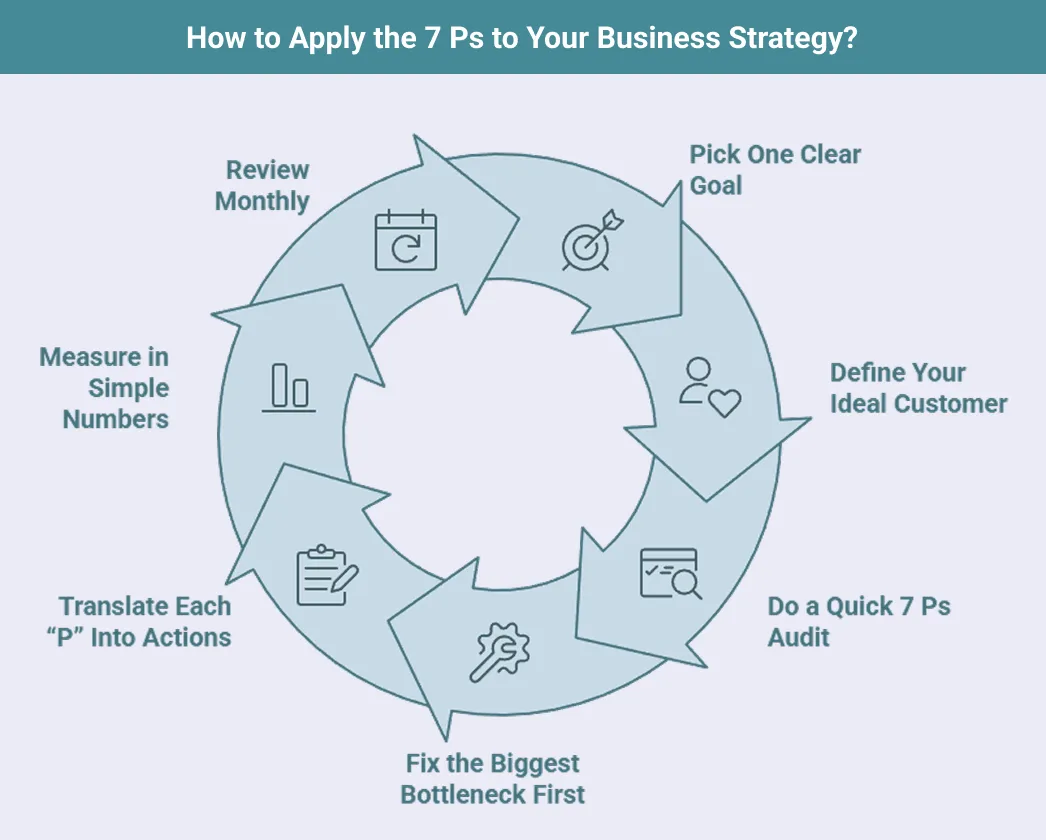
Conclusion
Trends in the business sector keep changing. Changes happen to channels and algorithms as well. Expectations of customers fluctuate but the principles of marketing still work. The 7 Ps of marketing are important because they take you further than just advertising. They make you work on making the whole client experience better.
People, Process and Physical Evidence matter a lot to keep the trust of your customers.
Start here if you want an easy strategy to make your 7 Ps of marketing plan stronger:
- Audit the 7 Ps.
- Fix the biggest leak.
- Build proof.
- Make buying easy.
- Review and improve.
Not sure which part of your marketing mix is holding you back?
At Xoomplus, we deliver expert digital marketing solutions to help you attract the right traffic, improve your website journey, build trust with better content and increase leads and sales.
FAQs
The 7 Ps of marketing help you run your business in a balanced way. They stop you from focusing only on ads. They make you check the offer, price, sales channels, service quality, delivery steps, and trust signals. This leads to better customer experience and steadier growth.
Digital marketing means promoting your business online using search, social media, email, content, and paid ads. It matters because customers research and compare fast. You can target the right people, measure results clearly, and improve quickly. It also supports 7 Ps of internet marketing by improving place and promotion.
'7' matters because it reminds you marketing is more than the 4Ps. The extra three, people, process, and physical evidence, are crucial today. Most brands sell experiences, not just products. These extra parts help you build trust, reduce friction, and keep service quality consistent.
The '7 functions' can vary by textbook, but they usually cover key work like research, product planning, pricing, promotion, selling, distribution, and customer support. They matter because they connect what customers want with what your business delivers. If one function is weak, growth slows.
7P means the extended marketing mix: product, price, place, promotion, people, process, and physical evidence. It is a simple framework to plan and improve marketing decisions. It works for both physical businesses and online brands because it covers sales, service, and trust, not just advertising.