- March 4, 2026
- Categories: Digital Marketing
Facebook Marketing Guide
You’re missing out on something great if your brand is not on Facebook . According to Statista, Facebook has more than 3 billion users around the globe, as of 2023. This huge level of reach gives businesses direct access. Businesses can reach both locals and international clients. Hardly any platforms offer this much reach with precise targeting tools.
If you are running a small shop or have a growing business, the Facebook market system is there to support you. These tools help you with brand image and customer interaction. These tools also help in increasing sales.
This blog helps understand:
- Proper use of the Facebook Marketplace
- Practical marketing tactics
- Clear Facebook ads guide approach
Why Is Facebook Market Still Relevant for Brands?
Some companies may think Facebook is outdated, but the fact is the opposite. Facebook brings social reach and paid ads together. It also creates direct selling opportunities. This makes it very effective.
Brands all over the world use it for:
- Millions of daily users
- Smart targeting tools
- Built-in shop tools
- Community groups
- Brand trust
Understand the Platform Before Starting
Facebook is not simply a news feed. It has many groups and pages. It has data, reels and shop tools. Brands need to understand these key parts as well:- Business Pages
- Facebook Groups
- Facebook Reels
- Facebook Shops
- Audience data
Set Up Business Page
The brand’s page is their base. A weak setup lowers trust right away. In marketing, trust is everything. So, you need to focus on:- Clear profile and cover images
- A short, direct bio
- Contact details
- Clear action button
- A pinned welcome post
Create a Content Plan That Flows
Businesses should have a clear plan. Posting randomly doesn’t bring growth. On Facebook, posts should connect. Each one should lead to the next.
The good content should have:
- Useful tips
- Brand stories
- Customer feedback
- Special offers
- Trending topics
- Community posts
Types of Posts That Drive Interaction
Various formats deliver different results. Strong marketing uses both engagement and sales content.
The formats that work best are:
- Short videos
- Carousel posts
- Polls
- Before and after images
- Customer stories
Use Facebook Groups to Build Trust
Groups build better relationships than public pages. In groups, users interact more freely. This helps the brand grow within the Marketplace.
Groups work well because they have:
- Higher organic reach
- Community discussion
- Direct feedback
- Interactive polls
- Live sessions
Sell Through Facebook Marketplace
Brands need to sell through the Marketplace. This tool lets them sell directly to buyers. It is very simple and visible. Small changes can make a difference. Focus on these steps to improve performance:- Use clear photos
- Add detailed product descriptions
- Keep prices fair
- Reply quickly to messages
- Refresh listings often
Beginner’s Guide to Facebook Ads
This is a sort of guide to Facebook ads. When brands plan ads well, they accelerate growth. A strong approach helps avoid wasting money. So always start with core elements and focus on these basics:- Clear campaign goal
- A defined audience
- A set daily budget
- Simple ad creative
- Strong CTA
Choose Clear Campaign Objectives
Every effective ad guide starts with clarity. A campaign must have a defined objective. The main objectives included are:- Brand awareness
- Traffic
- Interaction
- Lead generation
- Conversions
Target the Right Audience
Results come when brands target the right audience. On Facebook, detailed filters help lower costs. It gives you strong control. You can target by:- Age
- Location
- Interests
- Behaviour
- Custom audience lists
Make Simple Ad Copy
Make sure to always write simple ad copy that connects. The audience responds quickly to clear value and exact messages.
In simple, strong ad copy should:
- Solve a problem
- Present a solution
- Focus on one benefit
- Include proof if possible
- End with CTA
Structure Campaigns Into Funnels
Users are not ready to buy straight away. A structured plan is needed to help them move from awareness to decision. The plan should be:- Cold audience awareness ad (Awareness)
- Warm audience proof ad (Interest)
- Hot audience offer ad(Convert)
- Reminder(Change)
Use Retargeting to Improve Conversions
In marketing retargeting is one of the most effective tools. It focuses on users who have shown interest earlier. Brands can retarget the people who:- Visits website
- Does not complete purchases
- Views videos
- Interacts with pages
- Subscribes to the emails
Manage Budget With Data
At the start, there is no need to spend a high budget. On Facebook, controlled testing lowers risk.
Always follow these budget guidelines to get results:
- Start with a low daily spend
- Test campaigns for a week
- Compare results
- Pause weak ads
- Increase the budget gradually
Test One Variable at a Time
Brands should test one variable at a time. It gives good results over time. A structured Facebook ads guide approach guides the isolation of variables. You should test the variables separately.- Headlines
- Images
- Audience segments
- Offers
- CTA
Install and Monitor Tracking Tools
Tracking ensures the expansion of business. In the Facebook environment, data improves targeting. It also enhances scaling decisions.
So, brands should install and monitor:
- Facebook Pixel
- Conversion tracking events
- Custom audiences
- Lookalike audiences
Segment Audiences for Better Results
If brands want to increase their efficiency, they should divide their users. Advanced marketing strategies divide users based on behaviour and intent.
For example, you can sort users by:
- Time since last visit
- Product viewed
- Purchase history
- Video watch percentage
- Geographic location
Build Lookalike Audiences
Lookalike audiences expand the reach of the brands while maintaining relevance with a framework. To do so, you should:- Upload customer list
- Use purchase data
- Use lead form submissions
- Select a 1 to 2% similarity range
Prevent Ad Fatigue
The most common challenge to businesses is ad fatigue. Ad fatigue decreases performance. In marketing, refreshing assets maintains interactions with buyers.
To reduce fatigue always:
- Update images
- Test new hooks
- Expand audience pool
- Rotate campaign angles
Align Ads With Landing Pages
Strong ads must lead to strong landing pages. It may sound simple, but it matters a lot. Message consistency increases sales. Brands should ensure that their landing page:- Loads quickly
- Matches the ad
- Presents a clear offer
- Includes proof
- Uses simple forms
Focus on Meaningful Metrics
Performance should be calculated by the impact of the business. In marketing, revenue metrics matter more than vanity indicators. So you should always monitor:- Cost per lead
- Cost per acquisition
- Return on ad spend
- Click-through rate
- Conversion rate
Scale Campaigns Gradually
Control is very necessary for scaling. A reliable ads guide suggests constant increases rather than abrupt jumps. So you should always adopt these scaling steps:- Increase budget by 15 to 20%
- Copy good ads into new segments
- Expand locations
- Introduce variations
- Monitor daily results
Combine Organic and Paid Plan
The strongest growth comes from integration. On Facebook, organic content supports paid campaigns. Balanced strategy includes:- Weekly value posts
- Boosting performing content
- Retargeting engaged users
- Sharing customer proof
- Running focused promotional ads
Transition to Performance Thinking
Organic posts build trust with the people. Paid campaigns build speed. Both matter, but growth requires strong performance campaigns.
If you want to shift your mindset, you should:
- Stop random boosting
- Build campaign plans
- Set one goal per campaign
- Review data weekly
- Focus on lasting results
Niche Strategies
Certain industries do very well. For example, real estate Facebook marketing ideas work well. It often uses property videos, local ads and community groups. In niche markets, focus matters more. So, try:- Virtual tours
- Local content
- Client success stories
- Local paid ads
- Live Q&A
Use Facebook Insights to Improve Results
Data removes all types of guesswork. The dashboard shows clear key numbers. These numbers tell what is working for a business. So measure:- Clicks
- Reach
- Interaction
- Follower growth
- Sales rate
Continue Learning and Adapting
Platform updates and user behaviour evolve. The market environment changes over time.
To stay competitive, you should follow:
- Follow official updates
- Test new features
- Review campaign data
- Monitor industry trends
- Adjust strategy as needed
Build Trust with Social Proof
Trust is key to bringing sales. In marketing, proof is stronger than claims. People always believe what they see. So you need to show them:- Customer reviews
- Proofs
- User photos
- Real case results
- Feedback
Make Offers That Convert
Clear offers do better than complex offers. The audience responds well to clear value. Simple deals attract rapid action. You should use offers such as:- Special discounts
- Product bundles
- Free trials
- Free shipping
- Gift items
Case Study: Made.com Online Growth
Made.com is a UK online furniture retailer. Their goal was to increase their online sales and increase brand reach across markets.Strategy
Made.com used Facebook ads to:- Target interested audiences.
- Run product ads
- Retarget website visitors
- Use lookalike audiences to find new customers
Results
The plan worked well for them and they got:- Fast online growth
- 27% increase in sales in the UK
- Expanded to European markets
- Strong customer acquisition through paid social
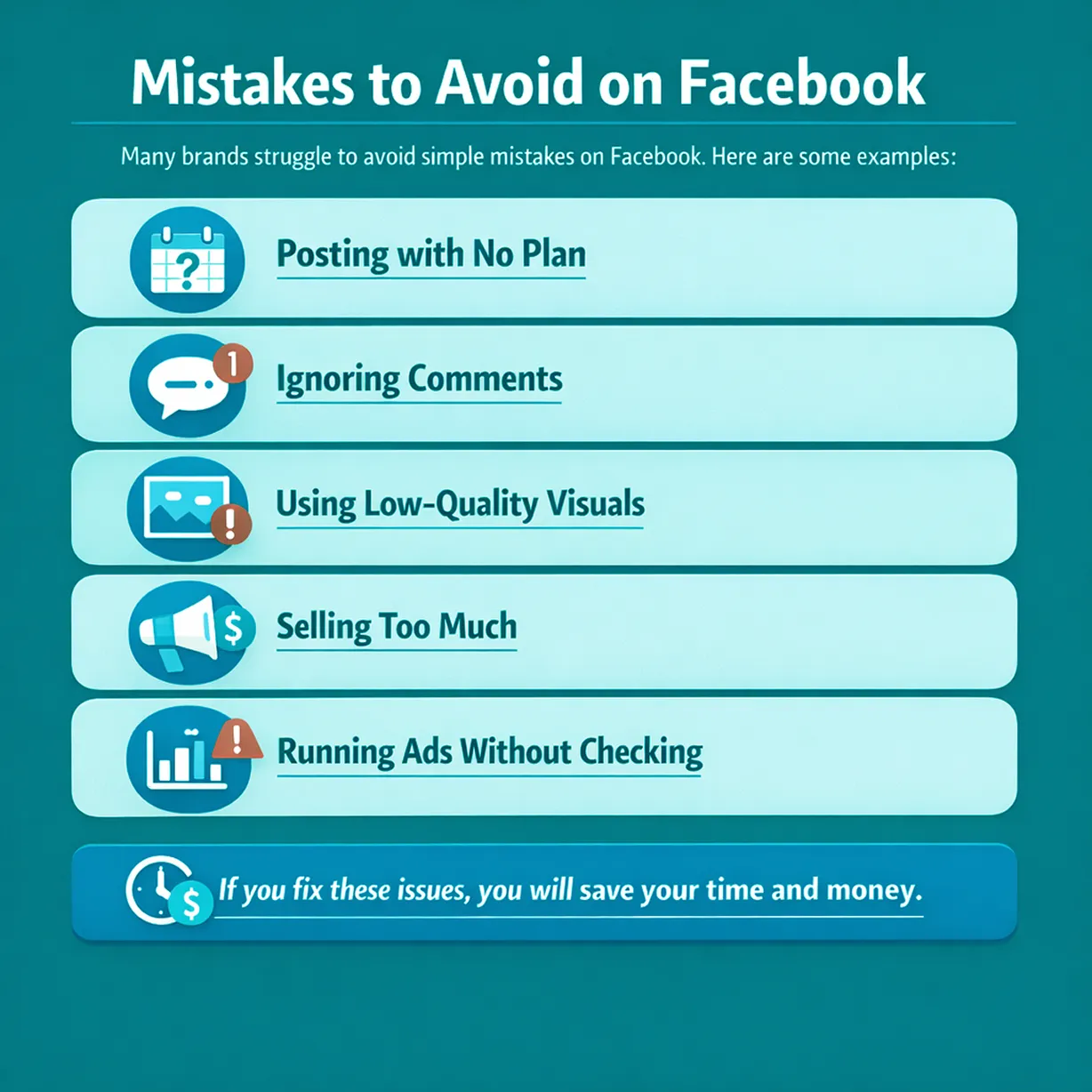
Mistakes to Avoid on Facebook
Many brands struggle to avoid simple mistakes on Facebook. Here are some examples :- Posting with no plan
- Ignoring comments
- Using low-quality visuals
- Selling too much
- Running ads without checking
Keep a Strong Content Flow
Strong content flow improves the consistency of the brand. Each post should support a broader marketing plan. Here are some examples of content flow:- Offer advice
- Follow with proof
- Introduce an offer
- Ask a question
- Retarget engaged users
Quick Strategy Overview
If brands want to grow, they should keep this framework in mind.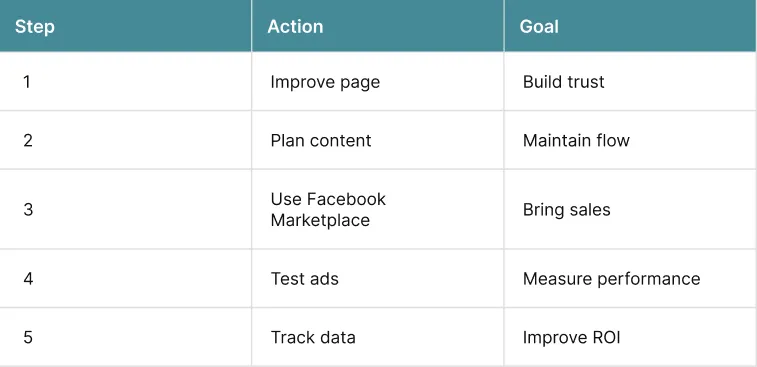
Final Wrap Up
Facebook marketing is not just random posting. It needs a clear plan to post. Spending money on random ads wastes money. An effective campaign brings results rapidly.
Facebook is a very powerful platform if it is used well. If you have clear goals and choose the right audience, you can increase the likelihood of conversions.
XoomPlus knows the way marketing works. We don’t just run ads. Our team develops Facebook campaigns that attract the right audience and bring results.
Get in touch with us and grow with confidence.
Is your website slow, unstable or losing visitors because of poor performance? Xoom Plus has helped many websites achieve better performance results.
Contact us to make your website faster and more reliable.
Faqs
Facebook marketing is the use of Facebook to promote products or services. It includes organic posts, paid ads, marketplace listings and groups. The goal is to increase visibility, engagement and sales.
Yes, Facebook remains one of the largest social media platforms globally. It offers advanced targeting and detailed audience segmentation. Businesses can reach both local and international customers efficiently.
Facebook Marketplace allows businesses to sell directly to local buyers. It increases product visibility without heavy advertising costs. Fast responses and clear listings improve enquiry rates.
The best objective depends on your business goal. Use awareness for reach, traffic for visits and conversions for sales. Selecting one clear objective improves optimisation and results.
Start with a small daily testing budget. Run campaigns for 5–7 days to gather data. Increase spending gradually based on performance results.
Retargeting shows ads to users who already interacted with your brand. This includes website visitors, video viewers, or page engagers. Warm audiences usually convert at a lower cost.