- February 20, 2026
- Categories: Digital Marketing
How to Build an Email List
What makes a website grow even with stale content? The answer is often a well-built email list. An email address list connects you with people who are already interested in your content. This helps you avoid social media algorithms and communicate with your audience in a direct and personal manner.
Having a list of user emails is an important marketing tool. While social media platform rules can change anytime, your email marketing list is your own. You can use it to communicate at your leisure.
This is why businesses tend to focus on emails for growth. Email marketing remains one of the highest ROI among marketing tactics. Industry reports suggest email marketing can return around £35 to £40 for every £1 spent.
This guide will help you build a proper email list that is a long-term asset, not just a temporary traffic source.
What Is an Email List
An email list is a collection of email addresses from people who have agreed to receive messages from you. These people might want updates, discounts, news, or useful content. This builds direct communication between you and your audience. You can tailor services to their needs.
Consent is a key aspect in building the list. Users willingly invite you in their inbox. This increases both the quality and quantity of engagements.
A good list can be made through sign-up forms on websites. This boosts organic growth and builds trust.
Email still beats social media for engagement, conversions, and control. That’s why nearly every serious website focuses on building an email marketing list early.
How an Email List Actually Works
When someone signs up, their email address is added to your system automatically. This system manages storage, permissions, unsubscribes, and delivery for you. You never send emails manually to individual contacts.
Your subscribers are grouped into an email distribution list. You can send messages to the entire list or target specific groups. You can send newsletters, updates, or promotions with just a few clicks.
Once set up, the system runs smoothly with minimal effort.
Email List vs Social Media
There is a direct comparison between email and social media as marketing tools. Both are used to reach a large audience and gain conversions. Here is how they compare: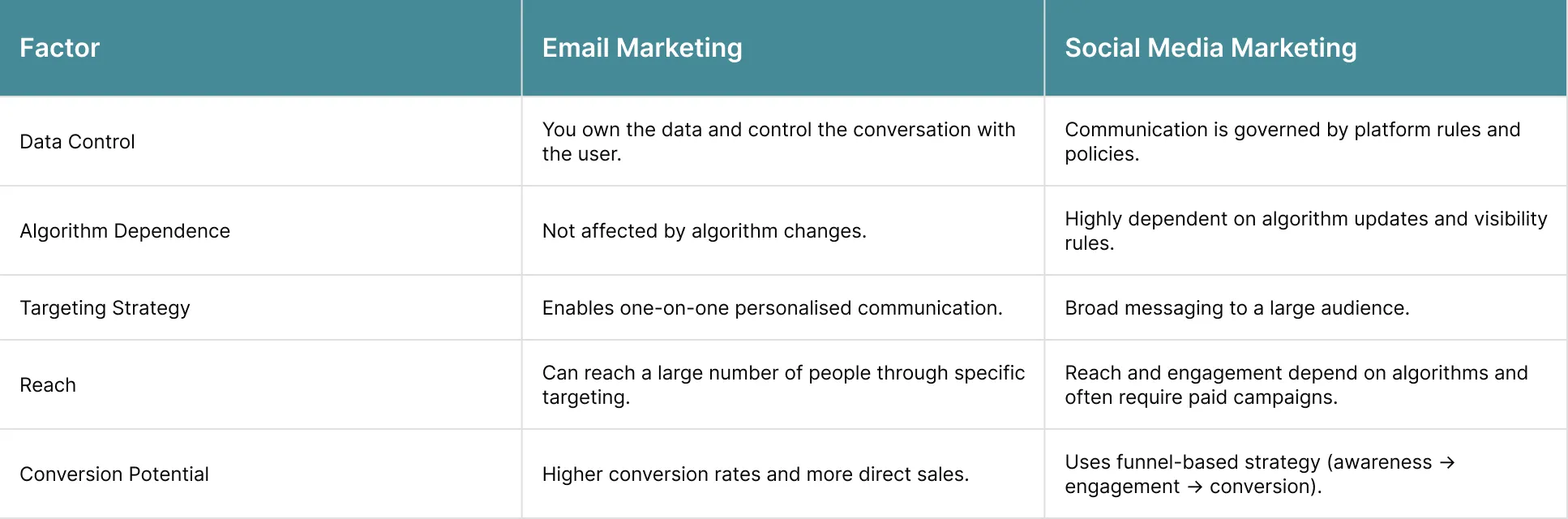
This is why experienced marketers prioritise email list building.
Who Needs an Email List
You do not need to run a large company to benefit from an email list. Anyone who wants people to return to their content can use email effectively. This includes individuals, small businesses, and growing brands.
Email lists work well for:
- Bloggers and writers.
- Online shops.
- Freelancers and consultants.
- Local service providers.
What You Need Before Building an Email List
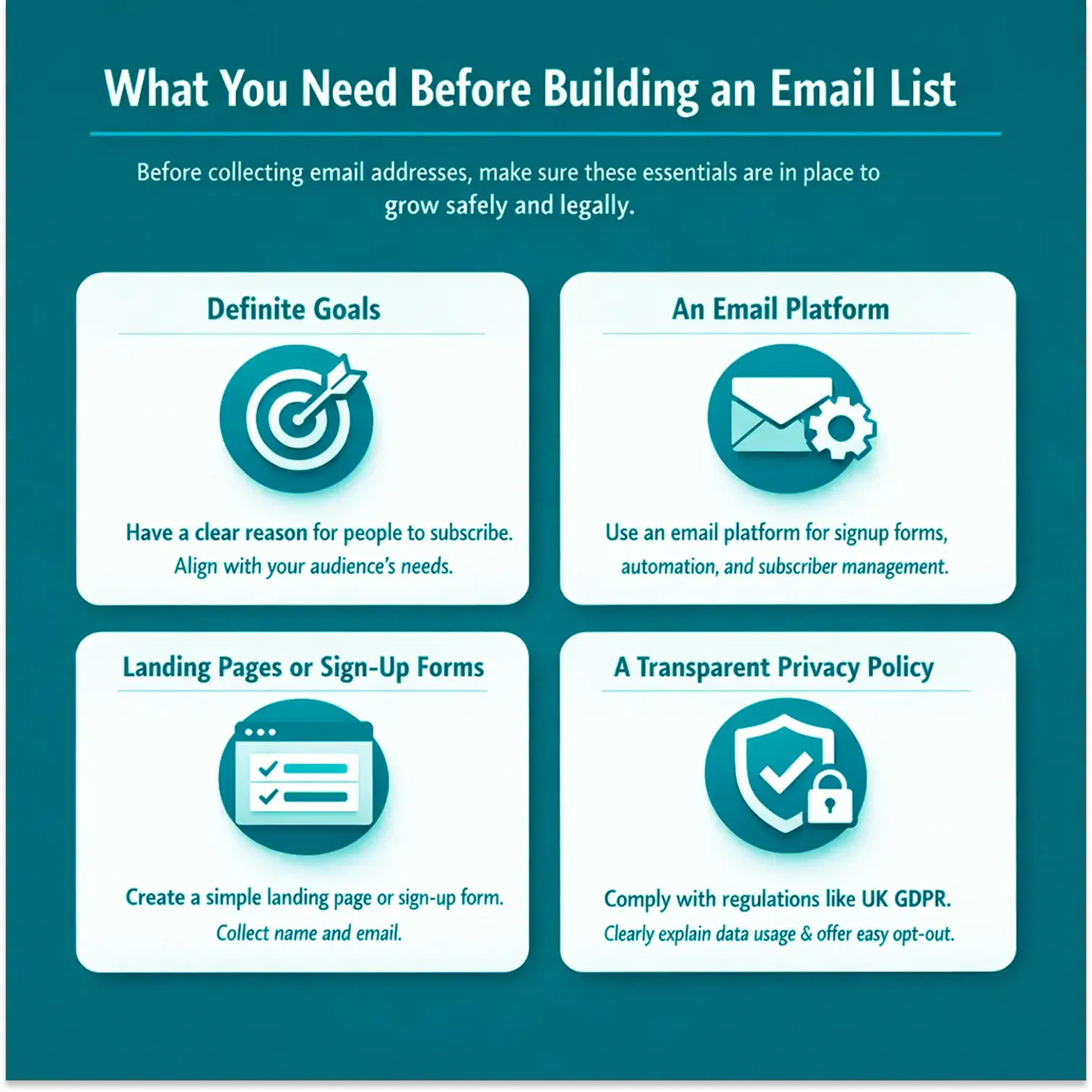
Before you start collecting email addresses, a few basics must be in place. These elements ensure your email marketing list grows safely and legally.
Here is what you need:
Definite Goals
A clear reason for people to subscribe. Know what your audience wants and what you can deliver. Make sure that your list is relevant to your products/services.An Email Platform
You need an email platform which allows a signup form. This allows you to manage subscribers, automate emails and ensure legal compliance.Landing Pages or Sign Up Forms
You need a landing page or sign-up form embedded in your website. Keep these simple and ask for basic information like name and email.A Transparent Privacy Policy
You need to comply with regulations like UK GDPR. Your privacy policy must be clearly stated and should allow users to unsubscribe easily.
Without these, email marketing lists struggle to grow safely.
Choosing the Right Email Marketing Platform
An email marketing list should never be managed manually. Email marketing platforms store, organise, and protect your data. They also help ensure emails are delivered correctly.List of Email Providers
Popular tools used to manage email marketing lists include:Brevo
Brevo is a CRM system that offers email marketing, social media management and CRM services to businesses. It is ideal for startups and small businesses to centralise their marketing efforts.Mailchimp
An all-in-one email marketing platform. It has all you need to build strong lists for email marketing. It offers automation, templates and tracking. It also offers website building and CRM services.
A good platform for small to medium-sized businesses.
Kit
Formerly ConvertKit, is a growth-focused email marketing tool. It is suited for bloggers, content creators and online businesses. It helps with subscriber segmentation, making it easier to target the audience.
It is growth-focused and helps content creators.
These platforms handle email address list data securely. Most offer free plans that are ideal for beginners.
Understanding Permission and Consent
Permission is the most important rule of email marketing. You should never add someone to your email marketing list without asking. Doing so damages trust and can break the law.
Subscribers must actively choose to join your list. This is usually done through a form where they enter their email. Reputable email providers strictly enforce consent rules.
People must clearly choose to join. This is usually done with a signup form.
Where Email Addresses Come From
An email address list grows when people voluntarily share their details. You are not buying or scraping contacts. You are earning attention.
Common sources include:
- Website signup forms.
- Blog popups.
- Landing pages.
- Checkout opt-ins.
- Free downloads.
Creating a Reason for People to Sign Up
People don’t join email lists for fun. They join because they get value. This value is called a lead magnet.
Examples include:
- Free guides.
- Discount codes.
- Checklists.
- Email courses.
- Early access.
Designing High-Converting Signup Forms
Signup forms should be simple and clear. Too many fields reduce signups. It might scare the users and appear spammy.
Best practices include:
- Asking only for email first.
- Clear headline explaining the benefit.
- A visible call-to-action.
- Mobile-friendly design.
Where to Place Signup Forms
Placement matters more than people think. Even great offers fail if they are hidden.
Smart placement increases signups without being annoying.
Effective placements include:
- Top of blog posts.
- End of articles.
- Homepage sections.
- Exit-intent popups.
Using Content to Grow an Email List
Content plays a major role in building your list of emails. Blog posts attract visitors, while email keeps them connected. This combination is why SEO and email work so well together.
Successful websites use:
- Tutorials with embedded signup forms.
- Long guides with downloadable upgrades.
- Resource pages designed for opt-ins.
Segmenting Your Email List Early
Segmentation means dividing your list of emails into smaller groups. Not every subscriber wants the same content. Segmented email marketing lists help you target a specific audience. This also yields a better conversion rate.
You can segment subscribers by:
- Interests they choose.
- Pages they sign up from.
- Behaviour and clicks.
- Purchase history.
Writing Emails People Want to Read
Having many email addresses is not good when individuals do not respond to your emails. Writing to be used should sound natural and conversational. You should never be pushy. You are communicating with people, not running advertisements.
Effective emails are:
- Focused on one main idea.
- Easy to read.
- Penned in the style of a human dialogue.
- Useful or interesting.
How Often You Should Email Your List
Emailing does not have a fixed schedule. Consistency and clarity are the most important.
Subscribers are supposed to have an idea of what to expect.
Common schedules include:
- Weekly newsletters.
- Fortnightly updates.
- Monthly summaries.
Legal Rules You Must Follow
Even permission may cause emails to appear in the spam. This can be mitigated by requesting the subscribers to whitelist your email. This enhances the interaction.
Ask subscribers to:
- Add your email to the address book.
- Mark your message as “Not Spam”.
- Add their safe sender list.
How to Add Email to Safe Sender List
Even permission may cause emails to appear in the spam. This can be mitigated by requesting the subscribers to whitelist your email. This enhances the interaction.
Ask subscribers to:
- Add your email to the address book.
- Mark your message as “Not Spam”.
- Add their safe sender list.
Keeping Your Email List Clean
A clean list performs better than a large inactive one. Removing inactive contacts improves deliverability and trust. Most experts recommend regular list maintenance.
You should regularly:
- Remove bounced addresses.
- Remove inactive subscribers.
- Honour unsubscribes immediately.
Conclusion
So, what really separates websites that grow consistently from those that slowly fade away?
In most cases, it comes down to whether they invested time and effort into building a strong list.
An email list more than amarketing tool. It is a direct line to people who have already chosen to trust you.
Platforms like XoomPlus help simplify this entire process. With the right tools, clear strategy, and audience-first approach, building and managing a list becomes structured rather than overwhelming.
Contact us to get your email marketing done properly.
Managing signups, permissions, and segmentation quickly becomes messy and unreliable when managed manually.
That is where having a structured system makes all the difference.
Check out our email marketing services to simplify email list building by giving you the tools to collect, manage, and grow email marketing lists properly.
FAQs
What Is An Email List And Why Is It Important?
An email list is a group of people who have given permission to receive emails from you.
It is important because it allows direct communication without relying on social media algorithms.
A strong email list creates stability, trust, and long-term engagement.
How Long Does It Take To Build An Email List?
Building an email list is a gradual process rather than an overnight task.
Growth depends on your content quality, offer strength, and consistency.
With the right tools and strategy, steady results can be seen within a few months.
Is It Legal To Collect Email Addresses?
Yes, collecting email addresses is legal when done correctly.
People must give clear consent, and you must provide an easy way to unsubscribe.
Reputable platforms and email marketing lists always follow data protection rules.
Can I Buy An Email Addresses List To Grow Faster?
Buying an email address list is strongly discouraged.
Purchased lists damage trust, reduce deliverability, and often violate platform rules.
Organic signups always produce healthier email marketing lists.
What Is The Best Way To Grow An Email List?
The best way to grow an email list is by offering real value.
Lead magnets, useful content, and clear signup forms perform best.
Consistency matters more than aggressive tactics.
How Often Should I Email My List?
There is no single correct frequency for emailing.
What matters most is consistency and setting expectations.
Weekly or monthly schedules work well for most email distribution lists.
How Can XoomPlus Help With Email List Building?
XoomPlus provides tools that help manage signups, permissions, and segmentation.
It supports clean list growth and improves email deliverability.
This makes it easier to maintain a healthy and effective email list.