
- February 2, 2026
- Categories: Digital Marketing
How to Build a Content Strategy That Drives Real ROI
A practical guide for UK businesses that want a strategy that brings traffic, leads and real ROI, not just views.
How many times have you spent hours making content only to get silence? No leads, no traffic, no sales. It feels demoralising, right? But the fix is usually simple. Your content is not the issue, the strategy you use for your content is.
The Content Marketing Institute reports that 61% of marketers say their content strategy improves year on year. It also reports that 13% see strong improvement, with clear growth in results and ROI.
A content marketing strategy is a plan for creating, publishing and maintaining useful content to support specific business goals. Without a strategy, many businesses waste their effort hoping something will stick.
A strong content marketing strategy gives you direction, focus and measurable targets. This guide explains what is content strategy, why content marketing strategies work and how to create a content strategy that drives real ROI for you.
What Is a Content Strategy?
At its core, content strategy is the planning and management of strategy and content so each piece has a clear purpose.
A content marketing strategy sets the path for every blog, page, video or post and links it to a wider marketing goal. Without it, content creation becomes guesswork.
A good content marketing strategy should answer these questions first:
- What content strategy goals matter most for the business
- Who the content is for
- What problem the content solves
- Where the content will be published
- Why the content exists
- How the content supports business goals
How Content Strategy Helps You
Content marketing strategies deliver results by aligning strategy and content to the right goal.
They help to:
- Attract the right audience
- Build trust and authority
- Improve search visibility
- Convert visitors into leads or customers
What Is ROI in Content Marketing?
You know ROI means return on investment, right? But in content terms, it means the value that comes back from the time and effort put into content.
ROI depends on your goals. For instance, if your goal is to rank higher on Google, then organic traffic can be a strong sign of ROI.
Depending on your goal, real ROI can look like:
- Organic traffic growth
- Lead generation
- Increased enquiries
- Sales influenced by content
- Reduced reliance on paid ads
How to Create a Content Strategy With High ROI
Content marketing strategy can be the difference between steady growth and wasted effort in digital marketing.
Content is often the first way you introduce your product or service, so the plan behind it matters for you.
If your goal is to build long term growth, it helps to follow a clear process. Following is how to create your content marketing strategy in simple steps.
1. Set Goals
Every strong content marketing strategy begins with clear goals. Content created without goals rarely delivers you results.
Common goals include:
- Increase website traffic
- Rank for specific keywords
- Generate leads
- Educate customers
- Support sales
2. Know Your Audience
Your content must speak to the right people. Even well written content can fail if it targets the wrong audience.
To understand your audience better, ask:
- What problem do they have
- What are they confused about
- What do they search online
- What would help them right now
3. Research Keywords
Keywords help you find content on Google. Good content strategies look for keywords that match what you actually want.
Keywords show interest and intent.
To use keywords well, focus on:
- One main keyword
- A few supporting keywords
- Natural usage without forcing it
- Google autocomplete
- People also ask
- Related searches
4. Match Search Intent
Search intent means why someone is searching. When content matches intent, you stay longer, trust builds and rankings improve.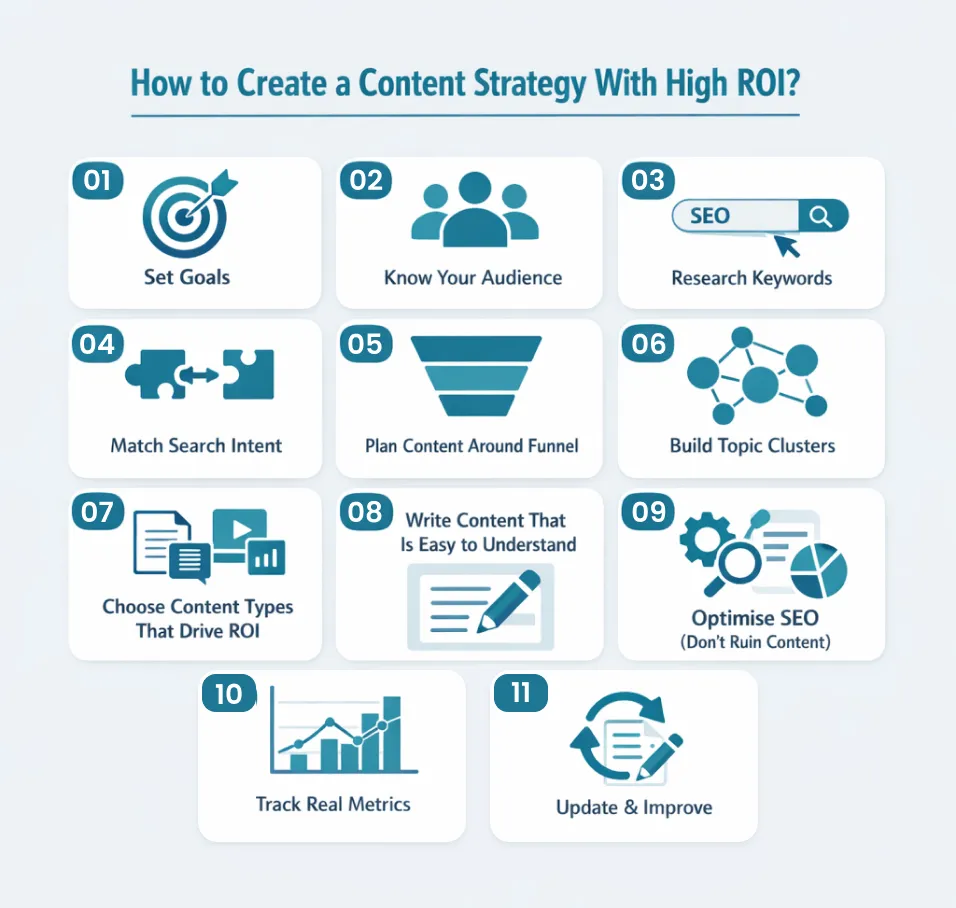
Main intent types:
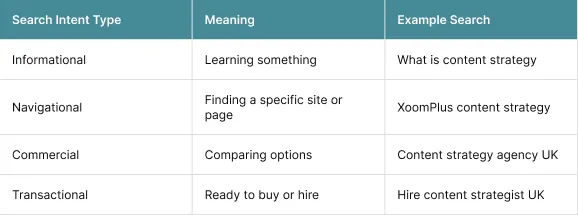
If a page is informational, it should teach clearly. If it pushes sales too early, people often leave.
5. Plan Content Around the Funnel
A marketing funnel helps you guide throughout your content marketing strategy.
A funnel helps plan content for different readiness levels. Not everyone who reads a blog is ready to buy today. Good content strategies should support each of the following stage:
Awareness stage:
- Blog posts
- Guides
- How to articles
- Comparisons
- Case studies
- Deep dives
- Service pages
- Pricing explanations
- Proof and results
6. Build Topic Clusters
Random blogs do not build authority. A strong SEO content strategy uses topic clusters so Google and readers can see a clear theme.
Here is how your topic clusters should work:
- One main pillar page
- Multiple supporting articles
- Clear connections between topics
Pillar page:
- Complete Guide to Content Strategy
- Content planning
- SEO basics
- Content ROI
- Content calendars
7. Choose Content Types That Drive ROI
Not all content performs equally. Goals should guide which formats to prioritise and the audience should guide you where to publish more. Look for platforms where your audience spends more time.
Make sure that your content is something that your audience enjoys. Your content strategies should prioritise high impact content.
Content types that often drive strong ROI:
- SEO blog posts
- Pillar pages
- Case studies
- Service pages
- Email sequences
So, a good plan uses more than one format. Because your audience is everywhere, you shouldn’t depend on only one platform.
8. Write Content That Is Easy to Understand
Clarity drives results. People scan before they read, so the layout should support quick understanding.
Simple ways to keep content easy:
- Short paragraphs
- Clear headings
- Simple words
- Bullets only where they help scanning
9. Track Real Metrics
Likes do not pay your bills, right? So your strategy should track metrics tied to business outcomes. Because the ultimate goal of every business is profits.
Useful metrics include:
- Organic traffic
- Keyword rankings
- Conversion rates
- Leads generated
- Sales influenced
10. Update and Improve Existing Content
Search changes over time and content can fade if it is not maintained. That’s why a strong SEO content strategy includes improving older pages, not only publishing new ones.
When you are updating pages, check for:
- Outdated information
- Weak or unclear sections
- Thin content
- Missing details people expect
Common Content Strategy Mistakes to Avoid
Even good teams get this wrong. A strong content marketing strategy is patient and focused.
Avoid:
- No clear goals
- Writing for everyone
- Ignoring intent
- Chasing trends
- Expecting instant results
How Long Does It Take to See ROI?
Content marketing is a long term approach. It builds value over time. Unlike paid ads that stop when spending stops, content can keep bringing traffic and enquiries long after publishing.
A simple timeline to expect:
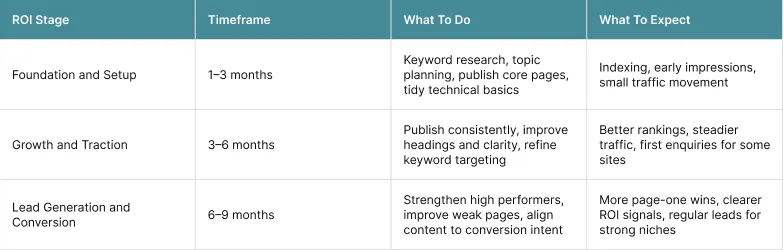
Timeframes vary by niche, competition and site quality but the pattern is usually similar.
Conclusion
A good content marketing strategy does not need fancy tools. It needs:- A clear strategy goal
- Helpful content built on real intent
- Consistent effort
- Smart SEO content strategy basics that support the reader
XoomPlus understands that content marketing strategies are built to match search intent and real business outcomes, not empty traffic. Contact us now to get proper content planning today.
Ready to turn your content into real business growth?
Stop guessing and start building a content strategy that actually drives traffic, leads, and sales. Get expert help from our content marketing services and start seeing real ROI from your content today.
FAQs
What Is A Content Strategy?
A content strategy is a clear plan for creating, publishing, and managing content so it helps your business grow. It focuses on who the content is for, what problems it solves, and how it supports goals like traffic, leads, and sales. Without a content strategy, content is usually inconsistent and ineffective.
Why Is A Content Strategy Important For ROI?
A content strategy makes sure every piece of content has a purpose. Instead of guessing, you create content that attracts the right audience and moves them towards action. This leads to better traffic quality, higher conversions, and stronger long-term ROI.
How Does A Content Strategy Support SEO?
A strong content strategy helps search engines understand your website. It plans content around keywords, search intent, and topic clusters, which improves rankings over time. This is a key part of an effective SEO content strategy.
How Long Does It Take For A Content Strategy To Show Results?
Most content strategies take time to work. You may see early traffic improvements in 3 months, stronger rankings in 6 months, and real ROI between 6 and 12 months. Content builds value over time rather than delivering instant results.
What Types Of Content Deliver The Best ROI?
High-ROI content usually includes SEO blog posts, pillar pages, case studies, service pages, and email content. These formats work well because they attract targeted traffic and support users at different stages of the buying journey.
How Often Should New Content Be Published?
Consistency matters more than frequency. For most businesses, publishing 2 to 4 high-quality pieces per month is enough to see results. A realistic content schedule is an important part of any content strategy.
Is Keyword Research Still Important In 2026?
Yes, keyword research is still important, but it should focus on search intent rather than just volume. Modern content strategies use keywords naturally to match what users are actually looking for, which improves both rankings and user experience.
Can A Content Strategy Work For Small Businesses?
Absolutely. A well-planned content strategy is often more effective for small businesses because it reduces reliance on paid ads. Over time, content can become a reliable source of traffic, leads, and sales without increasing costs.
What Is The Difference Between A Content Strategy And Content Marketing?
A content strategy is the plan behind the content, while content marketing is the execution. The strategy defines goals, audience, and structure, and content marketing strategies focus on creating and promoting content based on that plan.
How Do You Measure The Success Of A Content Strategy?
Success is measured using metrics that matter to the business. These include organic traffic, keyword rankings, conversion rates, leads, and sales influenced by content. Tracking these metrics helps improve the strategy over time.