- March 9, 2026
- Categories: Digital Marketing
What Is Semantic SEO and Why Does It Matter?
Would you believe ranking high on Google is not harder, just different now? Once you understand how search engines read content, it becomes much easier. With the right strategy, ranking is not guesswork anymore.
Semantic SEO changes the plan of action completely. This does not just use a single keyword to answer the query. This writes content that search engines can understand after analysing the intent of the user. This strategy also helps organise information clearly.
In March 2024, 1.4 billion people visited Bing.com. This shows that search engines other than Google are also important. This also emphasises the need for this across all platforms.
In this blog, we will learn:
- What is Semantic SEO?
- What are its components?
- How does it work?
- What are the tips to improve it?
What Is Semantic SEO?
This is a strategy focused on optimising your content behind the main topic. It also helps Google to understand the context behind the user’s query. This practice does not focus only on keywords. This looks at the overall topic. This gives the answers to all questions surrounding the topic. Its analysis pattern is completely different.“Semantic SEO is about understanding what your users really mean, not just what they type.” Bill Slawski, SEO researcher & expert.
Difference: Traditional Vs Semantic SEO
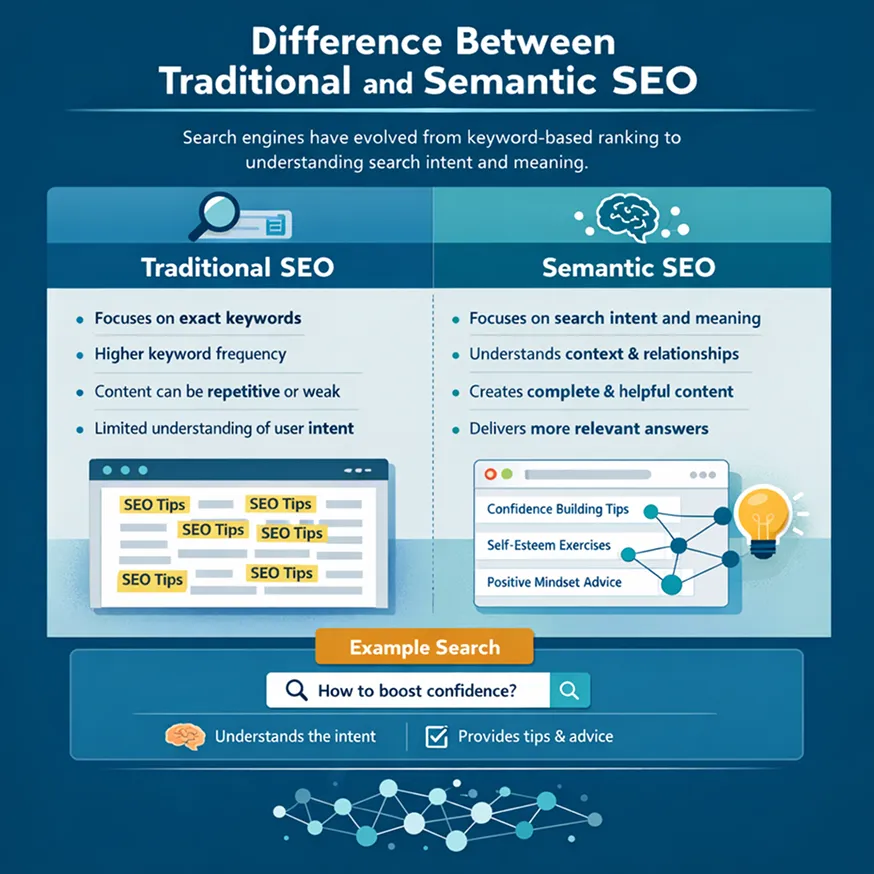
Google and other search engines improved due to semantic search. Traditional SEO works in a different way. If the keyword appears more on the page, the website’s ranking increases. This strategy creates weak and incomplete content.
Conversely, in semantic search, search engines do not focus only on keywords. They focus on the real meaning of the query. For example, if you search “How to boost confidence?”. This helps Google to understand your question. Then, it gives you some tips and methods to improve your confidence.
This does not look for keyword matches. This provides content that fulfils your topic needs.
Components of Semantic SEO
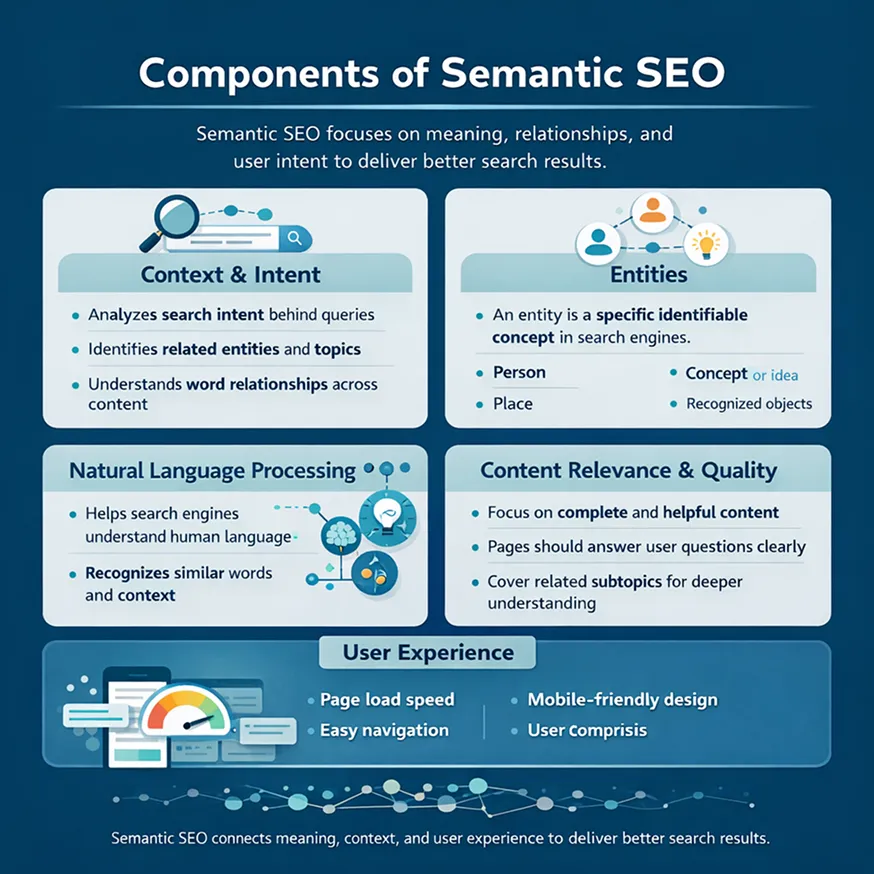
The key components of semantic SEO are:Context and Intent
Semantic SEO analyses search intent and identifies related entities. This also understands word relationships and topics that connect across a website. This feature is missing in traditional SEO.
Suppose you search, “how to make soup?”, it means you want a recipe. But if you search for “soup making tips”, your intent is different. You are asking for suggestions. The focus is on the actual context behind the query.
Entities
In a semantic SEO practice, an entity means:- A specific object identified by a search engine
- Specific person
- Specific place
- Specific Concept
Language Processing
This AI model helps search engines understand the way people write and search. This understands similar words and context. This practice also ensures that search engines know the scope of a user’s question. This does not just match keywords.
Related: How NLP Is Reshaping the Future of SEO Content Strategy
Content Relevance and Quality
It is very important to maintain quality in SEO. Google focuses on complete content over pages with just keywords. The pages should answer a user’s questions. They should also cover related subtopics. These types of pages rank high.Experience of User
User experience is one of the key factors that influence rankings. This looks at signals such as:- page load speed, which affects bounce rate
- Mobile friendly design, which supports mobile indexing
- Easy navigation, which helps the user find the answer
The Importance of Semantic SEO for Rankings
There are some tips to follow to boost the ranking of your website. Like:Conduct Semantic Keyword Research
You should not only focus on exact keywords. Always try to find related terms and long tail keywords.
For example, if you’re targeting content marketing. Use terms like SEO content and digital marketing plans. These terms help search engines understand the relevance of content. This also helps to improve ranking potential.
Use Organised Data
If data is organised, it helps search engines understand the content. This improves your content with rich segments. These segments show the necessary information in search results. This results in an increase of click through rates.
For example, you’ve added structured product information for a laptop. This helps search engines display price, reviews and specifications directly in search results.
Create Detailed Content
You should always create detailed content. This strategy performs well in SEO. This practice allows you to cover a topic completely. You should make content that answers multiple user questions. This should also cover subtopics linked to the main topic. This increases the chances of ranking for your main keyword.Use Internal Link Wisely
An internal link helps search engines understand the link between different pages. This supports the topic relevance of your pages. This is easier for users to browse. Suppose you link an article on SEO to social media marketing. It creates a semantic connection between topics.Answer People’s Questions
The most important section to handle is the People questions. You should answer relevant questions. This increases your chances of appearing in this section. Let’s take an example, if you’re analysing SEO. You should address questions such as:- What is SEO?
- How does SEO work?
Case Study: Google’s BERT Update
Google launched its language model BERT (Bidirectional Encoder Representations from Transformers). This is a powerful development. It changes the way how Google understands search queries.
As you know, traditional search algorithms focus on keyword matches. BERT helps Google to understand the objective of the user like a human.
What is BERT?
BERT is a deep learning algorithm. This explains the links between words in a question.
It can now interpret complex questions. For example, if you search “UK traveller to USA visa”, Google understands the intent behind the full query. This shows results about visa requirements for UK citizens travelling to the USA.
How Does BERT Work?
BERT shifts SEO from plans that just focus on keywords. Now it creates content that focuses on the user’s objective. It understands the full context of a question rather than just words. BERT helps Google to give correct and relevant results. This improves user experience.Impact on Search Results
After the launch of BERT, the quality of search results has been improved. This has affected 10% of all search results for long conversations.
For example, if you search for “Can you give medicine for a headache?”. After BERT, Google understands the intent of the user. It shows more relevant information about headache treatments.
Future Perspective
Semantic SEO has become important. The use of search engines like Google’s RankBrain and BERT has increased. These systems use semantic search to read the conversation better. They did not just match search terms with content. They use machine learning to analyse user intent. This also finds the accurate content to answer the question.
AI systems can now assess the quality of content based on a number of factors. These include:
- The ability of the content to answer various topics
- Depth of content
- Relevance of the content to the searcher’s needs.
Strengthen Semantic SEO With Topic Clusters
It is very important to organise your content into different clusters. This process helps search engines understand the content completely on your website. First of all, make a pillar page around the main topic. After that, link this topic to its subtopic. In this case, you will have a clear content order.
This method helps search engines know about the context of your content. This also improves the experience of the user. This strategy provides them with complete resources. If you implement this plan successfully, relevancy of your content increases.
Conclusion
Semantic SEO practices are necessary to improve the ranking of your website. This uses its data to provide you with the most relevant results. This enhances your content to fulfil the user’s intent. This understands the intent behind the user query. This makes your content useful and relevant.
Xoomplus understands the need for semantic SEO solutions for websites. We create strategies that drive traffic and improve rankings.
Contact us now for expert help and strategies that align with modern search engine algorithms.
Ready to Boost Your Rankings with Semantic SEO? Don't miss out on the opportunity to enhance your site's visibility and drive more traffic.
Book a consultation to start optimising your website with effective semantic SEO solutions.
FAQs
What is semantic SEO?
Semantic SEO is a strategy focused on optimising content for entire topics rather than just specific keywords. This helps search engines understand the context and intent behind user queries, leading to better results. This approach is essential for improving rankings and making your content more relevant to users.
How does semantic SEO differ from traditional SEO?
Traditional SEO often focuses on keyword density and placement, while semantic SEO goes beyond keywords. Semantic SEO emphasises understanding the meaning behind search queries and ensuring that content addresses the full range of questions users may have on a topic, leading to better rankings.
How can I optimise my website with semantic SEO?
Start by conducting keyword research for related terms, using Latent Semantic Indexing (LSI) keywords. Organise your content into topic clusters, create in depth long form content and use structured data markup to help search engines understand the context of your content. This will improve visibility and rankings.
What role do entities play in semantic SEO?
Entities are specific people, places, things, or concepts recognised by search engines. They help search engines identify and understand the relationships between words in your content. Optimising content with entities allows search engines to deliver more accurate search results by grasping context and user intent.
Does semantic SEO affect my site's user experience?
Yes, semantic SEO significantly enhances user experience by ensuring your content is comprehensive and answers the questions users are searching for. By improving content relevance, providing value and ensuring the site is easily navigable, users stay engaged, reducing bounce rates.
Can I still use traditional SEO methods with semantic SEO?
Yes, while semantic SEO is now the primary focus, traditional SEO methods like keyword research, content optimisation and backlinking still play a crucial role. Combining both approaches ensures that your content is not only contextually relevant but also technically optimised for search engines.