- April 30, 2026
- Categories: Web Solutions
Emerging Online Store Trends to Watch for in the E-Commerce World
The concept of shopping is different now because of e-commerce. It became an important part of global retail, shaping online store trends. Technology, convenience and evolving customer expectations are driving this change.
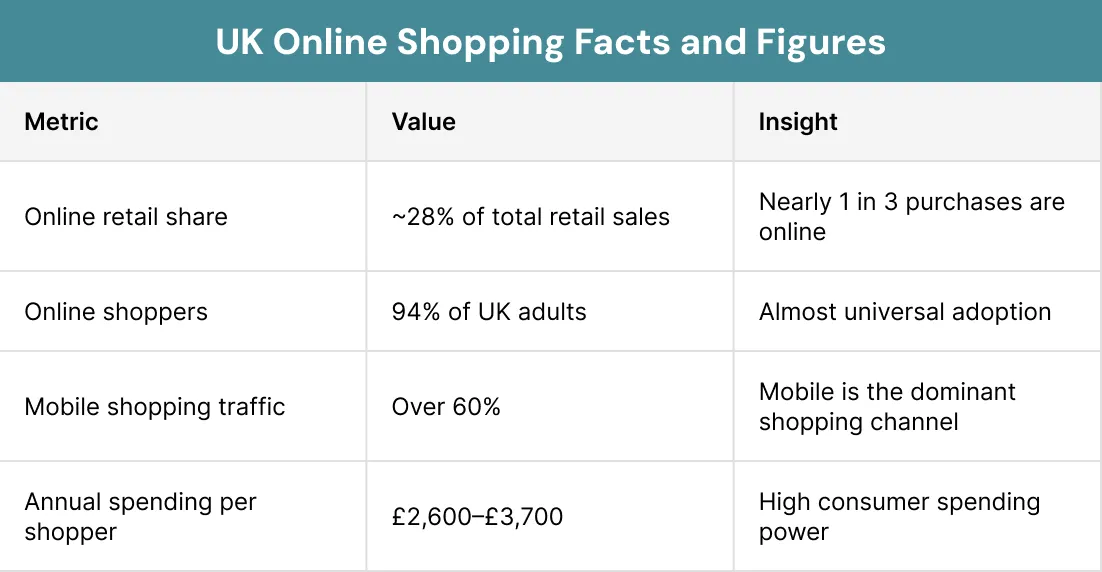
Shopping used to be a trip to a shop; now you can get it done in seconds right from your phone. Around 85% of internet users in the UK shop online as per 2025 UK trends. This makes the United Kingdom the country with the developed online retail market in Europe, where people shop online.
The global event of the COVID-19 pandemic sped up this change. It pushed many people to shop online. Even people who never liked shopping online are now doing it every day. Businesses are working hard to get better online just to keep up.
Online trading has never been this busy, fast or tricky before. Technology keeps changing. New sites are emerging all the time. And shoppers? They keep switching things up too. You have to stay on top of these changes and adapt to them if you want your business to grow.
Key Takeaways
- E-commerce is growing fast, so businesses need to stay updated with online store trends to keep up with changing technology, customer behaviour and global markets
- Using AI for personalisation, product recommendations and data analysis can improve customer experience and increase sales
- Social media and mobile platforms are now key sales channels, so businesses should focus on content driven and mobile friendly shopping experiences
- A fast and simple checkout with secure and flexible payment options helps reduce cart abandonment and improve conversions
- Customers expect transparency and strong data protection, so building trust through clear communication is essential
- Fast delivery, easy returns and convenient fulfilment options are now basic expectations in modern online store trends
- Not every trend fits every business, so it is important to choose strategies that align with your target audience, products and long term goals
Current E-Commerce Market
Online shopping is really growing all over the world. Sales were expected to reach $7.4 trillion in 2025. This means 24% of all retail sales will happen online. So, 1 in 4 purchases could be online.
Even big markets like the US and Europe still have room to grow. Both are set to grow by more than 50% in the next few years.
The future of retail is about blending physical and digital experiences. – Justin King,Chairman at Dexters London Ltd.
Even newer markets are expanding at an even greater pace. There is an increase in the number of people in Africa and Southeast Asia who have the internet and smartphones. This has created a window of online shopping to millions of new customers. Southeast Asia has become the rapidly developing region in the world for online sales.
Online shopping continues to increase with online store trends and shows no signs of declining. It is now one of the main ways people shop all over the world.
People in the United Kingdom spent around 2,600 pounds per year on online shopping.
Top E-Commerce Trends in 2026
Online store trends are quickly expanding online shopping. New things are happening in this area because of technology, tough competition and people’s needs.
The Asia Pacific is the biggest place for online shopping in the world. It is going to get a lot bigger by the year 2030. China and the United States are the leaders when it comes to shopping. People here spend a lot of money online every year.
Artificial intelligence and shopping on mobile phones are changing the way companies interact with their customers. Online shopping is also becoming more about being sustainable. If you want your online shopping business to be successful in 2026, you need to know what is going to happen with shopping.
AI Trends in Online Shopping
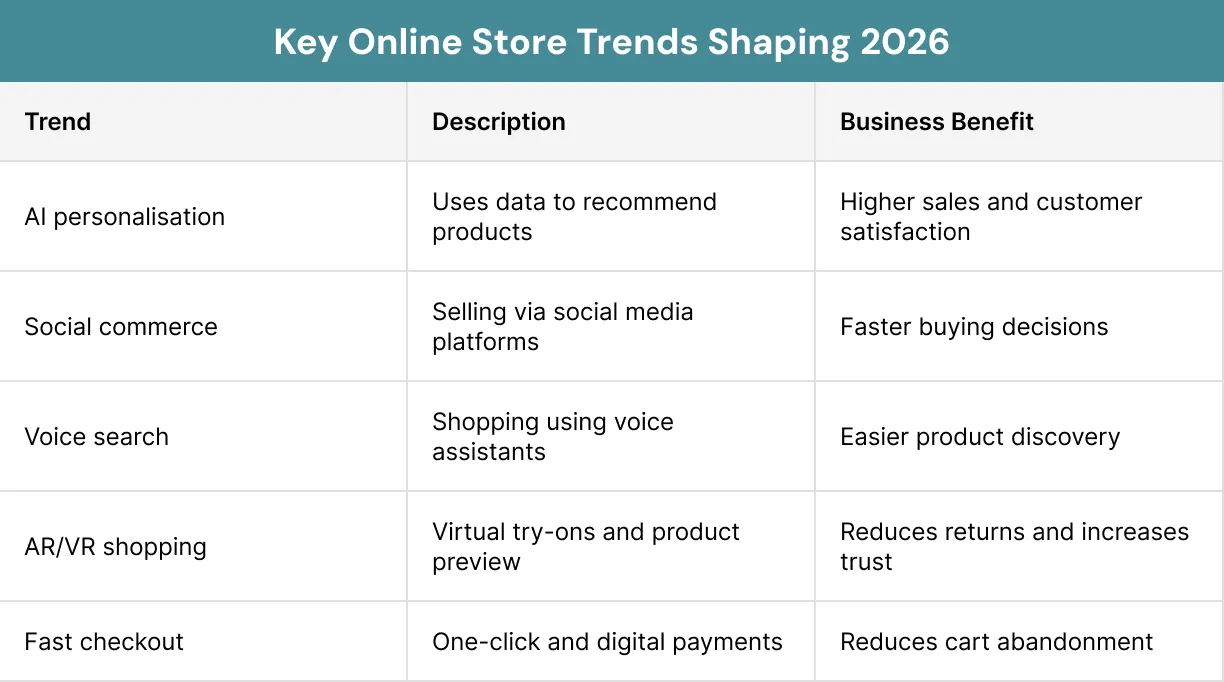
AI is one of the most important driving forces of modern online shopping and online store trends. AI allows companies to provide users with a more personalised shopping experience using trending online stores.
In today’s world, people expect companies to know how they behave, what they like and need. AI uses real time data, including browsing habits and purchase history to personalise shopping.
1. Personalisation and Customer Experience
Personalisation has now become a basic need, not a luxury for trending online stores. Many people expect firms to know what they want and give the right ideas. When you do something good, it usually means you get sales and your customers are happier.
For example:
- Personalised product recommendations
- Targeted emails
- Customised offers
2. AI Upselling and Cross Selling
AI also plays a big part in upselling and cross selling for trending online stores. By looking at how people shop, firms can suggest extra items that go well with what the person is viewing or buying.
This helps raise the value of each order. It also improves the customer experience, as people get useful tips instead of ads that do not fit their needs.
3. Machine Learning and Instant Analytics
Machine learning helps firms keep getting better by using live data in trending online stores. Shops can track how customers behave, spot trends and change what they sell quickly.
This helps firms make better decisions, improve their ads and react fast to what people want.
Social Commerce and Video Shopping Trends
Social media is now a big force in e-commerce growth and online store trends. Instagram, Facebook, TikTok and Pinterest are not just for chatting. They have become proper shopping channels too.1. Social Shopping
Social shopping lets people find and buy goods on social media platforms used by trending online stores. Tools like in app checkout, shop posts and item tags make it fast and easy.
These apps give firms a huge reach with billions of users around the world. They also cut down the steps from seeing a product to buying it. This makes it easier for people to finish a purchase.
Interesting Fact:
Social media is a major shopping discovery tool.
2. Influencer and Content Driven Sales
Shopping decisions are highly impacted by influencers and content creators. Many consumers trust tips from real users more than from ads.
User posts, reviews and testimonials are helpful in building trust. They show how products work in real life. This helps new buyers feel more confident about what they choose.
Quick Tip:
Reviews can make or break a sale.
3. Video Content as a Sales Tool
Video content is now one of the best ways to reach buyers for trending online stores. Many people watch product videos before they buy.
People rely more on short clips, demos and tutorials to see the product rather than still images. They show how it works, which can reduce returns and uncertainty.
Live shopping is also on the rise. In live shows, brands can:
- Talk to people in real time
- Answer questions
- Show products
Voice Search and Smarter Online Shopping
Voice tech is really popular when you shop online and is changing online shopping trends. It is not just for checking the weather or setting reminders anymore. Voice tech is used to shop more easily.
You can now search products, check their prices and even buy things using voice tech. This way, routine shopping becomes faster and easier.
The value of voice sales is set to grow a lot. This shows more people are starting to use this tech.
For example, many UK households now use Amazon Alexa to look for products or reorder groceries.
It is easy for people to just say what they want instead of typing. This makes shopping more convenient.
Smarter Search Experiences
Search habits of consumers are also changing with the rise of trending online stores. They are now using voice commands to ask full questions rather than just typing keywords. This means companies need to change their product pages to match how people speak.
You need to provide clear, simple and well structured information so that consumers find products more easily. It also makes sure items can easily be found using voice enabled devices. Understanding essential web design tips can be helpful for improving user experience on websites.
Augmented and Virtual Reality in Online Shopping
Augmented reality (AR) and virtual reality (VR) are changing the way people shop online as part of new online store trends. They help bring the in store feel to your screen.1. Product Visualisation
AR lets people see items in their own space before they buy. For example, they can place a sofa in their room with a phone camera or see how items look on them.2. Virtual Try Ons
Virtual try on tech is very popular in areas like fashion and beauty. You can now try on clothes, make-up and accessories online. This makes it easier to pick the right thing before you buy.3. Impact on Customer Confidence
These rich, real like tools help reduce doubt and build trust. When people can see items more clearly, they are more likely to buy and less likely to send them back.Easy Payment Options and Fast Checkout
Convenience is not only about finding a product, it extends to how customers pay.1. Flexible Payments
Flexible payments are now a big part of online shopping and online store trends. Most people still use cards, but digital wallets like PayPal, Apple Pay and Google Pay are hugely popular too. They are fast and safe to use. Many people now use digital payments and this keeps growing each year.2. Buy Now, Pay Later Services
One big change is the rise of Buy Now, Pay Later (BNPL). People can pay their amount in installments and it usually has no extra fee. This makes expensive items easier to buy and can raise the average order value for your business.
For example, when you shop from fashion retailers like Boohoo, you can choose Klarna as a payment option at checkout. This allows you to pay the amount in four installments and it is mostly interest free.
3. Seamless Checkout Experience
A quick and easy checkout is now a must for trending online stores. Customers expect:- Minimal steps
- Auto fill
- Secure transactions
You Should Know:
A complicated checkout is one of the biggest reasons shoppers abandon their carts.
Omni Channel Shopping and Customer Support
Modern shoppers do not follow one clear path in online store trends. They may see a product on social media, check it on a site and then buy it in a shop or on a phone. This has led to omni channel retail, where all parts are linked into one smooth experience.
Omni channel strategies work well. Shops that use more than one channel get more sales than those that use just one. People who shop across channels also tend to spend more and buy more often.
For example, John Lewis gives people a great shopping experience. They can buy things on the internet. Then pick up the items at the store using the “click and collect” service.
1. Unified Commerce
Unified commerce is a key part of trending online stores This means stock, user data and payment tools are all in one place. It helps firms give the same good service, no matter where people shop.2. Customer Support
Customer help is also changing. AI chat tools now deal with many questions and give fast, all day help. These tools are more human like and can read tone and need. This helps people get quick and useful support at any time.Subscription Based and Direct to Consumer (D2C) Growth
New strategies of selling, like subscriptions based and direct sales are changing how firms sell goods in online store trends.1. Subscription Models
Subscriptions provide ease and a set plan. People get items on a set date, so they do not need to order each time. This is very common in areas like beauty, food and health products.
For example, Graze is an example of a subscription model. People get boxes of snacks on a regular basis. They do not have to place an order every time they want to get a box of snacks from Graze.
2. Direct to Consumer Growth
Direct to customer (D2C) brands sell straight to people, not through shops. This helps firms keep more control of:- Pricing
- Brand
- Customer relationships
- Tailor your offerings
- Improve retention
- Build long term loyalty
Sustainable and Ethical E-Commerce
Being eco friendly is no longer nice to have in online store trends. It’s a must. Many people are now happy to pay more for products that are eco friendly. Some people are also changing their shopping habits to reduce harm to the planet.
This change affects all parts of e-commerce. Brands now use eco packings, cut waste and choose ethical sources. People want transparency when it comes to products. They want to know how products are made and where the products come from.
The increase of the resale and second hand market is another important development. This market is growing fast, led by young buyers who want low cost and sustainability. To meet this trend, many shops now offer
- Buyback deals
- Trade in plans
- Resale platforms
Faster Delivery and Logistics in E-Commerce
Delivery needs have changed a lot in online store trends. Customers now want fast, safe and easy ways to get their orders. The standard features of delivery are:- Same day delivery
- Click and collect
- Curbside pick up
Tech plays a big part in this change. Firms can optimise operations and reduce costs by:
- Real time inventory tracking
- Automated warehouses
- Data driven logistics systems
For example, Amazon gives people the option to get things delivered on the same day or the next day in many parts of the UK.
Online Store Trends and Global Selling
Marketplaces still lead in the e-commerce landscape and online store trends. They make up a big share of global online sales and give firms access to large groups of buyers. Both horizontal markets (with many types of goods) and vertical markets (for one field) are growing fast.
Cross border trade is also a big chance. More than half of people have bought from other countries. This is often due to lower prices or rare goods. Better delivery, payment systems and local support now make it easier for firms to sell worldwide.
Emerging markets play a big part in this growth. Many countries in Asia, Latin America and Africa now have more internet and phone use. This gives online shops new chances to grow.
Data Privacy and Customer Trust in Online Store Trends
People are worried about their privacy and safety with the growth in online store trends. They want to know what happens to their information. They want businesses to be careful with it.
The rules for businesses to keep user data are getting stricter. There are limits for businesses to store and use e-commerce data.
The decline of third party cookies means firms now need to use first party data. It is the information that people choose to share.
Being honest and trustworthy is really important now. Companies that are clear about what they do with customer information and how they keep it safe, are more likely to get trust from customers that will last. If a company does not tell customers what is going on with their data, they can lose those customers forever.
B2B E-Commerce and Automation
Business to business online trade is growing fast with online store trends. More companies are now using websites to purchase goods. This helps them save time and get things done faster.
Automation plays a role in this change. AI systems can deal with tasks like:
- Order processing
- Inventory management
- Customer support
B2B markets are also growing in online store trends. They give new opportunities for suppliers and buyers to meet. These platforms now offer more tools, like custom prices, bulk orders and integrated logistics.
Digital Advertising Challenges in E-Commerce
More businesses are now online, so you need to find ways to stand out in competitive online store trends. The cost of ads is going up making it even tougher to get customers. You have to face common marketing challenges like competing with online businesses.
Brands need to be smart and focused to be successful in this competition. They can improve return on investment by:
- Using first party data
- Personalised campaigns
- Using advanced analytical tools
Building strong brand trust also matters. Keeping old customers often costs less than finding new ones. This makes good customer service a key way to stand out.
Future of E-Commerce
The future of e-commerce will be shaped by three things:- Technology
- Consumer behaviour
- Global trends
Physical shops and online sales will become more and more linked at the same time.
Global expansion will still be a big chance, particularly in emerging markets. So, businesses will still have to deal with things like logistics, following the rules and understanding cultural differences.
How to Choose the Right E-Commerce Trends
All trends will not suit every firm in online store trends. The key is to evaluate trends based on your:- Target audience
- Product type
- Available resources
It is also important to think about long term benefits. Trends that improve efficiency, customer experience or brand loyalty are more likely to give you lasting advantages.
Important E-Commerce Trends You Should Follow
There are many online store trends to consider while some of them are essential instead of optional. The fundamental trends for success in e-commerce are:- Mobile optimisation
- Personalisation
- Omnichannel experiences
- Data privacy
- Secure payment systems
- Efficient logistics
Beyond these, the right trends depend on your market and strategy. Social sales and video content can be the most important for some businesses. For others, global sales or AI driven automation may bring the greatest opportunities.
Beyond these essentials, the choice of trends will depend on your specific market and strategy. For some, social commerce and video content may be the priority. For others, cross border expansion or AI driven automation may offer the greatest opportunities.
Real Life Example
A good example of online shopping and trending online stores is TikTok Shop in the UK. Lots of businesses now sell things directly through videos and live streams on the app.
For example, during sales events like Black Friday, products get sold really fast through live videos. Brands show the items and answer questions in real time on these videos. This makes shopping fun and helps people make decisions quicker.
In fact, over 200,000 businesses in the UK are now using TikTok Shop. Some brands have seen big growth by selling through social media instead of traditional websites in online store trends.
This shows how social commerce and video shopping are becoming a part of online store trends in the UK. TikTok Shop is changing the way people shop online.
Conclusion
E-commerce is changing fast. New tech and what customers want are driving this shift. AI, better shopping experiences, flexible payments and global expansion all offer big chances to grow in online store trends.
However, keeping up with trends is not enough. You need to know your customers, adapt quickly and spend money in the right strategies. You can set your brand up for the long term success by focusing on:
- Innovation
- Efficiency
- Building trust
Xoom Plus understands the challenges of keeping up with online store trends and helps businesses grow with tailored e-commerce strategies and smart digital solutions. Contact us today to get started.
Struggling to keep up with changing online store trends?
Xoom Plus helps you build, optimise, and grow your e-commerce business with smart, data driven solutions.
Reach out to us today.
FAQs
What are the trends in online shopping?
Key online shopping trends include AI-powered personalisation, social commerce, mobile first shopping, fast delivery and flexible payment options. Businesses are also focusing on sustainability and better customer experience. These trends are shaping how people discover and buy products online.
Which E-Commerce type is most profitable?
Direct to consumer (D2C) and subscription based e-commerce are often the most profitable. They allow businesses to control pricing, customer data and relationships. High margin niches like digital products and branded goods also perform well.
What are the limitations of buying and selling online?
Online shopping lacks physical product experience, which can lead to returns or dissatisfaction. Delivery delays, security concerns and high competition are also common challenges. Businesses may face rising ad costs and logistics issues.
What are the benefits of e-commerce?
E-commerce offers convenience, 24/7 availability and access to a global market. It reduces operational costs and allows personalised shopping experiences. Customers can compare products easily and shop from anywhere.
What is the biggest problem with online shopping?
The biggest issue is the inability to physically check products before buying. This often leads to returns, trust issues and unmet expectations. Delivery delays and data privacy concerns also affect customer experience.