- February 9, 2026
- Categories: Web Solutions
Joomla vs WordPress: A Complete Comparison Guide
Stuck between choosing Joomla or WordPress? Then you are not alone. Choosing a website platform is a common decision in 2026, especially when the choice is between Joomla and WordPress. For good reasons too, Joomla vs WordPress is a complete comparison guide for anyone choosing a CMS for a blog, business site or online store.
Here is the deal:
- Both platforms power millions of websites.
- Both are open-source.
- Both can build content, business sites, and even full e-commerce stores.
- But they are not the same.
This guide breaks down Joomla vs WordPress in simple terms with tech snobbery at a bare minimum.
Joomla vs WordPress: Tale of the Tape
Before we properly start the showdown, let’s run a quick breakdown of some of the features of each.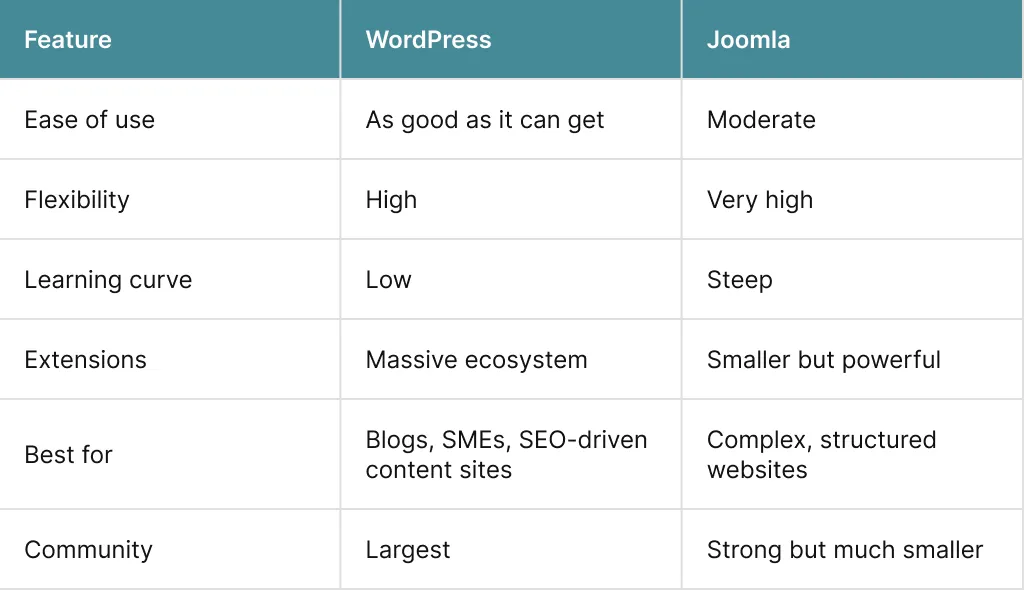
WordPress is usually better for beginners and fast launches. Joomla is often better for complex sites that need stronger structure and access control.
If that table already cleared things up, great.
If not, we got a lot more in store for you.
What Is WordPress?
WordPress is the world’s most popular content management system. It started as a blogging tool. It evolved into a full website platform.
Today, over 587 million websites are built on WordPress. That is because it is highly accessible.
- Anyone can publish.
- Anyone can update.
- Anyone can manage content.
What Is Joomla?
Joomla sits between WordPress and developer-heavy systems. Joomla is a framework-like CMS.
It assumes your site has:
- Multiple content types.
- Different user roles.
- More complex logic.
Joomla vs WordPress: Ease of Use
Ease decides adoption. This is where most people make their decision.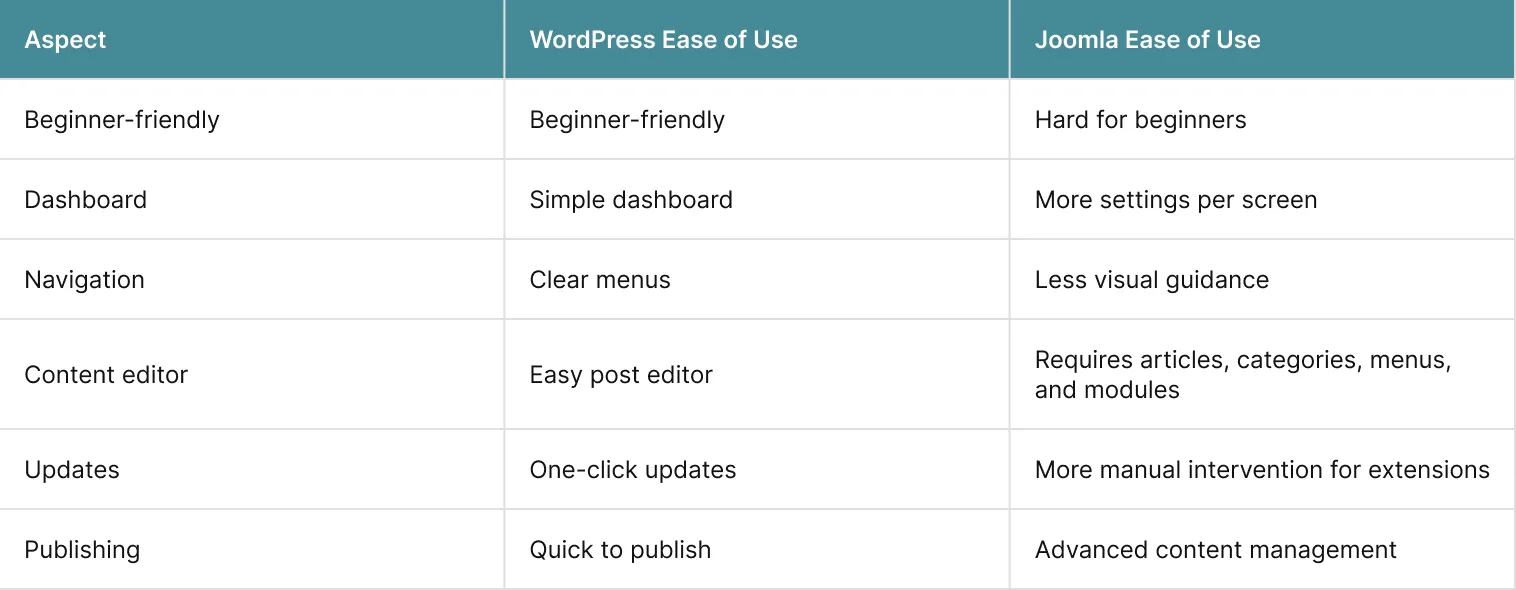
Most users feel comfortable within hours with WordPress. Joomla is easy once you get the hang of it. The learning curve is still steep, though.
Verdict: WordPress.
Joomla vs WordPress: Flexibility and Control
Ease of use is nice. But control is power. Both WordPress and Joomla offer good options for increased control and flexibility.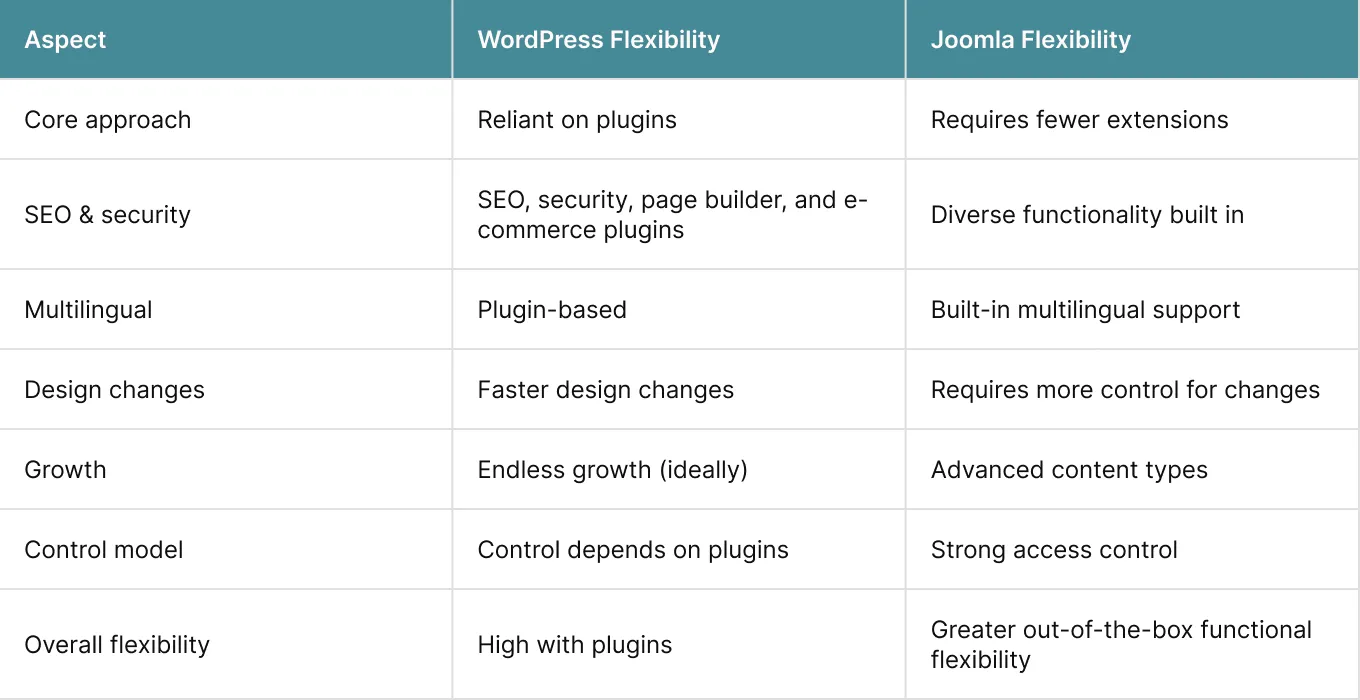
You can extend WordPress endlessly. But too many plugins can cause issues. Flexibility comes from add-ons, not the core.
For Joomla, you need fewer extensions. The core system does more work. This is where Joomla versus WordPress becomes interesting.
Verdict: Joomla.
Joomla vs WordPress: Themes and Design
On the internet, looks matter a lot. The better your website looks, the more traffic it will attract.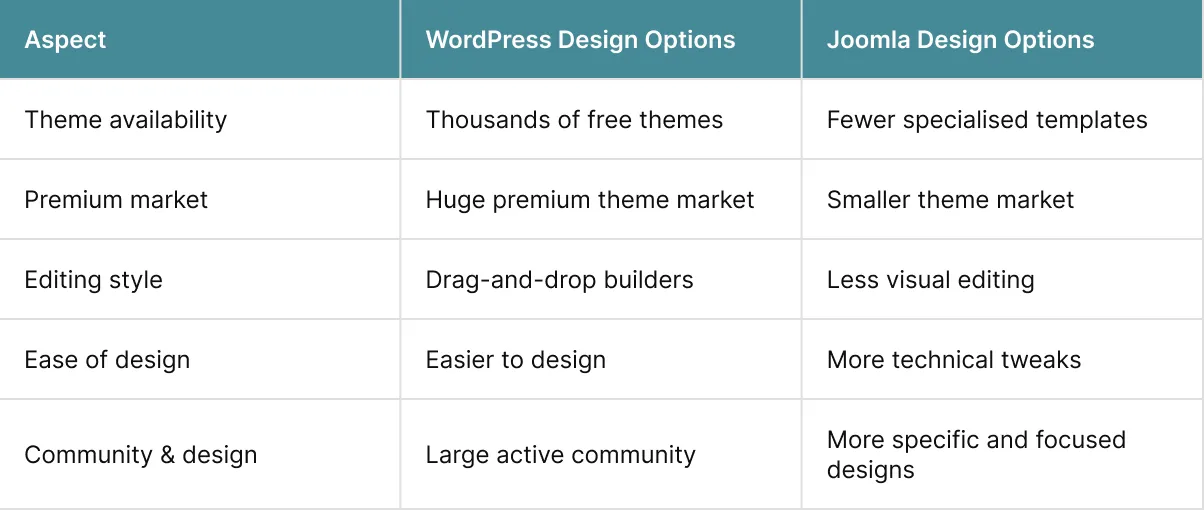
You can design without a designer. This makes WordPress ideal for fast launches. You can check out our guide for web design trends for 2026 to get your start today.
For Joomla, design freedom does exist, it just takes more effort and is limited.
Verdict: WordPress.
Joomla vs WordPress: Plugins and Extensions
Features and functions are what make a website.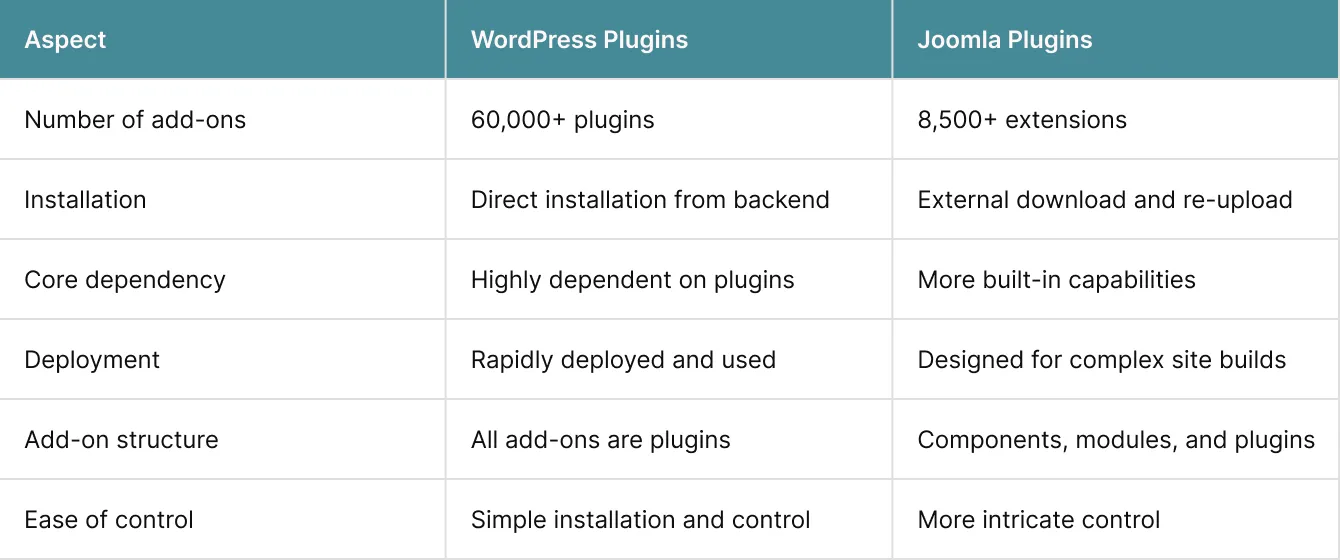
The WordPress plugin ecosystem is as good as it gets. The only drawback is that too many plugins can slow down the site. Joomla extensions are fewer but more robust. The variety of WordPress extensions is still too great for Joomla to beat.
Verdict: WordPress.
Joomla vs WordPress: SEO Capabilities
SEO is essential for any site to rank. Both WordPress and Joomla offer significant SEO capabilities.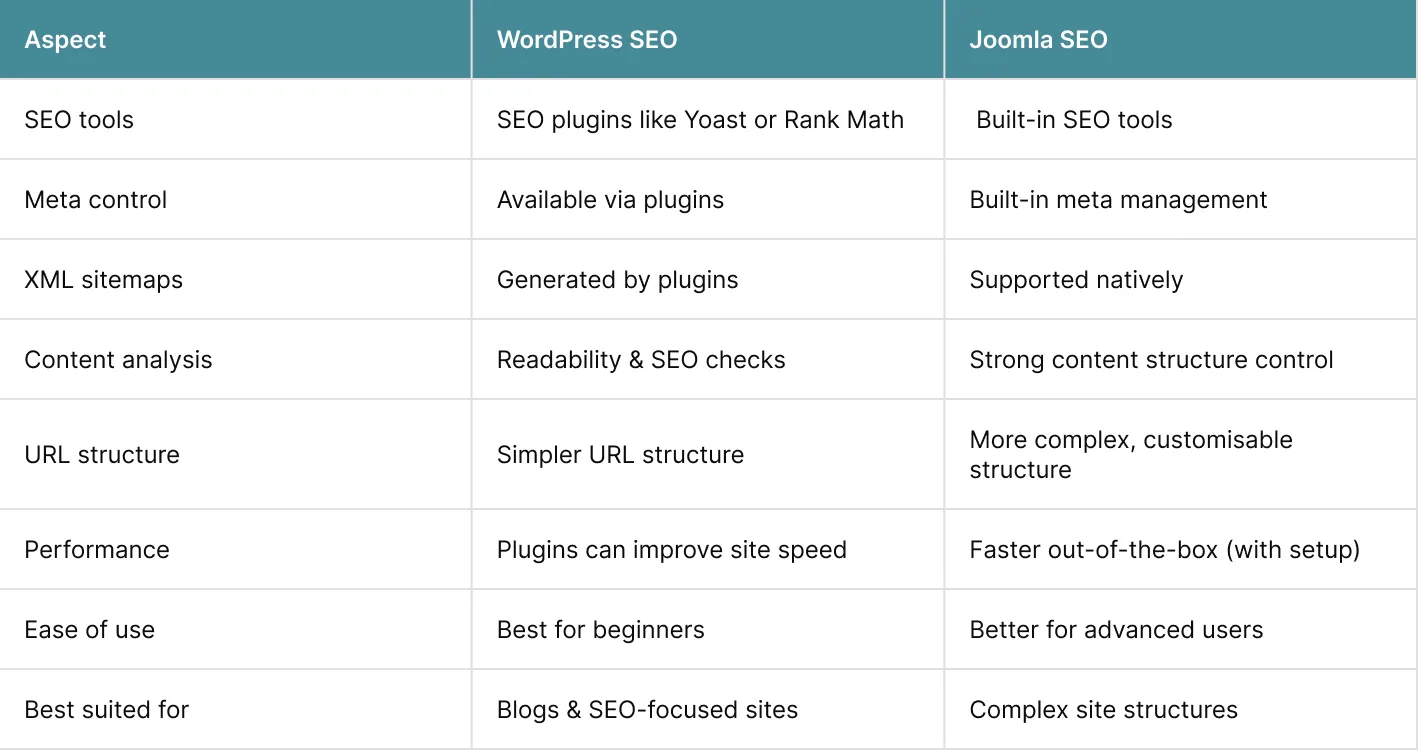
SEO for WordPress is beginner-proof. Joomla has fewer SEO extensions but has less guidance for beginners.
This is why WordPress vs Joomla often favours WordPress for marketers.
Verdict: WordPress.
Joomla vs WordPress: Security
Security is not optional. WordPress relies on its plugin ecosystem for security. Joomla has more built-in user-specific permissions, catering to more targeted attacks.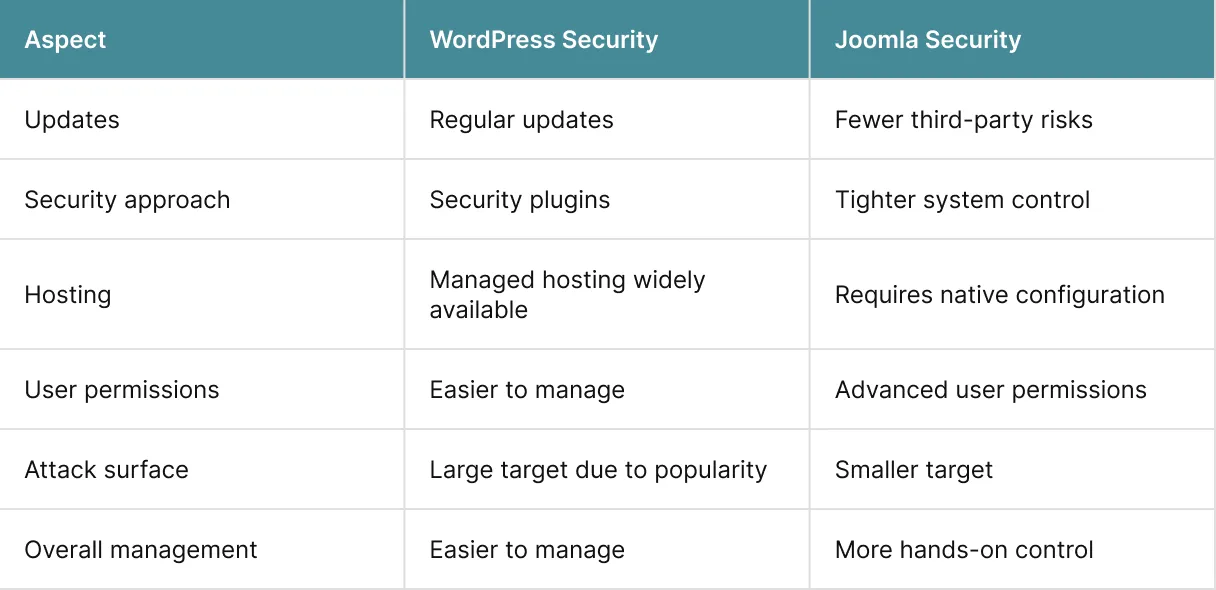
Joomla has strong core security. WordPress is secure when managed well. Although outdated plugins can cause issues.
Verdict: Joomla.
Joomla vs WordPress: Performance
Speed affects everything. Whether it is SEO, UI/UX or content publishing, speed makes all the difference.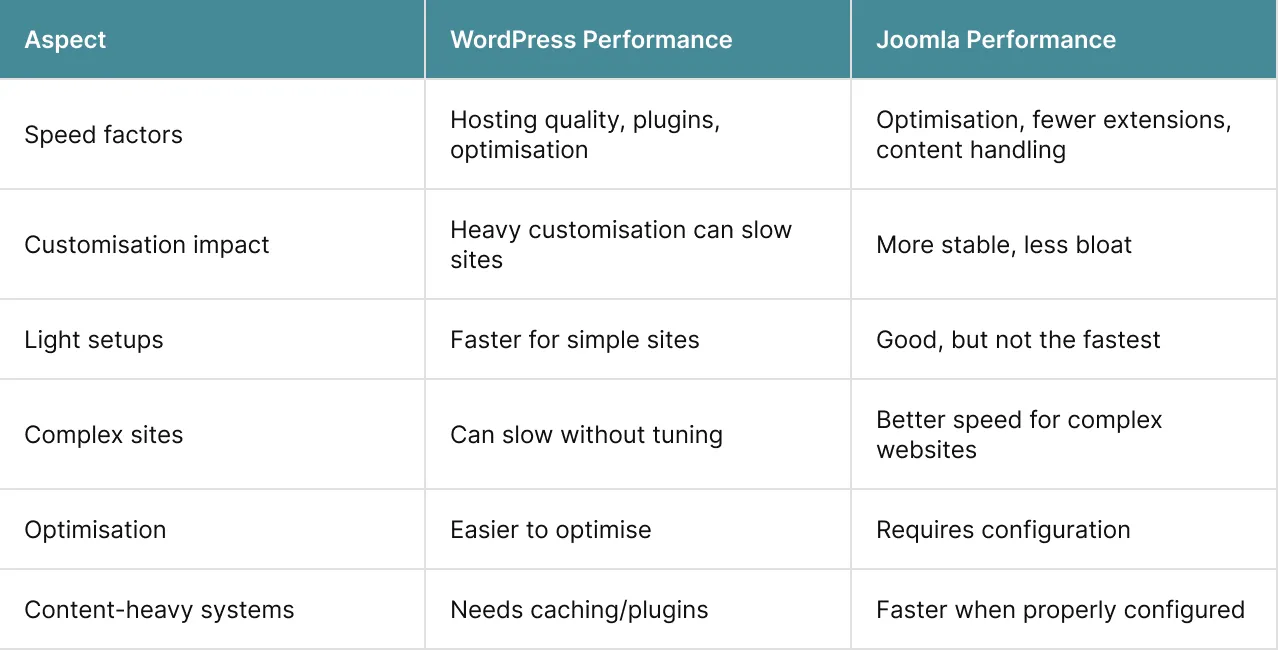
Speed and performance depend on optimisation. Due to more freedom, it is easier to optimise WordPress. However, for a larger content database, Joomla’s built-in system gives better performance.
Verdict: Tie. Depends on optimisation.
Joomla vs WordPress: E-Commerce
If you are looking to sell online, then priorities change. WordPress has been a cornerstone of e-commerce for a long time. It provides an easier setup and smoother transactions. For a complex system with multiple inventories, Joomla can be a better option.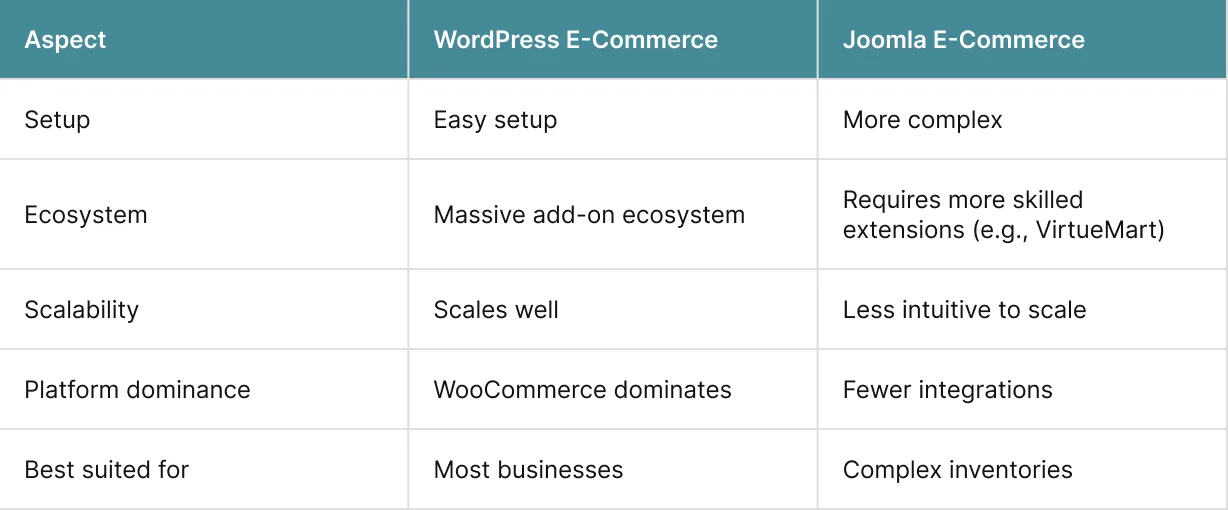
There is a reason why WordPress dominates e-commerce. The ease of setup is too good for most small businesses to ignore. Joomla offer more options but is better suited for complex, scaled-up businesses.
Verdict: WordPress.
Joomla vs WordPress: Community and Support
Help matters when things break. WordPress offers strong community support. Joomla is more suited for skilled users.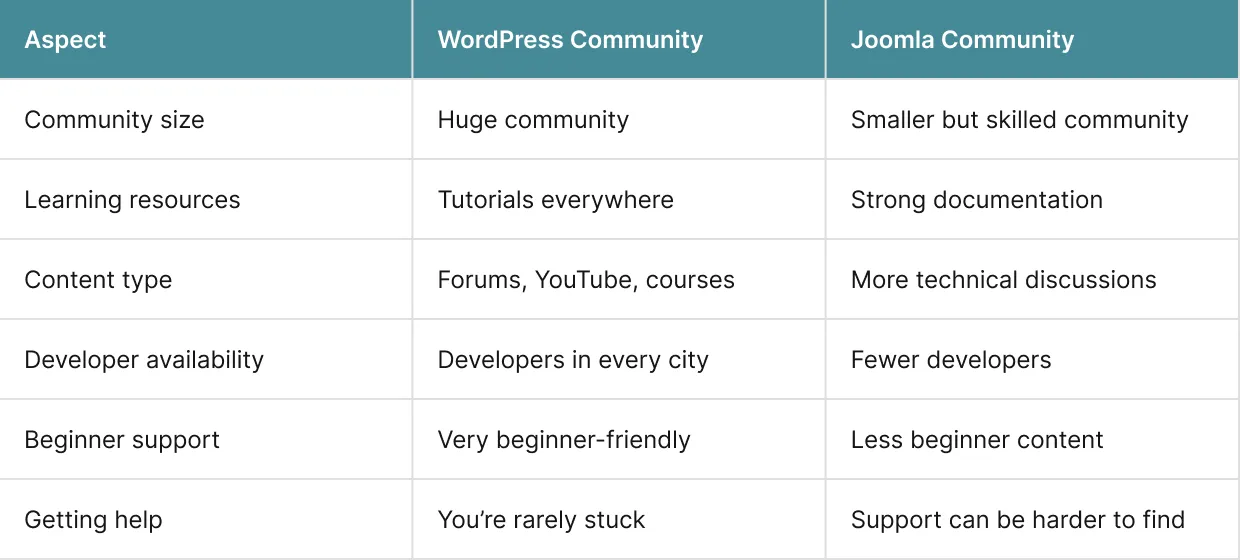
WordPress has a huge, helpful community that is great for beginners. Joomla is more suited for high-level users.
Verdict: WordPress.
WordPress Pros and Cons
As popular as WordPress is, it has its own merits and demerits.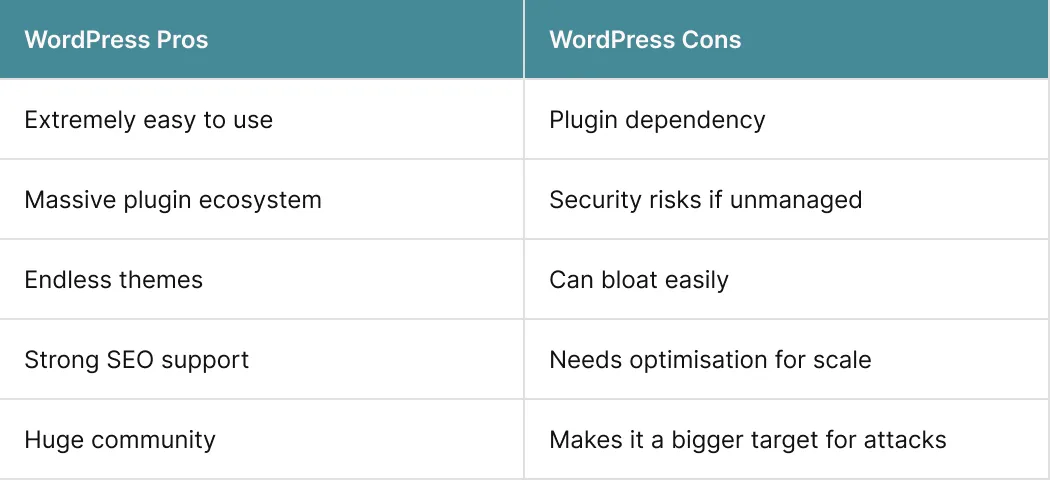
WordPress is powerful. But careless setups cause problems.
Joomla Pros and Cons
Joomla is a powerful, high-end CRM designed to produce complex multilingual websites. It comes with its own pros and cons.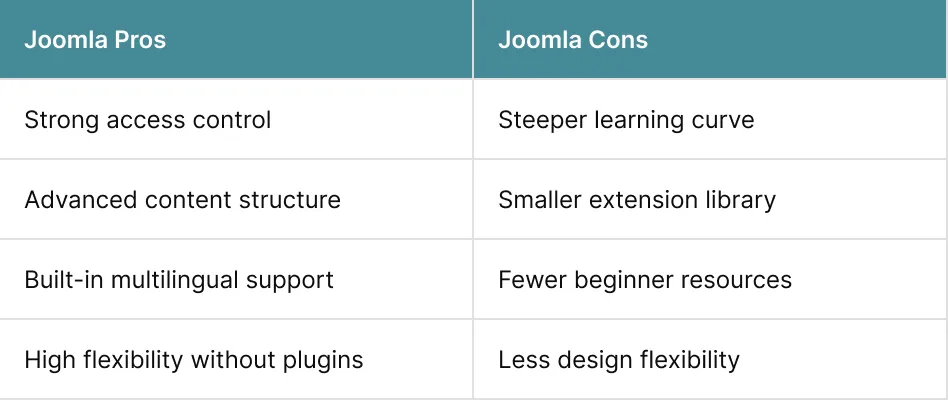
Joomla shines in complex builds.
It struggles with simplicity.
Joomla vs WordPress: Best Use Cases
Ultimately it’s the needs of users that decide which platform is best for them.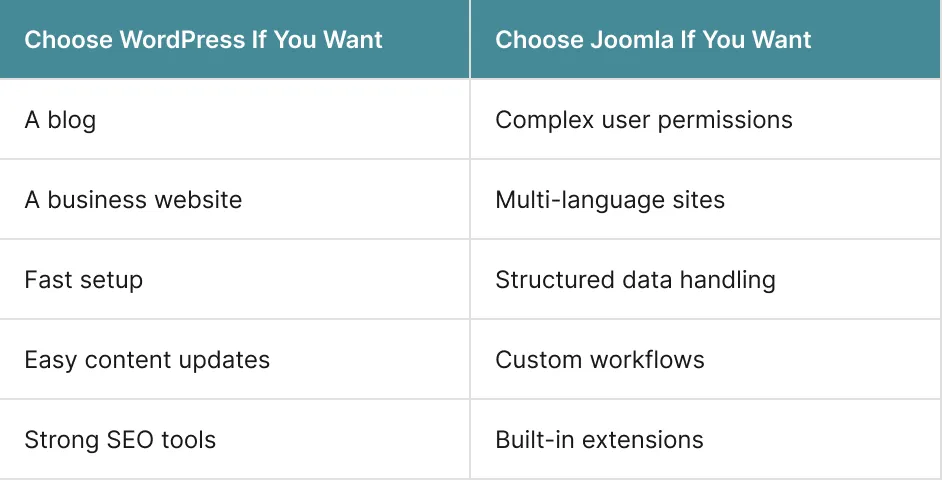
This is the heart of Joomla vs WordPress.
Conclusion:
There is no ‘better’ platform. There is a better fit for yuu though.
WordPress wins on:
- Ease.
- Speed.
- Ecosystem.
- Marketing friendliness.
- Control.
- Structure.
- Built-in power.
If you know exactly what you need, Joomla might be the smarter choice.
XoomPlus understands the importance of web development in the success of an online business. Your website is your online image. It must be optimised to fit your needs. Contact us to get the right website developed for you.
Still unsure which platform fits your goals? Planning a content-heavy site? Scaling a business website? Want SEO, speed, and flexibility without future rebuilds?
With our web development services, choose the platform that grows with you, not against you.
FAQs
Is Joomla Better Than WordPress?
Joomla is better for complex websites with advanced user roles and structured content.
WordPress is better for ease of use, speed, and content-driven sites.
Which Is Easier To Learn, Joomla Or WordPress?
WordPress is significantly easier to learn.
Joomla has a steeper learning curve and requires more planning.
Is WordPress More Secure Than Joomla?
Both are secure when maintained properly.
Joomla has stronger built-in access controls, while WordPress relies more on plugins.
Which Platform Is Better For SEO?
WordPress is better for SEO due to powerful plugins and beginner-friendly optimisation tools.
Joomla offers strong SEO control but less guidance.
Can Joomla Handle E-Commerce As Well As WordPress?
Joomla can handle e-commerce, but setup is more complex.
WordPress with WooCommerce is easier and more flexible for most stores.
Is Joomla Still Relevant Today?
Yes. Joomla is still widely used for enterprise and structured websites.
It is especially strong for multilingual and permission-heavy projects.
Should Beginners Use Joomla Or WordPress?
Beginners should choose WordPress.
Joomla is better suited for users with technical experience or complex requirements.