
- January 2, 2026
- Categories: Graphic Design Solutions
The Importance of Modern UI/UX in Modern Web Design
A website can look good but still struggle to bring in the right results. If that is the case with you as well, you need to read this blog. Often, readers find it hard to get the right information, move between pages or complete a simple task on a website. This makes them close the tab and leave the website. Research found that 88% of users don’t return to a website after a bad experience. This is what affects the results of your website. So, pretty visuals alone are not enough. Your website also needs to provide a smooth, useful experience to visitors. That is why modern UI/UX design is crucial for your website.
Although UI and UX are different, they work together to make a website that looks clear and feels easy to use. This makes visitors stay longer and engage with your brand. To achieve this, modern web design goes beyond just the layout. It also considers usability, accessibility, performance and visitors’ needs. As a result, modern UI/UX designs make websites user-friendly, support engagement and bring in the best results for your brand. Modern UI/UX designs also focus on a consistent experience across every device to build trust in your brand.
This guide explores the importance of UI/UX in modern web design. It also explains how better designs support the overall website performance.
Key Takeaways
- Modern UI/UX combines visual design with usability to create better website experiences.
- Clear UI/UX helps visitors navigate websites, understand content and complete actions more easily.
- Responsive and accessible design helps websites work for users across different devices and abilities.
- Good UI/UX can support engagement, conversions, website performance and brand trust.
- Modern web design should focus on both how a website looks and how effectively it works for its users.
What Is Modern UI/UX in Web Design?
Modern UI/UX blends the function and visuals of a website to give users a smooth experience and mobile-first browsing. To put it simply, UI refers to the visual elements visitors see and use on a website. This includes the layout, colours, typography, buttons, icons, menus and images. A good UI makes these elements clear, consistent and easy to grasp. UX, on the other hand, focuses on the overall experience of a website. It assesses whether a user can navigate between pages, find information and achieve their purpose with ease.‘Good design is actually a lot harder to notice than poor design, in part because good designs fit our needs so well that the design is invisible.’
Don Norman
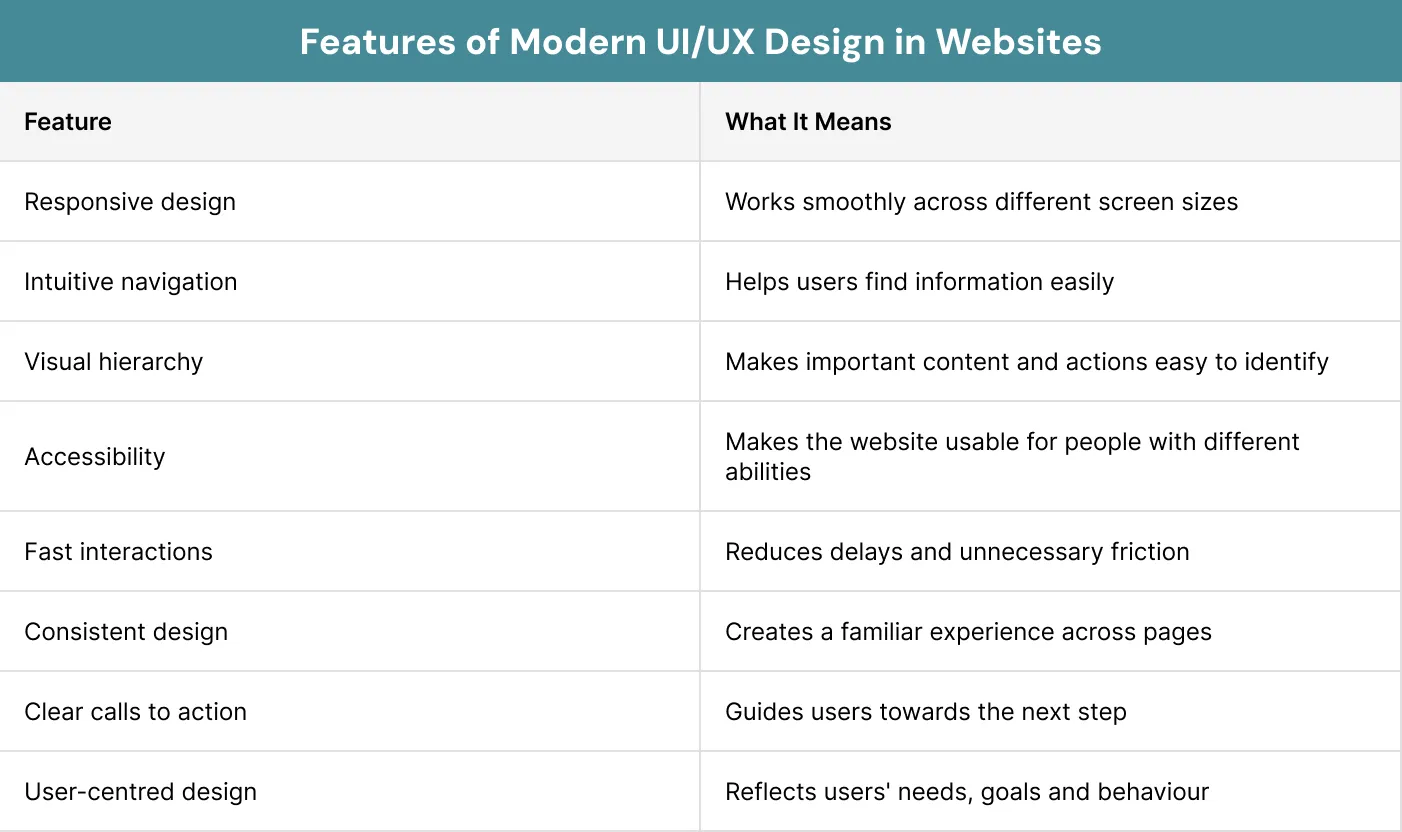
Modern web design brings UI and UX together to give a better web experience to users. They ensure this through a clear interface and a logical and simple user journey. What this means for you is to consider how your website looks and how people interact with it. The goal should be to create an experience where the visuals of a website support its usability rather than disrupt it. The table below shows the key features that define a modern UI/UX design in modern websites.
Why Is Modern UI/UX Important in Web Design?
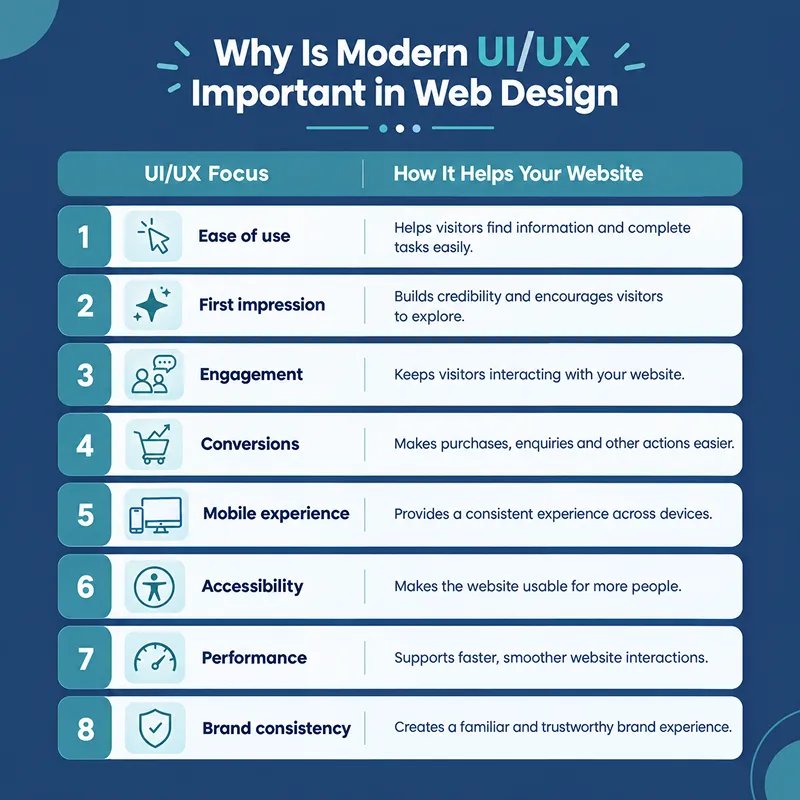
Modern UI/UX plays a crucial role in how users engage and interact with a website. So, why does that matter for your website? Imagine a website that offers unique services, useful products or valuable information but does not bring in the right results. Well, this happens because the site is difficult to use and navigate. This is what modern UI/UX fixes in websites. So, how does it do that? Modern UI/UX combines clear visuals and a simple user journey in a website’s design. This blend of aesthetics and usability helps visitors scroll, search and use a website with ease. As a result, visitors stay longer on a website and are more likely to complete an action.
There are many elements of modern UI/UX that improve a web experience. These elements range from usability and first impression to engagement, conversion and performance. Each element is assessed in detail to explain why modern UI/UX has become a vital part of modern web design.
1. Makes Websites Easier to Use
Modern UI/UX ensures a website is easy to use and navigate. This helps visitors find what they want, move between pages and complete tasks without confusion. This is done by creating clear navigation, readable content and a familiar layout. As a result, visitors find the menu easily, buttons clearly show what they do and the content has a clear hierarchy.
Let’s look at an example of this. Imagine a service website that clearly explains what it offers, states the prices and has a simple follow-up tab. If any of these steps were unclear, visitors might just leave without doing anything. Hence, modern UI/UX ensure users focus on why they came to a site rather than figuring out how the site works.
2. Creates a Strong First Impression
What many don’t know is that a website is often the first impression of a brand. A clear layout, visual quality and usability of a website are often the first things a visitor notices. This helps them form an opinion about a brand, good or bad. Hence, modern UI/UX focuses on these aspects more than before. It ensures a website looks and feels trustworthy at first glance. As a result, visitors feel they can trust the brand and explore the website more.
In contrast, a poor interface with cluttered layouts, outdated visuals or confusing elements can have an adverse effect. It not only makes visitors leave the website, but also makes them question the brand. However, this does not mean a website needs complex animation or elaborate effects to stand out. Instead, a clear design, consistent visuals and a structured layout can create a strong first impression.
3. Improves Engagement and Retention
Modern UI/UX make visitors spend more time on a website. So, how does it do this? Well, modern UI/UX ensures the content on the site is easy to follow, and the interface feels natural. This ease makes visitors more likely to explore and read other pages, and interact with other features of the site as well.
Modern UI/UX create a clear flow between different parts of the site to keep visitors engaged. Such flow is created through structured content, relevant links and visual elements. As a result, visitors are more likely to explore the website in-depth. Similarly, a smooth web experience supports retention as well. If visitors find a website useful and easy to interact with, they are more likely to return to it again. This builds a long-term bond between a brand and visitors
4. Increases Conversions
A key rule for a strong web design is to make it easy for visitors to take actions that matter to your brand. Modern UI/UX make it easy for visitors to make a purchase, book an appointment, request a quote or submit an enquiry. So how does a good UI/UX support these actions?
Modern UI/UX make a clear path for visitors towards these actions. It often includes a visible CTA, simple forms, clear product information and a smooth checkout process. Let’s look at another example. If you run an online store, you should make it easy for your customers to move from a product page to checkout. If you run a services website, make it clear how visitors can contact you or request a quote. When such actions are clear and easy to complete, visitors are less likely to abandon the process. This can reduce friction and support higher conversion rates.
5. Supports a Mobile-Friendly Experience
Nearly 58% to 64% of all website traffic comes from mobile devices. This means you must provide the same website experience on small screens as on desktops. Modern UI/UX addresses this shift in user needs. The question is, how? Well, it uses responsive design to adapt the website to different screen sizes. This makes the text readable, buttons easy to tap and menus work smoothly on every screen.
This helps modern UI/UX create mobile-friendly websites. As a result, it avoids problems like horizontal scrolling, crowded layouts and elements that are hard to interact with. So, by designing for different screen sizes, you ensure your website offers the same experience to visitors across all devices.
6. Makes Websites More Accessible
A key element of modern UI/UX is accessibility for all. What this means is that a website is usable for as many people as possible. Even visitors with different abilities. It helps remove barriers that prevent people from engaging with a website. The question here is: how can you make your website more inclusive?
You can opt for a simple UI/UX with clear text, suitable colour contrast, descriptive labels, voice assistance and keyboard-friendly controls. Also, website images should have alternative text. All these aspects help you design a more inclusive website. As a result, more visitors are able to interact with your website.
Pro Tip
Make your website more accessible to people using small screens, slow internet connections, temporary impairments and different input methods to support growth.
7. Supports Better Website Performance and SEO
A website should ensure that its visual design does not come at the expense of its performance. Why is that a problem? To make their websites look good, many brands end up using large images, excessive animations and unnecessary scripts. While it does make a website look good, it also makes it slower and less responsive. This greatly affects the performance of a website. Modern UI/UX offers a solution for this. Optimised images, efficient code and carefully selected visual effects make a website look good and perform better at the same time. All these make a website offer a smoother and faster experience.
Also, modern UI/UX and SEO improve a website’s performance. Many brands overlook the link between website performance and SEO and Google’s E-E-A-T signals. This improves the loading performance, responsiveness and visual stability of a website. They become positive signals for SEO. This can lead to better ranking and visibility. Hence, modern websites should balance visual appeal with speed and technical efficiency.
Did You Know?
Google considers an LCP (Largest Contentful Paint) of 2.5 seconds or less a good loading-performance target. Faster experiences can help users access important content sooner.
8. Strengthens Brand Consistency and Trust
A consistent website gives visitors a clear sense of the brand. This helps them memorise a brand’s identity and build trust in it. This is greatly emphasised in modern UI/UX design. To achieve this, modern UI/UX ensure a common design pattern across different pages on a website. Such patterns include colours, typography, buttons, icons and spacing.
This consistency makes the website feel more organised and predictable. This helps reinforce a brand’s identity. Over time, this consistency helps strengthen the trust visitors place in your brand.
Case Study: How Takedown Sportswear Used Modern UI/UX for Growth
The case of Takedown Sportswear clearly shows the importance of modern UI/UX. The large e-commerce store had more than 2,000 products, but had a weak interface and functionality. This made it hard for its customers to find the products they wanted. As a result, the brand faced major losses of potential sales.
Once the problem was spotted, the brand redesigned its website to improve the overall experience. The redesign project included UX design, conversion rate optimisation and visual design. The focus was on making the shopping journey smooth and easy for customers. After the redesign of its website, the brand saw a visible jump in its sales and conversion. The brand reported a 50% increase in conversion rate, a 38% hike in add-to-cart rate and an 82% jump in total sales.
This clearly shows the impact of an effective UI/UX design. Modern web designs are not just about a website that looks good and new. Rather, it should help customers easily find products, engage with the website and complete a purchase. Hence, modern UI/UX improve the user’s journey while supporting the brand’s goals.
Conclusion
Modern UI/UX is crucial because modern websites are no longer judged by just how they look. Visitors now expect websites to be smooth, fast, responsive and easy to use across different devices. Modern UI/UX ensure visitors get the web experience they expect.
Modern UI creates a clear and consistent interface, while UX ensures that visitors’ journey is simple and smooth. These two elements help brands create better experiences, keep visitors engaged and make it easier for them to take action. That is why you need to pay attention to your website’s UI/UX even more.
Design experts know that UI/UX is more than just a design choice for modern websites. It is a key element in creating a website that works well for both its users and the brand.
Do you want to make your first impression the best?
Contact us to invest in UI UX design that aligns with your users’ journey and search engine expectations.
FAQs
UI refers to the visual and interactive elements of a website, such as layouts, buttons, menus, colours and typography. UX focuses on the overall experience, including how easily visitors can navigate the website and complete their goals. Together, UI and UX help create a website that is clear, functional and easy to use.
UI/UX is important because visitors expect websites to be easy to use, responsive and visually clear. Good UI/UX can improve usability, engagement and conversions while creating a more professional experience for visitors.
UI focuses mainly on how a website looks and how users interact with its interface. UX focuses on the wider experience and how easily users can complete tasks and achieve their goals. Although they have different roles, UI and UX work together in effective web design.
Common features include responsive design, intuitive navigation, visual hierarchy, accessibility, fast interactions, consistent design, clear calls to action and user-centred design.
Good UI/UX can make important actions easier to complete. Clear calls to action, simple forms, useful information and straightforward checkout processes can reduce unnecessary friction and help visitors move towards a purchase, enquiry or booking.
Yes, it does. UI/UX can support SEO by contributing to a better page experience. Website performance, mobile usability and other technical factors can affect how users interact with a site. A well-designed website should therefore consider both user experience and search performance.
Mobile UI/UX ensures that a website remains easy to use on smaller screens. Responsive layouts, readable text, accessible menus and easy-to-tap buttons help provide a consistent experience across smartphones, tablets and desktop devices.
Accessible design removes barriers that can make websites difficult to use for people with different abilities. Clear text, suitable colour contrast, descriptive labels, logical headings and keyboard-friendly controls can make a website easier for a wider range of users.