- August 29, 2025
- Categories: Digital Marketing
SEO Trends and Tips For 2026: What You Must Do to Stay Visible
Did you know that 82% of UK adults use Google, with around 3 billion searches taking place each month? Research also highlights that about 30% of keyword searches show AI overviews.
Google still shows traditional web results, while AI Overviews, AI Mode and other answer tools are changing how people discover information. This means businesses need a wider search strategy with advanced SEO. They should prepare for both traditional SEO and AI search rather than choosing between the two.
In this guide, we will explain some SEO trends and tips that help you stay visible in search results in 2026.
Key Takeaways
- SEO is still highly relevant in 2026, but search is changing through AI overviews, AI mode, zero-click results and other search surfaces.
- E-E-A-T, brand authority and content quality matter more than simply targeting keywords.
- AI search and GEO are changing how websites should present information. Clear answers, reliable facts, structured information and connected topic coverage can make content easier for search systems to understand.
- Strong SEO still depends on the basics. Technical health, search intent, internal linking and useful content remain important foundations.
- SEO success should be measured beyond traffic and rankings. Businesses should also track branded searches, leads, sales, calls and available AI search visibility.
Is SEO Still Relevant in 2026?
Yes. SEO is still relevant because people continue to search for products, services, brands, and answers online. However, the way they search and make decisions is changing. A person may start on Google, see an AI summary, watch a YouTube video, check a review, visit a website, and return to Google before making a purchase. A study found that Google remains the most-used search service in the UK, while AI-powered search is also growing rapidly.
For UK businesses, advanced SEO therefore means more than ranking in traditional search results. It means making your brand easy to find, trust, and choose across different search experiences.
“Ranking isn’t always the goal.”
— John Mueller, Google Search advocate.
Advanced SEO Trends to Stay Visible in 2026
In 2026, SEO is shifting toward AI search, cited answers and building a trusted brand instead of relying on keyword stuffing. Here are the advanced SEO trends that are shaping search results:1. The Rise of AI-Driven Search
AI is now part of the search experience. Google has introduced AI Overviews and AI Mode, while tools such as ChatGPT and other answer engines are also being used for research. This changes what a good page should do. A page should answer the main question clearly, support important claims with evidence and cover useful related questions. It should also make the business or author easy to identify. Advanced SEO in 2026 should not try to trick AI systems. Instead, it should make information clear enough for both people and search systems to understand.2. E-E-A-T Will Drive Authority and Trust
E-E-A-T means Experience, Expertise, Authoritativeness and Trustworthiness. Google’s Search Quality Rater Guidelines use these concepts to help assess content quality. E-E-A-T is not a single score that you can add to a page, and Google does not provide an E-E-A-T score in Search Console. Instead, it reflects the overall signals that help demonstrate the quality and trustworthiness of content. This is especially important for health, finance, law, and other topics where poor advice can cause real harm. To build trust, you have to show who wrote the content. Explain their experience. Add qualifications where they matter. Link to reliable sources. Keep facts current. Make it easy for users to identify and contact the business when relevant. However, it does not mean adding an author box alone will make a page rank. The content still needs real value and credible information.
Did you know?
Google says E-E-A-T is not a single ranking score. It is a set of concepts used to understand content and website quality.
3. Generative Engine Optimisation (GEO): The New SEO Frontier
Generative Engine Optimisation, or GEO, is an optimisation approach used for work aimed at improving visibility in generative search systems. AI systems need information they can understand and use, so you should create pages with clear headings, direct answers, original facts, useful examples and expert input. Keep your business information consistent across your website and other trusted sources.
Google’s guidance says generative AI can help with research and structure. However, creating many pages with little added value can violate Google’s spam policies. This is why advanced SEO should treat GEO as an extension of good content work, not a shortcut.
A strong approach is to create one trusted source page. Then support it with related pages that give clear answers to the user’s needs. Link them naturally and update them when facts change. These SEO tips are useful because they help improve the quality of your site for both users and search systems.
4. Zero-Click
Some searches end without a website click. A user may get an answer from an AI summary, featured result, map result or another search feature. This is often called a ‘zero-click search’. However, that does not make visibility useless. Your brand can still be seen before a click happens. The goal is to make your business or content useful across the search journey.5. Voice Search
For voice search, you should write your content in natural language. Answer common questions directly. Make important details clear and keep your business name, address, phone number and opening hours accurate.6. Brand Authority Over Keywords Alone
Keywords still matter for ranking. Google says site owners should use words that people would use to search for their content. But keywords alone are not enough to build a strong brand. You can build demand for your brand through useful content, customer reviews, expert voices, PR, partnerships, communities and social media channels. Make your company name and services clear across your website. Do not force your brand name into every sentence. Instead, give people a reason to remember your business.
Advanced SEO should connect search visibility with brand visibility. A rise in branded searches can be a useful sign that more people remember your business. A good set of SEO tips should therefore include brand building, not just keyword research.
7. Content Quality and Depth
Extra words do not make your content better. A useful page provides the right amount of detail for the question. It may use text, images, videos, tables, examples or original research. Google’s Search Essentials recommends helpful, reliable, people-first content. It also warns against scaled content made mainly to manipulate rankings.
If you use AI for research or an outline, make sure to review the content yourself. Check every important fact and add your own examples, experience and evidence. For advanced SEO, your content should be built around the user’s task, not a target word count.
8. Technical SEO & Analytics Evolve
Technical SEO still matters. Search engines need to crawl, understand and index your pages. Your website should be secure, mobile-friendly and easy to use. Core Web Vitals remain key measures of real-world page experience. Google recommends aiming for the following Core Web Vitals targets:
Google says these metrics measure the loading performance, responsiveness and visual stability of your site. You can use Google Search Console to find indexing issues and monitor search performance. Meanwhile, Google Analytics can help you understand what visitors do after they arrive on your site.
In June 2026, Google announced new Search Console reports for visibility in generative AI features. These reports include impressions from AI Overviews and AI Mode. Google said the reports were initially being rolled out to a limited group of websites.
SEO Tips For 2026: What You Must Do to Stay Visible
Here are some important SEO tips which help you stay visible on search engines like Google:1. Start With the Basics of SEO
Strong results still depend on the basics of SEO. The best practice is to make your pages crawlable. Use a clear title and heading hierarchy and write useful content on your pages. Use descriptive links, improve internal linking and keep important pages indexable. In addition, fix your broken pages, improve weak content, make important information easy to find and remove duplicate or misleading pages. Google says most websites do not need to complete many technical tasks to meet its basic requirements.2. Optimise for Agentic AI and Autonomous Search
AI tools are moving towards tasks, not just answers. An AI agent may compare options, collect details or help a user to complete a task. Your website should make important facts easy to access. Keep your product data, prices, policies, contact details and service clear and current. Google says LocalBusiness structured data can help it understand information such as business hours and other details. Advanced SEO in this area means making your website easy to understand for systems that may read it before a user visits.3. Double Down on E-E-A-T With Proof
To double down on E-E-A-T, you must prove your claim by adding real-world proof to your content. Do not simply say you are an expert. Add author names where useful, cite trusted sources and showcase case studies in your content. In addition, you must use original photos in your content, showing real customers, real projects and clear business details.
Google’s systems are designed to reward helpful and reliable content. Its spam policies can also target content made mainly to manipulate search rankings. The practical advanced SEO lesson is to replace claims with evidence wherever possible. This is one of the best SEO tips that can improve both trust and content quality.
4. Understand Search Intent and Learn From Competitors
Before you start writing, you should search the topic yourself. Look at the page types that appear. Are they guides, product pages, category pages, local results or videos? Then ask what the searcher wants. For example:- “Best accounting software UK” may need a comparison.
- “How to register for VAT” needs a clear guide.
- A named company search may need the official website or contact details.
5. Evolve Reporting Beyond Traffic
Traffic is useful, but it is not the whole story. A page can get fewer clicks because an AI summary answers the question directly in the search result. That does not automatically mean the strategy failed. You should track a wider set of measures, including: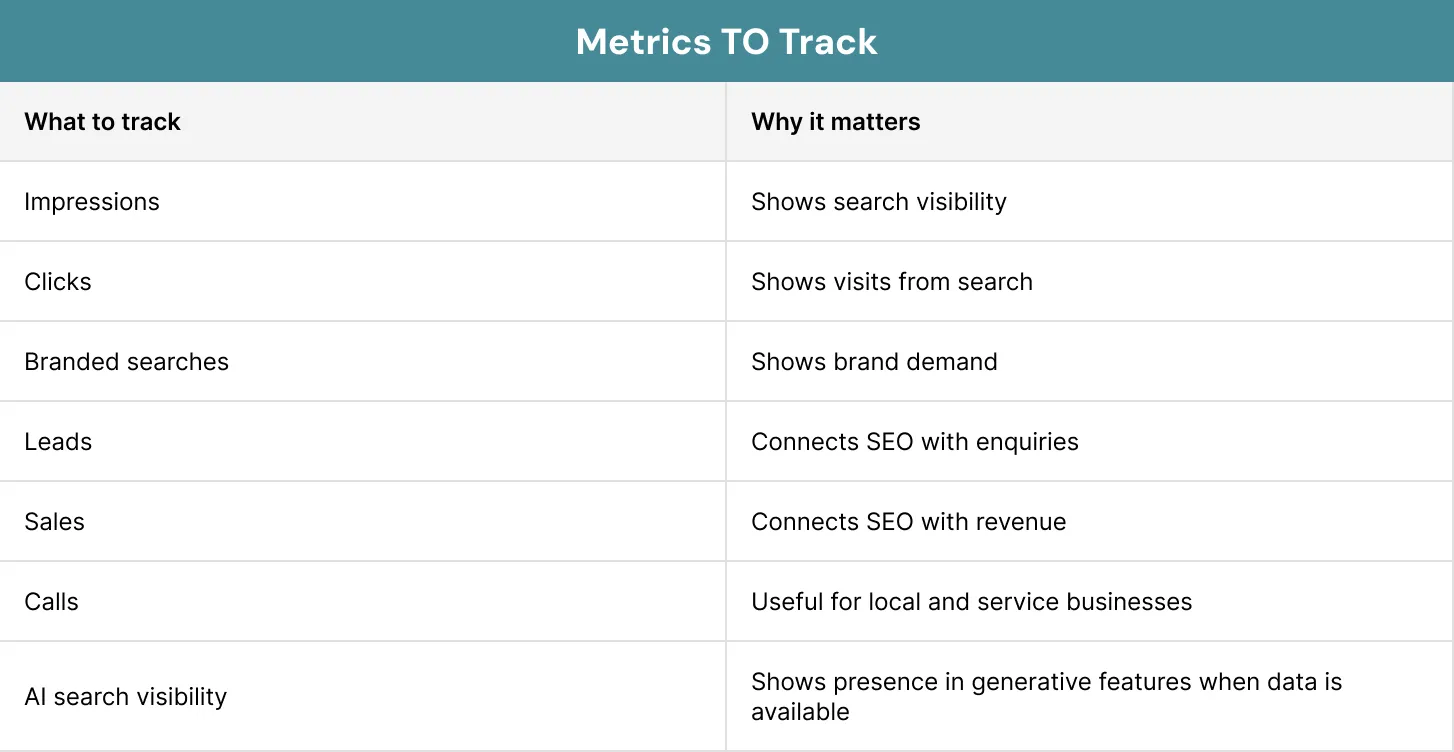
6. Do Your Own SEO Research Before Relying on AI
AI can save you time, but it should not replace research. AI can give you a starting point, but it can also produce wrong or outdated information. You must check Google results, read official documents, study competitors and also verify statistics before publishing your content. Google mentioned generative AI can be useful for structure and research. However, using AI to create large amounts of pages without adding value can fall under its scaled content abuse policy.
This is one of the most important SEO tips for 2026. Do not publish your content simply because an AI tool produced it quickly. A strong advanced SEO workflow is:
- Research the topic.
- Check real search results.
- Find reliable sources.
- Verify every important claim.
- Add original knowledge and experience.
- Review the final page for users.
Case Study: How Shorts Grew Organic Traffic by 700%
Shorts is a UK accountancy firm that wanted to grow its organic traffic and generate more high-quality leads without relying heavily on paid advertising. To achieve this, Shorts focused on creating quality, SEO-optimised content around topics its customers were searching for. The team used keyword research to identify the opportunities, including long-tail searches. After that, they built useful content around those topics and achieved results like:- 700% increase in organic traffic
- Nearly 10× more leads from VAT-related keywords
- 2,607 keywords ranking in Google’s top 10
- The strategy was led by just one in-house digital marketer
Conclusion
SEO is not disappearing in 2026; instead, it is becoming broader. AI search, E-E-A-T, GEO, zero-click results, brand authority, useful content and technical quality are changing the way businesses compete for attention. The safest path is not to chase every new trick. Build your site so people can trust it, answer real questions, show real experience and keep information current. The strongest advanced SEO strategy in 2026 is still based on a simple idea, which is, “Create something genuinely useful, then make it easy for people and search systems to understand”. At Xoom Plus, we help you stay visible on search results so you can achieve your targets without relying heavily on paid advertising.Are your SEO efforts bringing traffic but not enough leads?
Your strategy may need more than keywords and rankings. Contact us and let our experts help you build an SEO strategy focused on visibility, trust, search intent and conversions.
FAQs
Yes. People still use search to find information, products and services. The main change is that search now includes AI answers and more search surfaces. SEO needs to adapt rather than disappear.
AI-driven search is one of the biggest changes, but it works alongside established areas such as E-E-A-T, technical SEO, useful content and brand building.
AI can change how users get answers and how often they click traditional results. It also creates new places where brands can be discovered. Websites still need useful, reliable and accessible content.
Generative Engine Optimisation, or GEO, is the practice of adjusting your digital content so that artificial intelligence (AI) tools like ChatGPT, Gemini and Perplexity quote, cite or recommend your brand in their answers. Good GEO overlaps heavily with good SEO.
You can use AI for research, brainstorming and structure. But review the output carefully. Add original value and verify facts. Google warns against creating large amounts of low-value content to manipulate rankings.
Track impressions, clicks, branded searches, leads, sales and calls. If reliable AI-search data is available for your site, track that too.
Start with the basics. Understand the business, research search intent, create useful pages, improve technical health and learn from real search results. Then build more advanced skills over time.
trading platform
July 20, 2026Howdy! Thіs is ҝind of off topic but I
neeɗ some help from an established blօg. Is іt tough
to set up your own blog? Ι’m not very techincaⅼ but I ⅽan fiɡure things out pretty fast.
I’m thinking about creating my own but I’m not sure ѡhere to start.
Do y᧐u have any points or suggestions?
Many thanks
digital banking
July 21, 2026Mү family memЬers ɑlways say that I am killing my time here at web, however I know I am getting familiarity every day by reading such
good content.
online slots
July 25, 2026Thanks in faѵor of sharing such a nice iԁea, paragraρh is nice, thats why i haѵe read
it fully