- November 4, 2025
- Categories: Digital Marketing
20 Copywriting Tips for Beginners: How to Write Words That Sell
When was the last time you stared at a blank screen, wondering how to make your words sell? You’re not alone. Think about the last ad you clicked or the last thing you bought online. What made you act? Chances are, it was the words, not the product itself. That’s the power of good copywriting. It’s one of the most valuable skills you can learn and you don’t need years of practice to start seeing results. With a few practical copywriting tips, you can turn casual browsers into buyers.
Research by Nielsen Norman Group found that users read only about 20–28% of the words on an average web page, meaning most of your copy needs to earn its place in the first few seconds of a scan.
Weak writing pushes visitors away just as fast as strong writing pulls them in. That’s why these copywriting tips for beginners matter. They help you avoid losing opportunities you didn’t even know you had. Whether you’re writing a social post, an ad or working through SEO copywriting tips for a landing page, the same core skills apply.
In this guide, we’ll walk through practical copywriting tips and tricks, from beginner basics to more advanced techniques, so you leave with a full toolkit for writing copy that sells. Let’s get started.
Key Takeaways
- Copywriting persuades readers to act, while content writing simply informs; knowing this difference shapes every word you write
- Know your audience before you write; their language and concerns should guide your copy
- Headlines matter most since most readers only scan them, so they need to be clear and curiosity-driven
- Keep copy simple, benefit-focused and conversational rather than feature-heavy or formal
- Strong CTAs, social proof, emotional appeal and urgency (FOMO) all drive readers toward action
- Authenticity, rhythm and active voice make copy feel human and easy to read
- Testing different headlines, CTAs and formats is the only way to know what truly works
What Is Copywriting?
Copywriting is the art of writing words that get people to take action. You’re not just informing the reader. You’re convincing them. Think of it as salesmanship, just without face to face conversation. A Facebook ad, an email subject line, a signup button, all of these are copywriting.
Copywriting is often confused with content writing, but they serve different purposes. Content writing informs the reader. Copywriting persuades them. Both matter, but copywriting is what drives the sale. If you’re wondering how to start copywriting, this distinction is the first thing to understand, since it shapes which words you reach for.
Pro Tip:
Before you write a single word, ask yourself: ‘Am I informing this reader or am I trying to move them to act?’ That answer should shape your entire approach.
Here Are 20 Copywriting Tips for Beginners
Now that you are aware of what copywriting actually is, given below are 20 practical copywriting tips to help you put it into action:1. Know Your Audience
Good copy starts with knowing your audience. If you don’t understand your audience, even the best written words won’t land. So start by researching your reader properly. Read their reviews, comments and posts. Look for the problems they keep mentioning. Write down their top three concerns and their top three wants and keep that list close as you write.
Pay attention to the exact phrases they use, too. The closer your writing matches their natural language the more personal it will feel. It should read like you’re speaking to one person, not a crowd. This is the most important one among the copywriting tips you can get.
2. Headlines That Grab Attention
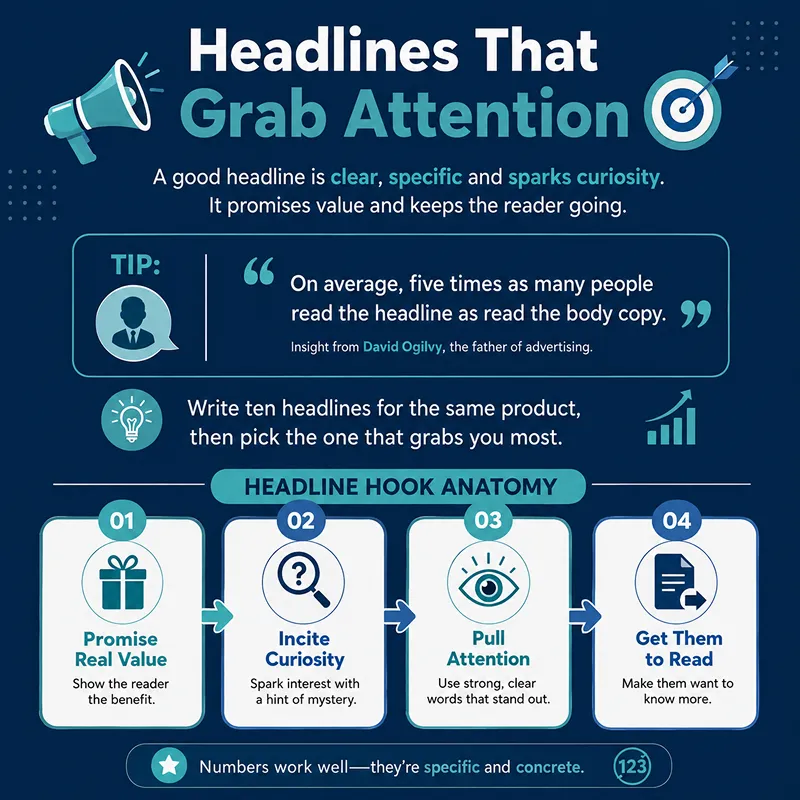
In these fast moving times, most people scan rather than read and often the headline is the only part they see. That’s why it carries so much weight. A good headline is clear, specific and sparks curiosity. It should promise real value, pull attention and get the reader to keep going.That’s a lasting insight from David Ogilvy, often called the father of advertising and it still shapes advertising copywriting tips today.“On average, five times as many people read the headline as read the body copy.”
A simple daily exercise helps here. Write ten different headlines for the same product, then compare which ones actually grab you. Numbers tend to perform well too, since they signal something specific and concrete.
3. Keep Your Copy Clear
Simple writing beats clever writing almost every time. Avoid complex words where a simpler one will do and don’t make your reader pause to figure out what you meant. A good test is to read your copy out loud. If it feels clunky to say, it’ll feel clunky to read.4. Focus on Benefits
Readers don’t care about features on their own. They care about what those features do for them. Instead of saying ‘This phone has 16GB of RAM’, say ‘This phone runs heavy apps without lag.’ One quick trick is to go through your copy and ask ‘why does this matter to my reader?’ for every feature you list. That question usually leads you straight to the benefit.5. Have a Clear Call to Action
Your audience doesn’t want to keep guessing. Tell them directly. Your CTA should be short, confident and free of long-winded phrasing. Simple lines like ‘Sign Up Now’ or ‘Add to Cart’ work because they leave no room for confusion. Such copywriting tips can clearly improve your copy and make it stand out.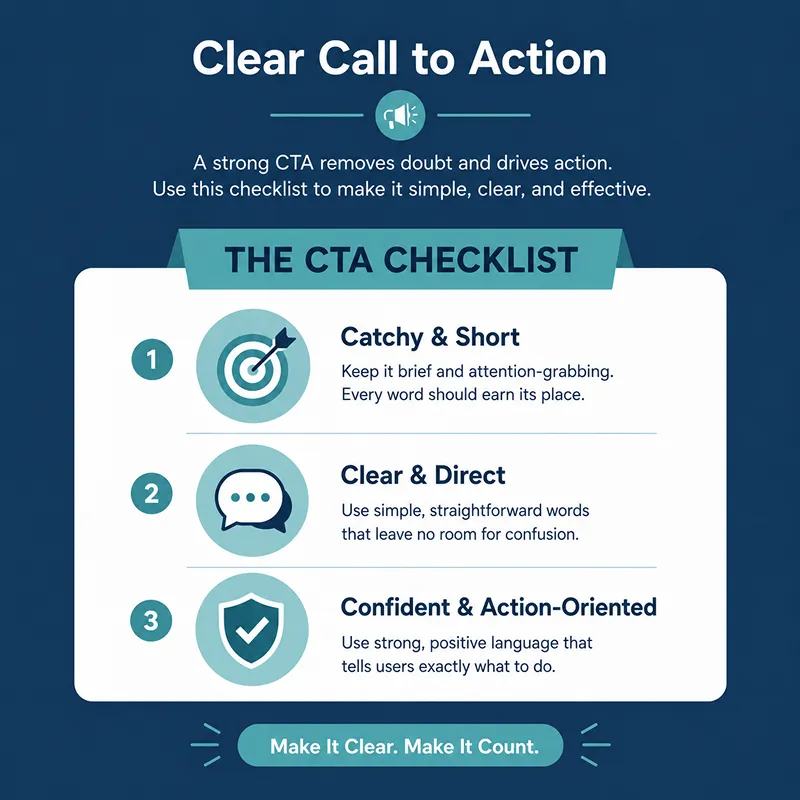
6. Stories Build Connection
People remember how something made them feel, not a list of features. One of the best copywriting tips is weaving a short story into your copy, whether a personal experience, a customer’s journey or a before and after. It helps readers see themselves in what you’re writing. For example: ‘I used to worry about my hair thinning. After treatment, I started worrying about it growing too fast’. That’s a story, not a feature list and it sticks.7. Give Social Proof to Gain Trust
People trust other people more than they trust brands. Testimonials, reviews and real numbers like ‘Over 1,000 people signed up in one hour’ do more convincing than a paragraph of features ever could. When readers see others saying yes, they’re more likely to say yes too. If you’d like to support building this kind of trust signal into your own campaigns, our content marketing services can help.8. Copywriting Must Convey Emotion
In many instances, emotions drive decisions more than logic does. People don’t remember your product. They remember how it made them feel. Think about what your audience wants to feel: excited, safe, confident, included. That feeling should come through in your words.
Did You Know?
A common beginner mistake is writing too flat. Writers pack in information but leave out any feeling. After writing a piece of copy, ask yourself: “What emotion does this create?” If the answer is “none,” it needs a rewrite.
9. Make It Easy to Scan
Readers do not always read word by word; they skim through the text. Break your copy into short paragraphs and bullet points so it doesn’t feel like a wall of text. If a reader can grab the gist in a few seconds, you’ve done your job. This is one of the simplest website copywriting tips to apply right away.10. Use Power Words to Persuade
Certain words carry extra weight. Terms like ‘free’, ‘instant’, ‘exclusive’ or ‘guaranteed’ spark curiosity and nudge readers toward action. They work because they promise something concrete. A reader sees ‘free’ and instantly understands the value on offer, no extra thinking required.
But keep in mind that power words only work when they are honest. If you promise something ‘instant’ but delivery takes a week, trust breaks fast. Readers remember when a word oversells reality and that memory sticks to your brand.
11. Write to Converse
A copy that sounds like a conversation keeps readers engaged far longer than the one that sounds formal. Use ‘you’ often. It creates a personal connection and search engines tend to favour this conversational tone too.12. FOMO Drives Action
Urgency moves people to act faster. Phrases like ‘Only three left’ or ‘Limited seats available’ tap into the fear of missing out, one of the strongest emotional triggers in marketing. That said, overusing it can backfire, so use it sparingly and honestly.13. Authenticity Connects
Real results and real stories with honest language build trust that lasts. Buzzwords have their place but only if what’s underneath them is genuine. An authentic human copy consistently outperforms copy that sounds like a sales pitch.14. Make a Rhythm
A mix of short and long sentences keeps your copy from feeling flat or exhausting. Too many long sentences feel heavy. Too many short ones feel choppy. Use short sentences for emphasis and longer ones when you need to add detail.15. Always Test
Do not give a go ahead for your first draft. Test different headlines, CTAs and subject lines against each other. A/B testing shows you what actually works with your specific audience rather than what you assume will work.16. Edit Ruthlessly
A great copy isn’t just written, it’s rewritten. Your first draft will always have extra words, weak phrases, and sentences that repeat what you’ve already said. Go back through your copy and cut anything that doesn’t pull its weight. If a sentence still makes sense without a word, cut the word. If a paragraph doesn’t move the reader closer to acting, cut the paragraph.17. Use Strong Visuals
People react to visuals faster than they react to text. Strong images and short videos or infographics can carry as much weight as your writing. At times, more mainly in a scroll-heavy environment. They also tend to help with SEO.18. Use Active Voice
Active voice keeps your writing sharp and direct. While the passive voice tends to feel weaker and more distant. Compare ‘Get Started Now’ to ‘You can be started now.’ The first is punchy and clear, but the second just isn’t.19. Guarantees Remove Risk
Buying always carries some hesitation. A clear guarantee, such as ‘Love it or get your money back’, helps ease that doubt. Just don’t overdo it or it starts to feel like a pressure tactic instead of reassurance.20. Show Expertise, Build Authority
People trust experts. Including expert quotes, case studies or recognised awards in your copy signals credibility and search engines tend to rank authoritative content higher too.
If followed properly, these copywriting tips can help you write the words that sell.
Case Study: How Homepage Headline Increased Conversions
CityCliq is a company offering affordable SEO optimised web pages for small businesses. It ran an A/B test on its homepage headline using four different versions:- Businesses grow faster online
- Online advertising that works
- Get found faster
- A fourth, more direct version stating plainly what the product does
Important:
This result lines up with eye-tracking research showing that users tend to prefer clear, straightforward headlines over ones that are funny or clever. It’s real-world proof for two tips already covered in this guide. Clear headlines matter and so does clear copy. Clarity beats cleverness and it wasn’t close.
Conclusion
These 20 copywriting tips and tricks aren’t just theory; they’re tools you can apply to your very next email, ad or landing page. Master them, and you’ll write copy that holds attention, builds trust and moves readers to act, whether that’s clicking, signing up or buying. The payoff shows up fast. A clearer headline means more people stay on the page, benefit-driven copy means more people say yes and a strong CTA means fewer visitors leave without acting.
You don’t need to apply all 20 copywriting tips at once. Start small. That one change is often enough to show you the kind of lift a good copy can create.
If you want to make the most persuasive copy for your products or services, our digital marketing services team at XoomPlus can help turn these tips into a copy that performs. Reach out to us today for having a great copywriting experience.
Make your words count. Don't let them go to waste.
Contact XoomPlus expert copywriters help you get the results you’re after.
FAQs
Copywriting focuses on guiding readers toward a specific action by blending persuasive language with clear benefits. It goes beyond informing to building trust, sparking interest and prompting a decision.
Spend time reading forum posts, customer reviews and social media conversations. Note the exact words people use to describe their problems and desires. That language becomes the foundation of your copy.
The Rule of One means addressing one reader, one problem and one promise. Focusing on a single outcome keeps your message sharp and memorable rather than diluted by multiple themes.
Run small experiments such as A/B testing headlines or calls to action. Compare click through rates and engagement metrics. Use those insights to tweak wording, format or offer until performance improves.
Writing trends, audience habits and platform features change constantly. Regularly studying fresh case studies, swapping feedback with peers and trying new formats keeps your skills sharp and your copy relevant.