- May 15, 2026
- Categories: Digital Marketing
PPC Guide: Everything You Need to Know About Paid Ads
Online visibility is no more an option for you today. Before you make any decision to shop or compare products and services, the first thing you do is to search it on google. This is why the traditional marketing way alone is not enough. You should also use paid media. PPC ads get you results in the form of leads, sales and form fills.
PPC advertising helps you to show their ads to people searching online. You only pay when someone clicks on their ad. PPC ads services can appear on platforms like Facebook, Instagram, LinkedIn, YouTube, Google Ads and Microsoft Advertising. You use PPC management to reach customers, grow their brand and increase sales. Global PPC advertising spending is projected to exceed $300 billion in 2026, highlighting the growing investment businesses are making in paid advertising to boost online visibility and sales.
Key Takeaways
- PPC (Pay-Per-Click) advertising allows businesses to pay only when users click on their ads, making it one of the most measurable and cost-effective digital marketing strategies.
- PPC campaigns help businesses gain instant online visibility, generate leads quickly, and attract highly targeted traffic.
- Major PPC platforms include Google Ads, Microsoft Advertising, Facebook, Instagram, LinkedIn, and YouTube.
- Successful PPC advertising depends on strategic keyword research, audience targeting, compelling ad copy, landing page optimisation, and continuous campaign monitoring.
- Search intent and keyword relevance play a major role in improving ad performance, click-through rates (CTR), conversions and Quality Score.
- Quality Score affects ad rankings and cost per click (CPC). Higher-quality ads and landing pages can reduce advertising costs while improving visibility.
- PPC campaigns provide detailed performance data, allowing businesses to track impressions, clicks, conversions, ROI, CPA and other important metrics.
- Retargeting campaigns help businesses reconnect with users who previously visited their website or interacted with their ads, increasing conversion opportunities.
- Different stages of the buyer journey require different PPC strategies, messaging and campaign goals to maximise results.
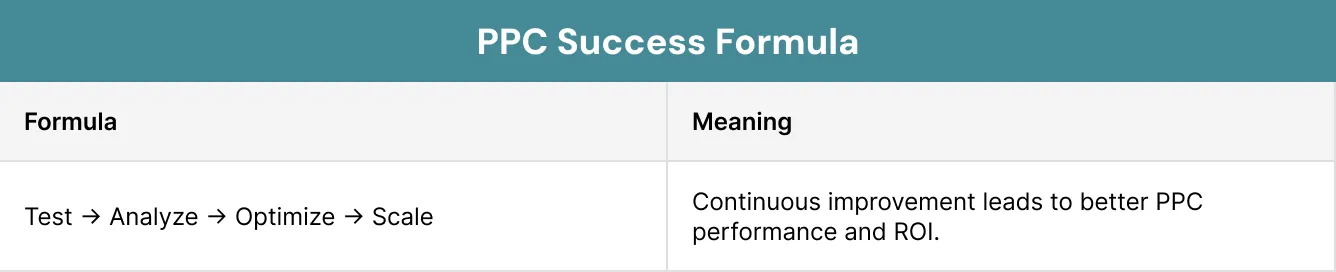
- Ongoing optimisation is essential for PPC success, including testing keywords, improving ad copy, adjusting bids, refining targeting and enhancing landing pages.
- PPC works best when combined with long-term digital marketing strategies such as SEO, email marketing, social media marketing and content marketing.
- When managed effectively, PPC advertising can become a powerful driver of business growth, brand visibility, lead generation and revenue.
1. What Is PPC Advertising?
Pay Per Click is a type of online advertisement where you pay when someone clicks on an ad. Ads can appear on search engines, websites, apps, social media and video platforms like YouTube.
Google Ads is one of the most popular PPC platforms. Because Google Ads often appear at the top of the Google search results with the word Ad. You use PPC to reach people searching for products or services online. PPC helps you to get quick visibility, attract the right audience and get easily track PPC management results.
2. How Paid Advertising Works?
Most of the PPC platforms use automatic auctions to decide which ads appear in search results. Platforms like Google Ads check different factors before showing an ad. These include:- Bid amount
- Keyword and ad quality
- Landing page experience
- Expected click rate
3. PPC Search Ads vs Display Ads
PPC ads match what users are searching for online. Using the right keywords helps to improve clicks, conversions and ad performances. You should regularly update keywords, test ads, manage budgets and improve landing pages for better results.4. The Development of Internet Marketing
Over the past couple of decades online advertising has evolved clearly from early banner promotions.
In 1994, HotWired, a digital publication featured the first online banner advertisement. Advertisers at the time paid set rates to have their ads appear on websites for predetermined amounts of time.
But there were drawbacks to early internet marketing :
- Very little targeting
- Restricted tracking
- Poor performance data
- Minimal optimisation of the campaign
The Origins of Paid Search
Keyword bidding systems were established by search engines in 1999. Advertisers may place bids to show up for particular keywords in search results:- Paid search marketing
- Auctions for keywords
- Monetization of searches
Google AdWords and Quality Score
Google changed the industry in 2000 with the launch of AdWords now known as Google Ads, by focusing on:- Ad relevance
- User experience
- Landing page quality
5. Why Businesses Use PPC Advertising
PPC advertising offers several major advantages for you.Immediate Visibility
Unlike SEO, which may take months to produce result PPC advertising can generate traffic almost instantly by:- Launching campaigns quickly
- Appearing in search results immediately
- Generating leads faster
- Promoting offers instantly
- New businesses
- Product launches
- Seasonal campaigns
Highly Targeted Advertising
Modern advertising platforms allow you to target very specific audiences. Some options may include:- Keywords
- Locations
- Age groups
- Interests
- Job titles
- Devices
- Previous website visitors
Measurable Results
Measurable results are one of the greatest advantages of PPC management advertising Companies are able to monitor by:- Impressions
- Clicks
- Conversions
- Revenue
- Cost per click
- Return on investment
Competing in Competitive Markets
In highly competitive markets, it can be difficult to rank naturally. PPC management can help your business to stay visible by appearing in both paid and organic search results.Retargeting Opportunities
The retargeting allows you to reconnect with users who previously interacted with:- Their website
- Previous adverts
- Products
- Emails
- Retention loss adverts
- Product reminder campaigns
- Follow-up promotional adverts
6. Understanding Keywords in PPC
Keywords are one of the most important parts of paid branding. The keywords are:- When an advert appears
- Which users see them
- How relevant the advert is
Keyword Research
The businesses should focus on keywords research that:- Match user intent
- Relate closely to products or services
- Fit campaign budgets
- Have suitable search volume
- Discover keyword ideas
- Estimate search demand
- Understand competition
- Forecast costs
Search Volume and Competition
Keyword search volume shows how many times people search for a word or phrase online and High volume keywords get more traffic but usually have higher competition and costs. Long tail keywords are more specific and can bring better results. For example “shoes” is broad while “black running shoes for women” is more specific and targets users ready to buy.7. What Is Quality Score in PPC?
Google Ads Quality Score measures the quality of ads keywords and landing pages. Google gives each keyword a score from 1 to 10 based on ad relevance, expected clicks and landing page experience.- Keyword Relevance
- Ad Relevance
- Landing Page Experience
Why It Matters:
A higher Quality Score can lower your cost per click (CPC) and improve ad placement, helping you to get better results without increasing budgets.
8. Major PPC Advertising Platforms
Google Ads may help you to manage PPC ads on google, youTube and websites. Microsoft Advertising reaches users on yahoo and MSN with lower ad costs. LinkedIn Ads are great for B2B and professional targeting. Facebook and Instagram Ads target users by interests and age.1. Setting Up a PPC Management Campaign
Launching a PPC management service campaign involves several important steps.2. Define Campaign Goals
Businesses should identify clear objectives before spending on adverts. Different goals require different strategies. Common goals include:- Website traffic
- Lead generations
- Product sale
- Brand awareness
- Customer acquisition
3. Choose the Right Keywords
Choosing the right keywords helps reach the right audience.- Match user intent
- Focus on relevance
4. Create Effective Ad Copy
Strong ad copy helps improve clicks and conversions.- Highlight benefits
- Encourage action
5. Set Budgets
Google Ads and most PPC platforms allow you to manage PPC spending through:- Daily budgets
- Campaign limits
- Bid strategies
6. Optimise Landing Pages
Landing pages should align closely with advert messaging. Good landing pages include:- Clear calls to action
- Fast loading speeds
- Relevant content
- Easy navigation
9. Understanding the Buyer Journey
Successful PPC advertising often aligns with the stages of the buyer journey to manage PPC. These stages are:1. Awareness Stage
At this stage, users are researching a problem or exploring solutions. Major metrics include:- Reach
- Impressions
- Video views
- Engagement
2. Consideration Stage
Users begin comparing products or services. Metrics may include:- Website visits
- Content downloads
- Time on site
3. Decision Stage
Users are ready to make a purchase or contact a business. Major metrics include:- Conversions
- Leads
- Purchases
- Revenue
10. What Are the Most Important PPC Metrics
Click-Through Rate (CTR)
CTR measures how many users clicked an advert after seeing it. A higher CTR usually indicates:- Relevant adverts
- Strong messaging
- Good targeting
Cost Per Click (CPC)
CPC Actions how much advertisers pay for each click.Conversion Rate:
Conversion rate measures how many users completed a desired action after clicking the advert.Cost Per Acquisition (CPA)
CPA measures the cost of generating a lead or customer.Return on Investment (ROI)
Return on Investment (ROI) measures the overall profitability of a PPC management campaign by comparing the revenue generated against the amount spent on Ads.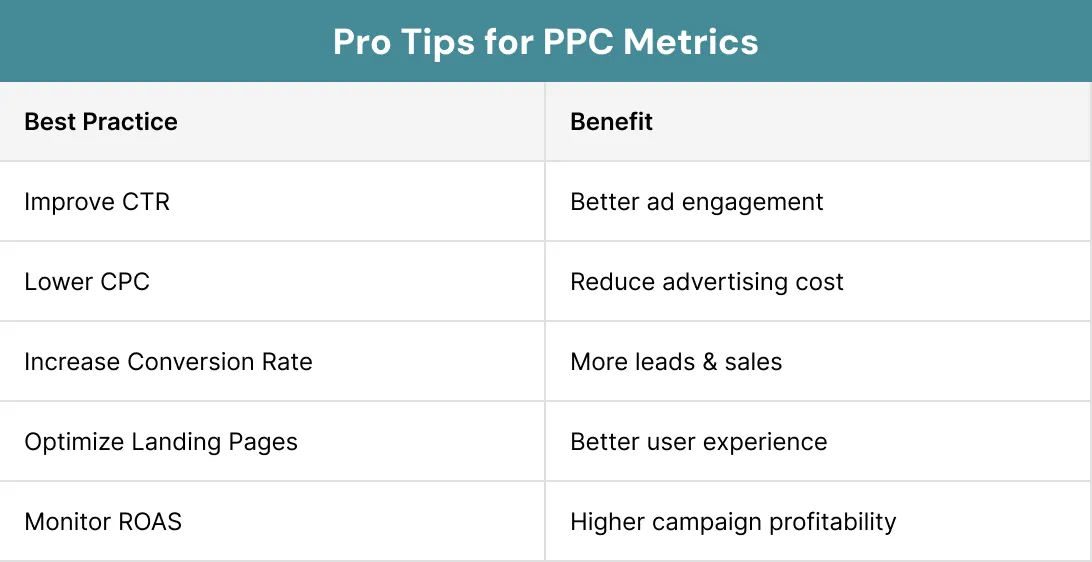
11. Best Practices for Successful PPC Campaigns
Successful PPC management uk ads are based on what users search online. Using the right Search terms may help ads match and user searches which can improve clicks and sales.
You should regularly update keywords, test different ads, adjust budgets and improve your landing pages to get better results. A good landing page also helps the users easily to find information and take actions.
By checking the campaign data the business can find new opportunities, improve weak ads, focus on top-performing keywords and reduce wasted spending.
Alternatives to PPC Advertising
Although PPC is highly engaging, you should also invest in long-term marketing strategies.SEO:
Search Engine Optimisation focuses on better organic visibility through:- Technical SEO
- Content creation
- Website optimisation
Organic Social Media
You can build audiences organically by:- Publishing content
- Engaging with users
- Building communities
Email Marketing
Email Branding remains one of the highest ROI marketing channels. It help businesses to:- Nurture leads
- Retain customers
- Promote offers
- Build loyalty
Events and Networking
Industry events and conferences help businesses:- Build relationships
- Increase trust
- Improve brand clarity
Final Thoughts
PPC advertising has become an important digital marketing method for modern business. As online competition grows you need smart strategies. They aim to stay visible, attract the right customers and get better results. PPC management advertising helps you to:- Reach the right customers quickly
- Increase brand visibility
- Track campaign performance easily
- Compete in busy markets
- Grow sales and leads
- Smart keyword research
- Audience targeting
- Strong ad copy
- Better landing pages
- Performance tracking
- Regular improvements
At Xoom Plus, we help you to create and manage successful PPC management campaigns that deliver real growth and better returns on investment. By understanding the customer behaviour and improving campaigns regularly businesses can achieve long-term online success. Contact us today and let us help grow your business with expert PPC advertising services.
Not getting enough leads or sales from your PPC campaigns?
Our PPC specialists help businesses reach the right audience, improve ad performance and increase ROI with effective PPC management services. Reach out to us today to grow your online visibility and boost sales.
FAQs
What is PPC advertising in digital marketing?
The PPC (Pay-Per-Click) is a digital advertising model where businesses pay only when a user clicks on their ad. It is widely used on platforms like Google Ads, Bing and social media to drive Specific traffic and generate leads quickly.
How does Google Ads PPC work?
Google Ads works through an auction system where promotion bid on search terms. When a user searches Google selects ads based on bid quality Score keyword relevance and landing page experience to decide which ads appear.
What are keywords in PPC campaigns?
Keywords are search terms that trigger your ads to appear. Choosing the right search terms is important because they control when your ads show who sees them and how relevant your traffic is. Long-tail keywords often bring better conversion results.
How do PPC ads help businesses grow?
PPC helps businesses grow by providing instant visibility, focused traffic measurable results and the ability to reach customers at different stages of the buying journey from awareness to purchase.
What metrics are used to measure PPC performance?
Key PPC metrics include Click-Through Rate (CTR), Cost Per Click (CPC), Conversion Rate, Cost Per Acquisition (CPA) and Return on Investment (ROI). These help evaluate campaign success.