- March 26, 2026
- Categories: Digital Marketing
Building Effective Email Marketing Strategy from Scratch
Did you know that email marketing generates an average return of $36 for every $1 spent? This strong return makes email marketing an effective way for businesses to connect with customers and drive results.
Email marketing provides a direct way to reach people who have chosen to hear from a business. A strong email marketing strategy helps you send useful messages at the right time. A clear email marketing strategy also gives your team a simple plan to follow. It can support sales, customer care, repeat purchases and long-term customer trust.
In this guide, we will explain how you can build an effective email marketing strategy from scratch to achieve your desired results.
Key Takeaways
- Define your target customers, understand their needs and segment your email list based on factors such as interests, purchase history and customer stage.
- Connect your email campaigns with wider business goals and use measurable targets to track whether your strategy is working.
- Choose the right email platform, build a permission-based list, plan campaigns and send useful content that matches each customer’s stage in the journey.
- Tailor emails to customer behaviour and use A/B testing to compare subject lines, CTAs, images, copy, layouts and send times.
- Track important metrics such as delivery rate, opens, clicks, conversions and revenue. Use the results to improve future campaigns and create a better customer experience.
What Is Email Marketing?
Email marketing is a digital strategy that uses email to promote products, share news and build relationships with people who have agreed to receive messages from your business. You can send newsletters, product updates, offers, welcome messages and follow-up emails to your customers.‘Email is such a personal way of communicating.’
— Joanna Wiebe
How to Build an Effective Email Marketing Strategy from Scratch
Building an effective email marketing strategy starts with a clear plan. First, you should understand your target audience and what they need. Then set goals that match your business aims. Below, we discuss email marketing strategy in more detail.1. Define Your Target Audience
Start by knowing who you want to reach. This first step gives your email marketing strategy a clear direction. Look at age, location, interests, buying habits, needs and past actions of your customers. You do not need a huge list of customer details. Start with information that helps you send more useful messages. In addition, create simple groups such as new subscribers, first-time buyers, repeat buyers and inactive subscribers. This makes your email marketing strategy more focused.2. Set Clear Email Marketing Goals
Decide what you want to achieve from email marketing. Your goals could include more sales, more website visits, more sign-ups or better customer retention. Make each of your goals measurable. For example, instead of saying “get more sales”, set a target such as “increase email-driven sales by 15% in three months”. Remember, your goals should match your wider business goals. This keeps your email marketing strategy tied to real business results. It also makes it easier to judge whether the plan is working or not.3. Choose an Email Marketing Platform
Choose an email marketing platform that fits your list size, budget, technical needs and campaign plans. Your platform should also support good email delivery practices. For example, Google requires bulk senders to Gmail to use SPF, DKIM and DMARC authentication and to make marketing messages easy to unsubscribe from.
Do not choose a platform only because it has many features. Choose one your team can use well. The right platform should make your email marketing strategy easier to run, not harder.
4. Build and Segment Email List
Build your email list by placing clear and honest sign-up forms on your website. You can offer a free guide, product updates, discounts or other value in return for a subscription. Keep your list clean, remove invalid addresses and manage unsubscribes quickly.
Segmentation helps your email marketing strategy deliver more relevant content instead of sending the same message to everyone. You might segment by:
- Customer type
- Product interest
- Purchase history
- Location
- Customer lifecycle stage
5. Plan Your Email Campaigns
Plan your campaigns before you start sending. Decide what you will send, who will receive it, when it will go out and what action you want readers to take.
Common campaign types include:
- Welcome emails
- Newsletters
- Product update
- Promotional emails
- Abandoned-cart reminders
- Post-purchase messages
- Re-engagement campaigns
6. Create Engaging Emails
Keep each email focused on one main idea. In this process, you should write a clear subject line, start with the most important point and use short paragraphs and simple words. Give your readers a clear reason to perform an action. Then add one main call to action, such as ‘Shop now’, ‘Read the guide’ or ‘Book a demo’.7. Tailor Emails to the Customer Journey
Tailor your emails based on what the customer does. For example, when someone visits your website and buys a product, send a thank-you email after the purchase. Give them simple tips on how to use the product. After they have had enough time to use the product, send a follow-up email asking for a review. Make the process easy by adding a clear ‘Leave a Review’ button. You can also ask customers to share their experience or product photos. This approach makes your emails feel helpful rather than promotional. It also gives your business useful feedback and helps build trust with future customers.8. A/B Testing of Email Elements
A/B testing lets you compare two versions of an email. Test one main element at a time so you can see what caused the difference. You can test:- Subject lines
- Calls to action line
- Images
- Email copy
- Layouts
- Send times
9. Email Automation
Email automation helps you send the right message at the right time without doing everything manually. You can set up automatic emails for new subscribers, abandoned carts, purchases and review requests. For example, after a customer buys a product, you can automatically send a thank-you email. After a few days, you can share product-use tips. Once the customer has had enough time to use the product, you can send an automatic review request.10. Track and Measure Email Performance
If you want to make your email marketing successful and take it on the right path, then you have to track and measure your email performance. This makes it easy to achieve desired results. Common metrics to measure include: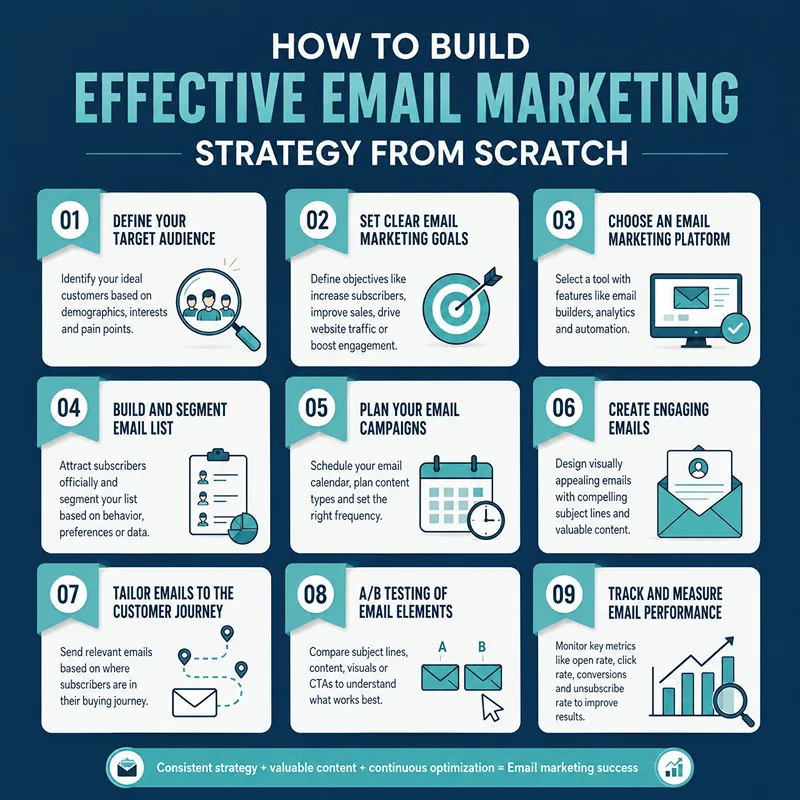
Case Study: How Email Marketing Helped Increase Revenue
Freshly Cosmetics improved its post-purchase email journey by sending different messages based on the customer’s stage and purchase history. The brand created personalised flows for first-time buyers and returning customers, rather than sending the same follow-up email to everyone. This helped the brand give customers more relevant information after they purchased.
After applying this email marketing strategy, the brand achieved strong results. This includes a 136% increase in revenue, a 140% increase in click rate and a 153% increase in placed order rate from its targeted post-purchase flow. The flow also won the Best Post-Purchase Flow award at The Klicks 2024.
This case shows why businesses should tailor emails to the customer journey.
Conclusion
Building an effective email marketing strategy does not mean sending more messages. It means sending useful messages to the right people at the right time. Keep your email marketing strategy simple enough for your team to manage. The best approach for effective email marketing is to choose a suitable platform, build a permission-based list, plan campaigns around customer needs, create clear emails, test them and measure the results. At Xoom Plus, our expert marketing team helps you make your email marketing effective, so you achieve your desired business goals with less spending.Want to Build an Email Marketing Strategy That Drives Real Results?
Contact us to create campaigns that reach the right customers at the right time.
FAQs
What is an email marketing strategy?
It is a plan for using email to reach customers or subscribers and achieve clear business goals. It covers the audience, goals, list, campaigns, content, timing, testing and measurement.
How do I start an email marketing strategy from scratch?
Start by defining your audience and goals. Then choose a platform, build a permission-based list, segment subscribers, plan campaigns, create emails, test them and measure performance.
How often should I send marketing emails?
There is no single schedule that works for every business. Start with a frequency your audience expects and can handle. Then use engagement, unsubscribes, and conversions to guide changes.
What should I measure in email marketing?
Track metrics linked to your goal. These may include delivery rate, clicks, conversions, revenue, unsubscribes and engagement.
Why is A/B testing important in email marketing?
It helps you compare different versions and learn what works better for your audience. Test one main element at a time and use the findings in future campaigns.