- July 16, 2026
- Categories: Web Solutions
Why Cart Abandonment Optimisation Matters for Online Stores?
Did you know that around 70% of customers abandon their carts after selecting products they like? One of the biggest reasons is a poor checkout experience.
As ecommerce store owners, when customers leave your store at the checkout stage, it means a loss of potential revenue. You invest time and money to bring customers to your website. So, when customers leave with abandoned carts, it is a loss of investment. This is why cart abandonment optimisation is vital for online stores.
In this guide, you will find what cart abandonment is, why it happens and why cart abandonment optimisation matters. You will find the best strategies to reduce the rate of abandoned carts and achieve growth.
Key Takeaway
- Cart abandonment optimisation helps recover lost sales and increase conversions.
- Unexpected costs and a poor checkout experience are the biggest causes of abandoned carts.
- Simple changes like guest checkout, clear pricing and faster pages can reduce cart abandonment.
- Abandoned cart emails and retargeting campaigns encourage shoppers to return and complete their purchase.
- Tracking your shopping cart abandonment rate helps you improve your checkout and grow revenue over time.
What Is Cart Abandonment?
Cart abandonment means when you add one or more products in an online shopping cart but leave without completing the checkout process. It is one of the most common challenges that online businesses face. This can greatly affect sales and revenue.
You should know that not every abandoned cart means the sale is lost. Some shoppers compare prices, save to buy in future or leave your store due to poor checkout experience.
This is why many online sellers focus on cart abandonment optimisation. This helps them recover lost sales and enhance the shopping experience.
How Is Shopping Cart Abandonment Rate Calculated?
The shopping cart abandonment rate is seen through the following formula:
Shopping Cart Abandonment Rate = ((Shopping Carts Created – Completed Purchases) ÷ Shopping Carts Created) * 100
For example, if 500 shoppers add products to their cart and only 200 make the purchase, in this case the shopping cart abandonment rate is 60%. A high abandonment rate does not always mean it is a problem. The average rate varies between 60% and 80%.
A constant high rate may be a result of poor cart abandonment optimisation. It is vital to know why it happens to improve your sales and revenue.
Did You Know?
Around 70% of online shopping carts are abandoned before checkout, making cart abandonment one of the biggest challenges for e-commerce businesses.
Why Does Cart Abandonment Optimisation Matter for Online Stores?
Online stores aim for more visitors to their website but that is only half the job. If shoppers leave your store before buying, then it results in loss of sales.
This is why cart abandonment optimisation matters for online stores. This helps turn visitors into paying customers. With small upgrades, you can get higher sales without spending more on marketing.
Cart abandonment optimisation offers several business benefits beyond recovering lost sales. Here is why cart abandonment optimisation is vital for your business:
1. Recover Lost Revenue
Every abandoned cart is a loss of sale. Even a small recovery can raise your revenue. It is often cheaper to recover an old shopper than to bring a new one. This makes cart abandonment optimisation a smart move.2. Improve Conversion Rates
A better checkout experience helps more visitors finish their purchase. Fewer checkout steps or a quick page load can improve conversions. This lets you earn more from the same number of website visitors.3. Increase Customer Lifetime Value
A customer’s first order can lead to many more. When a shopper has a smooth experience on an online store, they are more likely to return. Repeat customers often spend more over time.4. Maximise Marketing ROI
It costs money to attract customers to your website through marketing. When more visitors end up buying from your store, you get more value for marketing. This improves your return on investment without a higher budget for marketing.5. Strengthen Competitive Advantage
Many online stores sell similar products. An optimised checkout page can bring more customers to your store. Every small improvement can help your business stand out.
Learn more about How Website UX impacts Sales.
‘If you do build a great experience, customers tell each other about that. Word of mouth is very powerful.’
— Jeff Bezos
Why Do Customers Abandon Their Shopping Cart?
Customers leave their shopping carts for many reasons. Some plan to come back later. Others leave because something changes their purchase decision.
The first step for cart abandonment optimisation is to know why shoppers leave. Once you know the reason, you can fix it and get more sales.
1. Unexpected Shipping Costs
Extra costs are one of the biggest reasons why customers leave their carts. Many shoppers are fine with the product price when they add it to their cart. They change their decision when they see high shipping costs or extra charges at checkout.
It is better to show all costs early. This builds trust and helps reduce cart abandonment.
2. Complicated Checkout
A long checkout can deter customers from purchasing. Too many forms or steps make buying feel like hard work. Many shoppers leave their purchases midway. Keep the checkout short. Ask only for the information you need.3. Forced Account Creation
Not every customer wants to create an account. Some only want to buy one item. If they must register first, they may leave the website entirely. Offer simple checkouts. Customers can create an account after they buy.4. Lack of Trust
Trust is a vital part of online store sales. Customers only buy from stores they trust. If your website looks unsafe, shoppers may leave before paying. Missing contact details, poor reviews or a lack of security badges can all reduce trust.
Show reviews, clear policies and secure payment badges to build confidence.
5. Limited Payment Options
Customers like to pay in different ways. Some prefer digital wallets. Others use debit cards or buy-now-pay-later services. If these options are not available, they may leave. You must offer multiple trusted payment methods to your customers.6. Slow Website Performance
Speed is vital for customers. Customers gets tired when pages take a long to load. This increases the bounce rates. Even a short delay can make the customers leave. A fast website creates a better shopping experience and supports shopping cart optimisation.
Find out more why Website speed matters.
7. Browsing or Comparing Prices
Not every visitor is ready to buy. Some shoppers compare prices before buying. Others save products to buy later. This is where abandoned cart emails and retargeting can bring them back to complete their purchase.
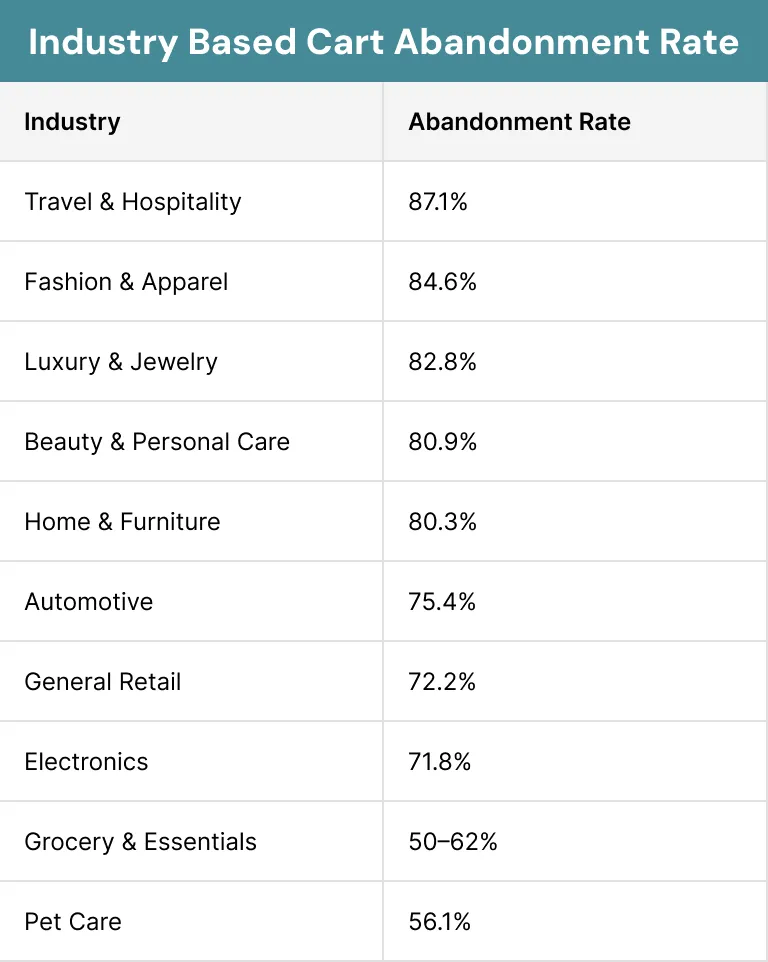
Cart abandonment rates vary across industries depending on customer behaviour and buying habits.
What Are the Best Strategies for Cart Abandonment Optimisation?
There is no single way to stop cart abandonment. The best results come from improving every part of the buying journey for customers. You should know how to prevent shopping cart abandonment to improve your sales and revenue.
These cart abandonment optimisation strategies help remove common problems. They also make it easier for shoppers to actually buy the products.
1. Simplify the Checkout Process
A simple checkout keeps customers moving. Remove extra steps and follow cart abandonment optimisation best practices. One thing is only asking for needed details. The faster shippers can pay, the more likely they are to finish their orders. A one-page checkout can also help improve shopping cart optimisation.2. Be Transparent About Costs
No one likes surprise charges. Show shipping costs, taxes and other fees before checkout. This helps customers know the total price from the start. Clear pricing builds trust and helps reduce cart abandonment.3. Offer Guest Checkout
Many shoppers want a quick buy. They may not want to create an account for a single order. Guest checkout removes this hurdle and speeds up the process. You can always invite customers to create an account after they buy.4. Optimise for Mobile Users
Over 60% online purchases are made through mobile phones. Your checkout page should work well on every screen size. Buttons should be easy to tap and pages should load quickly. A mobile-friendly website supports better shopping cart optimisation and improves conversions.
The continued growth of e-commerce makes reducing cart abandonment even more important for online stores.

5. Provide Multiple Payment Methods
Customers like choices. Offer trusted payment options such as credit cards, digital wallets and buy-now-pay-later methods. This makes it easier for shoppers to pay with their preferred method.6. Display Trust Signals
Customers buy with confidence when you add trust signals on your product page. Show security badges, customer reviews and clear return policies. Display your contact details where shoppers can easily find you. These signals assure customers that their payment is safe.7. Use Abandoned Cart Emails
An abandoned cart email reminds shoppers about their purchase left behind. Send the first email within a few hours. Keep it short with a clear link back to the cart. A small discount or free shipping can bring the customers back to complete their purchase.8. Retarget Customers Across Channels
Some shoppers need reminders to complete their purchase. Use email, social media or display ads to bring them back. Show the products they viewed and make it easy to return to checkout. Retargeting keeps your brand in front of shoppers and helps recover lost sales.Common Cart Abandonment Optimisation Mistakes
Even the best online stores can lose sales because of small mistakes. These mistakes often go unnoticed but can have a big impact on revenue. A good cart abandoned optimisation is not only about adding new features. It is also about removing the problems that stop customers from buying.
These are the most common cart abandoned optimisation mistakes.
1. Sending Recovery Email Too Late
Timing matters. An abandoned cart email works best when it arrives soon after the customer leaves. Waiting too long reduces the chance of recovering the sales. Send the first email within a few hours. Follow up with one or two reminders if needed.2. Ignoring Mobile Checkout
Many shoppers buy from their phones. If your checkout page is slow or hard to use, customers will leave. Small buttons, slow pages and difficult forms can create a poor experience. A mobile-friendly checkout is a key part of cart abandonment optimisation.3. Asking for Too Much Information
Long forms can drive customers away. Only ask for the details you need to complete the order. Every extra field adds more effort and raises the chance of an abandoned cart. A simple checkout helps more shoppers finish their purchase.4. Hiding Extra Costs Until Checkout
Unexpected charges break trust. Many customers leave when they see shipping fees or taxes added at the final step. This can raise your shopping cart abandonment rate.5. Not Tracking Abandonment Data
You cannot improve what you do not measure. Track your shopping cart abandonment rate regularly. Review where customers leave the checkout and look for common patterns.
Good data helps you improve your cart abandonment optimisation strategy over time. Small changes can lead to better results and more completed orders.
Case Study
ASOS is one of the world’s largest online fashion retailers, making it a useful example of effective checkout optimisation. Fashion retailer ASOS wanted to make buying easier for its customers. The company improved its mobile checkout with a few simple steps. They added more payment options and removed unnecessary steps from the buying process.
These changes created a smooth shopping experience. More shoppers completed their orders instead of abandoning their carts. This shows why cart abandonment optimisation matters.
Even small changes to improve the checkout process can reduce cart abandonment. It can increase conversions, recover lost sales and raise customer happiness.
Conclusion
Every abandoned cart is a chance to win back customers. A good cart abandonment optimisation helps online stores recover lost sales. You can achieve this without spending more on ads. It also improves the shopping experience and raises customer trust.
Simple changes can make a big difference. Changes like faster checkout, clear pricing, more payment options and timely abandoned cart emails. All these can help reduce cart abandonment. The best results come from testing, measuring and improving your checkout over time.
Xoomers ensure cart abandonment optimisation is a part of your strategy. This increases conversions, improves customer loyalty and grows your online store. The experts are here to optimise and scale your online business.
Make your e-commerce store stand out.
Optimise cart abandonment, increase conversions and grow your online business.
Connect with us to make it happen.
FAQs
What is cart abandonment optimisation?
Cart abandonment optimisation is the process of improving the online shopping experience to encourage more customers to complete their purchases. It involves simplifying checkout, improving website performance and using recovery strategies like abandoned cart emails.
What is a good shopping cart abandonment rate?
The average shopping cart abandonment rate is around 70%, although it varies by industry. A lower rate usually means your checkout process is simple, trustworthy and easy to complete.
Why do customers abandon their shopping carts?
Customers often leave because of unexpected shipping costs, long checkout processes, forced account creation, limited payment options, slow website performance, or concerns about trust and security.
How can businesses reduce cart abandonment?
Businesses can reduce cart abandonment by offering guest checkout, showing all costs upfront, improving page speed, providing multiple payment methods and sending timely abandoned cart emails.
Do abandoned cart emails really work?
Yes. A well-timed abandoned cart email can remind customers about their unfinished purchase and encourage them to return. Personalised emails with clear calls to action often achieve higher recovery rates.
Why is shopping cart optimisation important?
Shopping cart optimisation removes barriers during checkout, improves the customer experience and increases conversion rates. It also helps businesses recover more sales without increasing their marketing budget.
What are the most effective cart abandonment optimisation strategies?
The best cart abandonment optimisation strategies include simplifying checkout, offering guest checkout, displaying trust signals, being transparent about costs, optimising for mobile devices and tracking customer behaviour to improve the checkout process.
How often should businesses monitor their shopping cart abandonment rate?
Businesses should review their shopping cart abandonment rate regularly, ideally every month or after major website updates. Tracking this metric helps identify problems early and measure the success of optimisation efforts.