- June 22, 2026
- Categories: Digital Marketing
Conversion Optimisation: How Website UX Directly Impacts Sales and Conversions
Do you often find yourself wanting to buy a product or a service but end up leaving it due to the lengthy, troublesome process? Well, it is always about user experience (UX). Efficient conversion optimisation ensures that users perform desired actions. It could be buying an item from a web store, filling out forms, or placing calls to customer service.
As Google says, the probability of a visitor bouncing is increased by 32% when a site takes three seconds to load instead of one second. It means that website design makes an impact on affecting the user’s behaviour. A slow and complicated website will make customers lose interest. On the contrary, a quick and user-friendly website can make sales easier.
Key Takeaways
- Conversion optimisation focuses on increasing the percentage of website visitors who take a desired action.
- User experience (UX) plays a major role in guiding visitors towards enquiries, purchases, and sign-ups.
- Clear navigation, strong calls-to-action, and simple forms help reduce friction and improve conversions.
- Fast-loading and mobile-friendly websites keep users engaged and lower bounce rates.
- Trust signals such as reviews, testimonials, and security badges can increase customer confidence.
- Regular A/B testing helps identify design changes that improve conversion performance.
- Small UX improvements can often deliver measurable gains without requiring a full website redesign.
- Businesses that prioritise conversion optimisation can generate more value from their existing website traffic.
What Is Conversion Optimisation
Conversion optimisation is the process that will make your website better to increase conversions. It allows you to transform visitors into leads or sales. This is one of the most important factors of your success online. The right user flow can lead to a different result. This is when the importance of good design comes into play. Simplicity can make the difference here.1. Conversion Rate Optimisation Importance
Conversion rate optimisation is important because it allows more users to convert. That means more people are taking an action. Whether it’s buying something, signing up for a service, or asking a question, even a little progress leads to success. It will also help companies make the most out of their web traffic.2. Importance of Conversion Optimisation for UK Businesses
Most firms in the UK use ads to generate traffic. However, having traffic isn’t always enough. Sometimes, it is more cost-effective to enhance an existing traffic base rather than get a fresh one. That’s where web design that can make an impact comes in. Improving UX improves performance.3. Conversion Types and Actions
Any action taken to promote business growth can be called a conversion. This means that the user is interested in the product or service. Some examples of conversions are making sales, requesting quotes, filling out forms, signing up for newsletters and scheduling demos.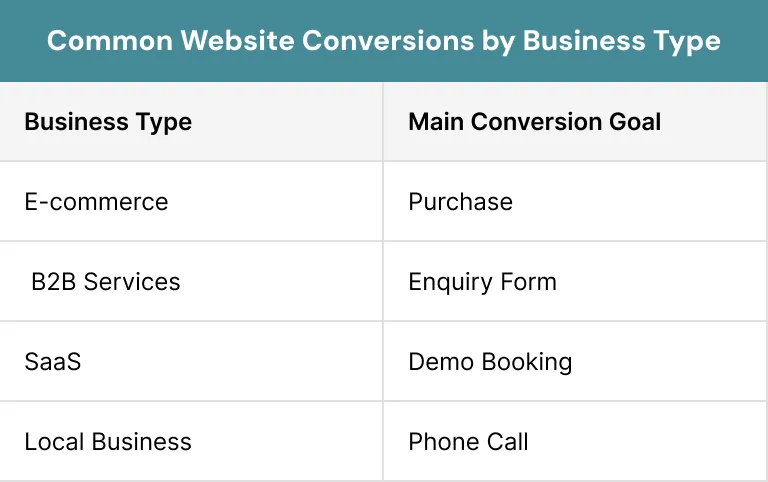
How Does Website UX Influence Conversion Optimisation
User experience forms an important part of conversion optimisation. Users prefer websites that offer ease of use. They expect to be able to access whatever they need without any delays. With simplicity and clarity of a website, users will remain on your website for longer periods of time. They will be able to trust you and convert into paying customers.1. Impact of Website UX on Conversion Optimisation
An opinion about the website is quickly formed by the user. So, user experience is very vital. A website that is clean and smooth is likely to make a good impression on users. Users also need to have trust in the website. They will exit the site if it seems outdated and difficult to navigate.2. User Behaviour and Decision Making on Websites
People always wonder how the design of a website impacts user experience. Well, here is a straightforward answer to that. A good design makes the site easy to navigate. People get more confidence when the information provided is well-designed and laid out properly. Getting what they need becomes much easier. The current generation of internet users expects a website to perform faster, to be mobile-friendly, and to be user-friendly. When all these expectations are met, then optimisation is much easier.3. Role of Website Design in User Experience
Poor UX design can lead to users refraining from acting. The users will drop off before they purchase or enquire about anything. This may result in confusing web pages as the user will have no idea about the next step. There are some sites where the user path is not clear. Other sites may be very slow and difficult to access through mobile devices.
Quick Insight:
Users rarely leave because they dislike a product. More often, they leave because the buying journey feels difficult.
Which Website Design Elements Have the Biggest Impact on Conversion Optimisation
There are certain aspects of the website that carry more weight in conversion optimisation. A clean layout shows the real impact website design can have on user trust and conversions. This makes users able to navigate around the website easily. The good thing about this is that it helps them engage with your website effectively.1. Importance of First Impressions in Website Design
The impact of website design usually begins when a person sees a website for the very first time. They see things like the layout, colours and structure of the page almost immediately. The visual structure helps users pay attention to important things. A good design can create trust and make the site easier to navigate.2. Role of Website Navigation in User Decisions
Proper navigation makes it easy for users to navigate their way through a web page. The menus need to be simple to use. The search function must allow users to get to where they want quickly. They should never get lost on their way through the pages.3. Importance of Clear Calls-to-Action
Calls-to-action guide users to the next step, such as:- Buttons should be easy to see.
- The text should tell users what to do.
- Good placement also helps.
- Clear calls-to-action can increase clicks, leads and sales.
4. Impact of Forms on Conversion Rates
The form should be filled quickly and easily. It is good to make the form short. More time spent on filling a form will result in fewer entries being made.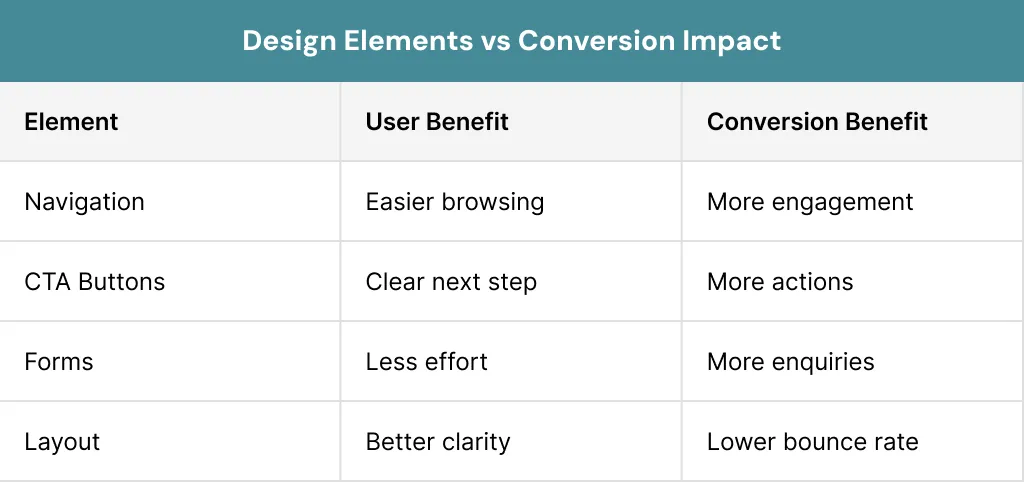
How Does Website Design Affect Sales Through Mobile Experience
Today, more individuals use phones for browsing, shopping and contacting organisations. For a website to be effective, it must have a good mobile design because failure to do so will result in a loss of leads and sales. The website should make it easier for users to act.1. Responsive Website Expectations
Visits to most websites are now done using mobile devices. Users expect websites to be responsive and adapt to small screens. Responsiveness of the website means that the page becomes user-friendly regardless of the device used. The user is likely to remain on a responsive website.2. Mobile-Friendly Design Importance
Poor mobile design causes frustration for many users. Buttons might be too small to press. Web pages might load slowly. Text and images might not fit the display. Such design causes difficulties when users want to perform some tasks. They simply give up.3. Smooth User Experience on Devices
Mobile-friendly website design allows for ease of navigation around a website. It makes it easier to get information. The user finds it easier to fill out any forms on the site. It is also easier to make purchases through a website.
Read More: The Impact of Website Loading Speed on Conversions and Sales
How Page Speed Affects Conversion Optimisation
Page speed is an important element when doing conversion optimisation. Consumers are looking for fast website loading times. Slow loading may lead the consumer to give up on the website.1. User Expectations for Website Loading Speed
The majority of people hate waiting. They think pages should open up in just seconds. In case of a slow website, they tend to go to other websites.2. Effect of Slow Website Speed on Revenue
A slow website could mean lost sales. There are some users who leave because the page is still loading. Another reason could be that the user leaves while making the transaction on the page.3. Key Speed Improvements for Better Performance
There are a few ways by which page speed can be increased. One method is compressing large images. The use of caching will make sure that pages load faster each time. There is also the option of hosting to make sure that your site performs well.
Did you know?
A delay of only a few seconds can increase visitor drop-off rates and reduce completed purchases.
How Do Trust Signals Support Conversion Rate Optimisation
Users will want to feel safe before they decide to purchase anything or give out personal information. This is where trust signals come in. They are crucial in helping increase conversion rates.1. Importance of Trust Before Purchase Decisions
Comparisons are a common practice for users while making their decisions. When a web page seems credible, it is most probable that a user will stick around and do something about it.2. Types of Trust Signals That Improve Conversions
Trust factors help increase conversions. Customer reviews show real feedback from users. Testimonials share real user experiences. Security badges help users feel safe when paying. Certifications show proof of skill and trust. Clear contact details show the business is real and easy to reach.3. Impact of Social Proof on Buying Decisions
People have faith in the opinion of other buyers. Reviews can be positive, which instills confidence. That will make customers more confident.
Read More: Conversion Rate Optimisation (CRO): The Missing Growth Lever
Can A/B Testing Improve Conversion Optimisation Results?
Conversion optimisation is not something that can be done just once. Sites need to evolve. A/B testing allows companies to evaluate their options and choose what works best for them.1. What Is A/B Testing
In A/B testing, two versions of either a web page or feature are tested. One version is shown to one user while another is shown to another user.2. Website Elements to Test First
Consider the elements that are seen by users frequently. These may be headlines, calls to action, forms, and images. Small modifications to these elements can produce effects on the behaviour of the users.3. Importance of Continuous Testing Over One-Time Changes
Needs of the users can be dynamic in nature. This means that what suits perfectly now may not suffice in future. Testing is important to ensure that the business continues to perform better in future.“You’ve got to start with the customer experience and work back toward the technology and not the other way around,”
by Steve Jobs
Conversion Optimisation Case Study
Airbnb represents an excellent case study for conversion optimisation. The company streamlined its process of booking stays to be quicker and more user-friendly. They made it more straightforward and simplified the process. They also enhanced mobile usability. With Airbnb, searching, comparing and booking stays became quick and easy regardless of your device. It led to lower drop-off rates during the process.
It was all about creating clear and trustworthy design and optimising navigation. Booking stays had become smooth and quick, allowing users to switch from one action to another seamlessly. The company made key actions easier to see, which helped users complete more actions successfully.
What Can Small Businesses Learn From This Example
Small businesses don’t require a lot of money to achieve an increase in their conversion rates. Begin by simplifying some of the things you want to accomplish. Remove any additional steps that can be taken out. Ensure that your site is mobile-friendly. Testing even minor things can have a significant impact on your conversion rate.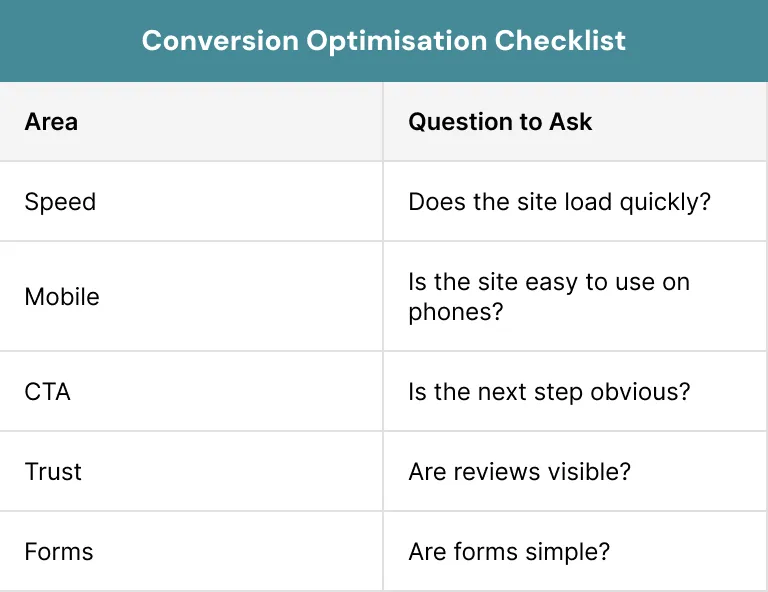
What Are the Most Common Conversion Optimisation Mistakes
However, most websites have problems losing potential customers because of conversion optimisation problems. These problems prevent customers from performing a particular action. What’s interesting is that the majority of these problems are easy to correct.
Some of these common conversion optimisation problems include a bad website design. Having too many options for visitors can be quite distracting as well. Slow website load times cause people to abandon a site quickly. Sometimes, some websites fail to support mobile users. Further, in many cases, poor calls to action can lower the conversion rate. Long forms can also cause users to drop out.
1. Impact of Too Many Choices on Conversions
Too many options can be confusing for the user. With many options available, the user might find it hard to choose their next course of action. They may simply walk away without doing anything at all.2. Increased User Friction
Friction refers to whatever makes an activity more difficult. Lengthy forms, pages that are difficult to locate, and too many steps can create friction for your users. Every additional step provides them with one more excuse to drop off.3. Less Mobile-Friendly Website Design
Mobile browsing has become more common among many people. If the site is not easy for users to navigate on mobile devices, there is a high chance that they will move away from the website.4. Not Tracking the Right Metrics
Some companies base everything on traffic. Traffic may be helpful, but it doesn’t always indicate success. Tracking leads, sales, conversions and filled forms are also necessary. Such figures will give a more realistic picture of your website’s performance.Conclusion
Conversion optimisation is not about traffic. It is about converting more visitors into buyers. User experience allows users to find whatever they are looking for, have faith in your brand, and act on it, whether that means making a purchase or sending an inquiry.
Tiny tweaks in page speed, navigation, mobile optimisation, form design and calls-to-action can positively impact sales and conversions.
We at XoomPlus know everything there is to know about how UX and conversion performance work hand-in-hand. Contact us today to optimise your website.
Getting website traffic but not enough leads or sales?
XoomPlus helps businesses improve UX, website performance, and conversion rates through smart design and development. We have helped businesses build websites that support growth and better user journeys. Explore our web services and contact us today.
FAQs
What is conversion rate optimisation?
Conversion rate optimisation (CRO) is the process of improving a website so that more visitors complete a desired action. This could be making a purchase, submitting an enquiry form, booking a consultation, or signing up for a newsletter.
How does website design affect user experience?
Website design affects user experience by influencing how easily visitors can navigate, understand, and interact with a website. Clear layouts, fast loading speeds, and mobile-friendly designs help users complete tasks with less effort.
How does website design affect sales?
Website design affects sales by shaping customer trust and reducing barriers to purchase. A well-designed website makes it easier for visitors to find information, compare options, and complete transactions, which can lead to more sales and enquiries.
What are the key elements of conversion optimisation?
Some of the most important elements of conversion optimisation include clear calls-to-action, simple navigation, fast page speed, mobile responsiveness, trust signals, and user-friendly forms. Together, these elements help guide visitors towards taking action.
Why is mobile UX important for conversion optimisation?
Many users now browse and shop on mobile devices. A mobile-friendly website improves usability, reduces bounce rates, and makes it easier for visitors to convert, helping businesses improve overall conversion performance.