- July 27, 2026
- Categories: Web Solutions
Ecommerce Website Security Tips Every Store Owner Should Know
What would happen if your online store were hacked today? One cyber attack could risk your customer data, sales and the business itself. Studies have shown that data breaches have amounted to over USD 4.88 million in 2024. This shows the possible threat and the cost caused by businesses due to security threats.
This makes it clear why ecommerce website security has become highly important today. It is no longer easy to protect your web-based store with little effort. The right security steps can help protect your store, your customers and also your business.
Key Takeaways
- Ecommerce website security protects your store, customer data and online payments.
- Common threats include phishing, malware, payment fraud, e-skimming and DDoS attacks.
- SSL certificates, strong passwords and secure payment gateways help reduce security risks.
- Regular updates, backups and security checks keep your website protected.
- Good security builds customer trust and helps your business grow.
What Is Ecommerce Website Security?
Ecommerce website security means ensuring that your ecommerce site is safe from cyberattacks and threats. It ensures that you protect customer data, payment ways and company data. It also ensures that your e-commerce site stays operational and builds customers’ trust in your business. There are some common mistakes businesses make during website development that may end up leaving their online store open to cyberattacks.
Key Point:
Cyber threats keep changing. Update your website, review your security settings and monitor your store regularly to stay protected.
What Are Ecommerce Website Security Tips Every Store Owner Should Know?
The best ecommerce website security tips are simple. Use an SSL certificate. Keep your website up to date. Use a safe payment gateway. Turn on MFA. Use a web application firewall. Back up your data often. These steps help keep your website safe. They also protect customer data and result in lower cyber risks.
Below is a list of some of the ecommerce website security best practices that can be used for website security:
1. Use an SSL Certificate
An SSL certificate keeps data safe as it moves between your website and your customers. It protects names, passwords and payment details from being stolen. It also shows the padlock icon and HTTPS in the web address. This is a basic part of website security. It helps customers feel safe when shopping on your site. It also removes Not Secure warnings. It can also help your search rankings.Quick Tip:
Get an SSL certificate for your website from your hosting provider. Make sure that all the HTTP pages are changed to HTTPS.2. Keep Your Website Updated
Update your website, plugins and themes as soon as new versions are available. Updates fix security problems and improve website performance. They also close weak points that hackers may try to use. This will solve any existing security issue. They will also help in making your site more efficient.Quick Tip:
Turn on automatic updates so your website updates automatically. You can manually install updates for plugins and themes directly. Test out your forms and other pages after an update. Regular updates help keep your website safe.3. Use a Secure Payment Gateway
Choose trusted payment providers such as Stripe or PayPal. They protect payment details with strong security tools and encryption. They also help lower fraud and give customers a safe way to pay. This helps protect both your business and your customers.Quick Tip:
Choose the right payment gateways according to your business. Turn on 3D Secure authentication for extra protection. Use tokenization to keep sensitive data secure. This will ensure that payment data is never stored on your website, and lower the risk of frauds.4. Turn On Multi-Factor Authentication
Multi-Factor Authentication (MFA) adds an extra step when someone logs in. Users must enter a code or confirm their identity before they can access the account. Even if a password is stolen, MFA helps keep hackers out. It is the simplest and easiest way to improve your website security.Quick Tip:
Turn on MFA for all admin accounts. Use an authenticator app rather than text messages if you can. Make sure that you follow the setup steps for MFA. MFA adds an extra login check. Your account will still be secure even if your password gets stolen.5. Use a Web Application Firewall
A Web Application Firewall (WAF) checks all traffic before it reaches your website. It blocks harmful requests and helps stop common cyber attacks. This keeps your website running smoothly and protects customer data. This helps stop cyber attacks, and also avoids blocking real visitors by mistake.Quick Tip:
Turn on a Web Application Firewall through your dashboard before your site goes live. Test new rules before blocking traffic on your ecommerce store. Watch your website for a few days. Adjust the settings if needed.6. Back Up Your Data Regularly
Back up your website often and keep copies in a safe place. If your site is hacked, crashes or loses data, you can restore it quickly. Regular backups reduce downtime and help your business recover faster. They are an important part of keeping your online store secure and operational.Quick Tip:
Set up automatic backups instead of doing them manually. Save copies in the cloud and other secure places. Back up your website every day if possible. Test your backups to make sure they work. This helps you recover your website quickly.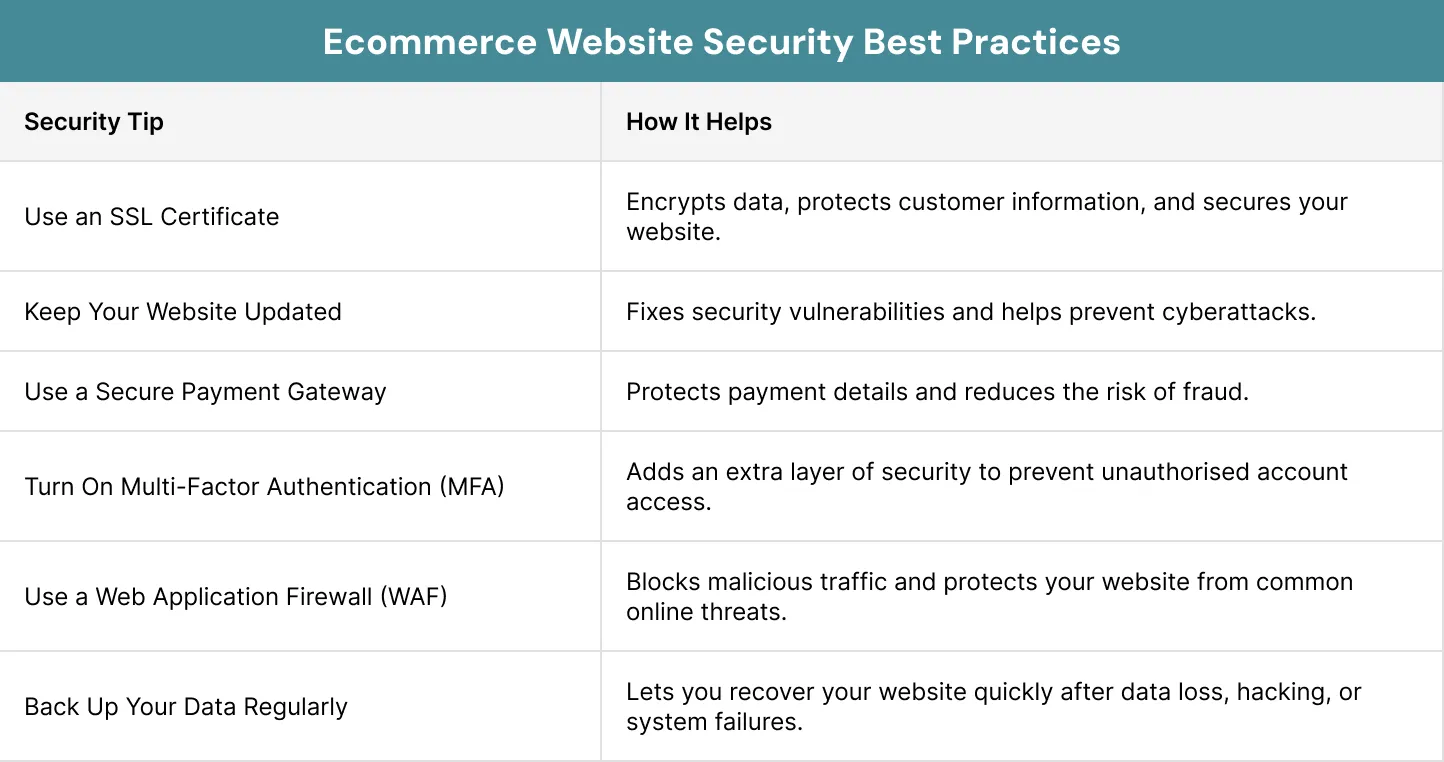
Why These Security Tips Are Important for Ecommerce Website?
Ecommerce website security is important as it helps keep your online store safe from cyber threats. It protects customer data, keeps your website running and lowers the risk of costly attacks. Strong security keeps your sales safe. It also protects your business name. People trust safe stores. They are more likely to buy from you.
Below are the main reasons why security matters:
1. Protects Customer Data
Your store collects customer data daily. This includes names, e-mail addresses and even payment details. Good security ensures the data is secure from hackers or unauthorised parties.2. Builds Customer Trust
People like to make purchases from online stores that they trust. If your store is secure, shoppers will feel safe about their purchases through your site. As a result, it increases sales and more loyal customers.3. Prevents Money Loss
Cyber attacks may stop sales and steal money. They may also result in fraud and chargebacks. Good security will help keep your business safe from such problems by stopping fraud and hacks.4. Follows Legal Rules
Online shops need to follow data and payment rules such as PCI DSS. Good security ensures that you meet these rules and do not get costly fines.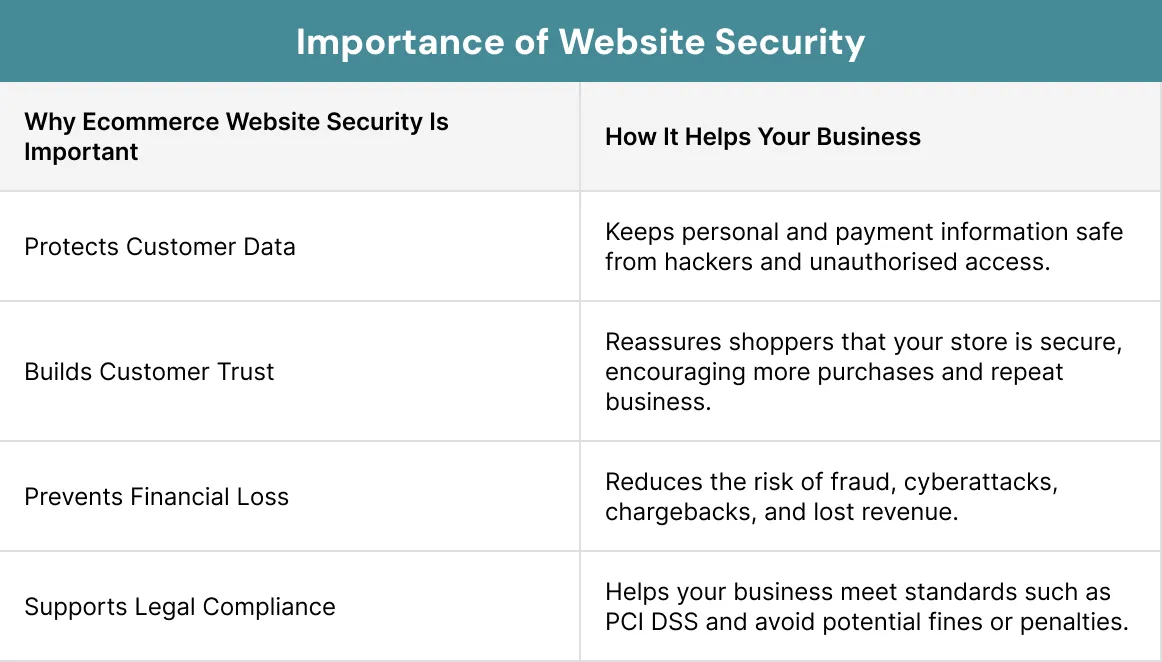
Did you know?
A secure website helps protect customer details, payment information and business data. Small security steps today can prevent costly problems later.
British Airways Hacked: Case Study
In 2018, the British Airways (BA) website was hacked by criminals. The attackers injected malicious code into the British Airways website, allowing them to steal payment and personal details from more than 400,000 customers. This hack was overlooked for over two months before any action was taken. In 2020, the ICO ordered that BA be fined £20 million since it failed to ensure proper protection for its customers’ data.
This case shows why e-commerce website security is so important. Good security helps keep customer data safe, stops cyber attacks and lowers the risk of large fines.
This is even stated by Bruce Schneier:
‘Security exists to facilitate trust. Trust is the goal and security is how we enable it.’
Bruce Schneier
Conclusion
Ecommerce website security will ensure your website, customers’ data and financial details are safe from any kind of cyber-attack. Some basic steps that may be used include SSL security, secure payment process, password protection and keeping software up-to-date.
At XoomPlus, we help companies create e-commerce websites that are highly secure and stable. If you need help with e-commerce website security, reach out to us.
Need Help with Ecommerce Website Security?
Protect your online store with reliable ecommerce website security solutions that keep your customer data and payments safe. Reach out to us for expert support and a more secure online store.
FAQs
What is ecommerce website security?
Ecommerce website security is the process of protecting an online store from cyber attacks, data theft and payment fraud. It helps keep customer data, payment details and business information safe.
Why is ecommerce website security important?
Good ecommerce website security protects customer data, builds trust, prevents money loss and helps your website stay online. It also helps businesses meet data and payment security rules.
What are ecommerce website security services in the UK?
Ecommerce website security services in the UK help protect online stores from cyber threats. These services may include SSL certificates, firewall setup, malware removal, security monitoring, backups and regular security checks.
How to secure an ecommerce website?
To secure an ecommerce website, use an SSL certificate, enable two-factor authentication (2FA), create strong passwords, update your website regularly, choose secure payment gateways and back up your data often.
How often should I check ecommerce website security?
You should check your ecommerce website security on a regular basis. Review updates, scan for malware, monitor website activity and perform security audits to help keep your online store safe.