- July 23, 2026
- Categories: Web Solutions
Why Mobile Ecommerce Optimisation Is Critical in 2026
Shopping through mobile phones is now a part of everyday life. People now use their phones to find products, compare prices, read reviews and make purchases. This is where ecommerce mobile optimisation plays a key role. A mobile-friendly store helps your customers to navigate easily, find products faster and complete purchases without any issues.
In 2026, businesses that invest in ecommerce mobile optimisation are more likely to attract and retain customers than those that do not.
Research shows that around 75% of ecommerce website traffic comes from mobile devices.
Key Takeaways
- Mobile shopping continues to grow, making ecommerce mobile optimisation essential for online stores in 2026.
- A mobile-friendly website improves user experience, reduces bounce rates and increases conversions.
- Product pages and checkout flows should be the first areas you optimise for better results.
- Regular testing, performance improvements and mobile-first design help keep your store competitive.
- Ignoring mobile optimisation can lead to lower sales, poor customer experience and lost business opportunities.
What Is Mobile Ecommerce Optimisation?
It is the process of improving an online store so it works well on mobile devices and tablets.
It focuses on the design of your site, speed, usability and its functionality. The goal is to make sure that users enjoy their shopping even on a mobile device.
Customers should be able to find your products, add items to their cart and enjoy the checkout process without any issues.
Why Mobile Ecommerce Optimisation Is Critical in 2026
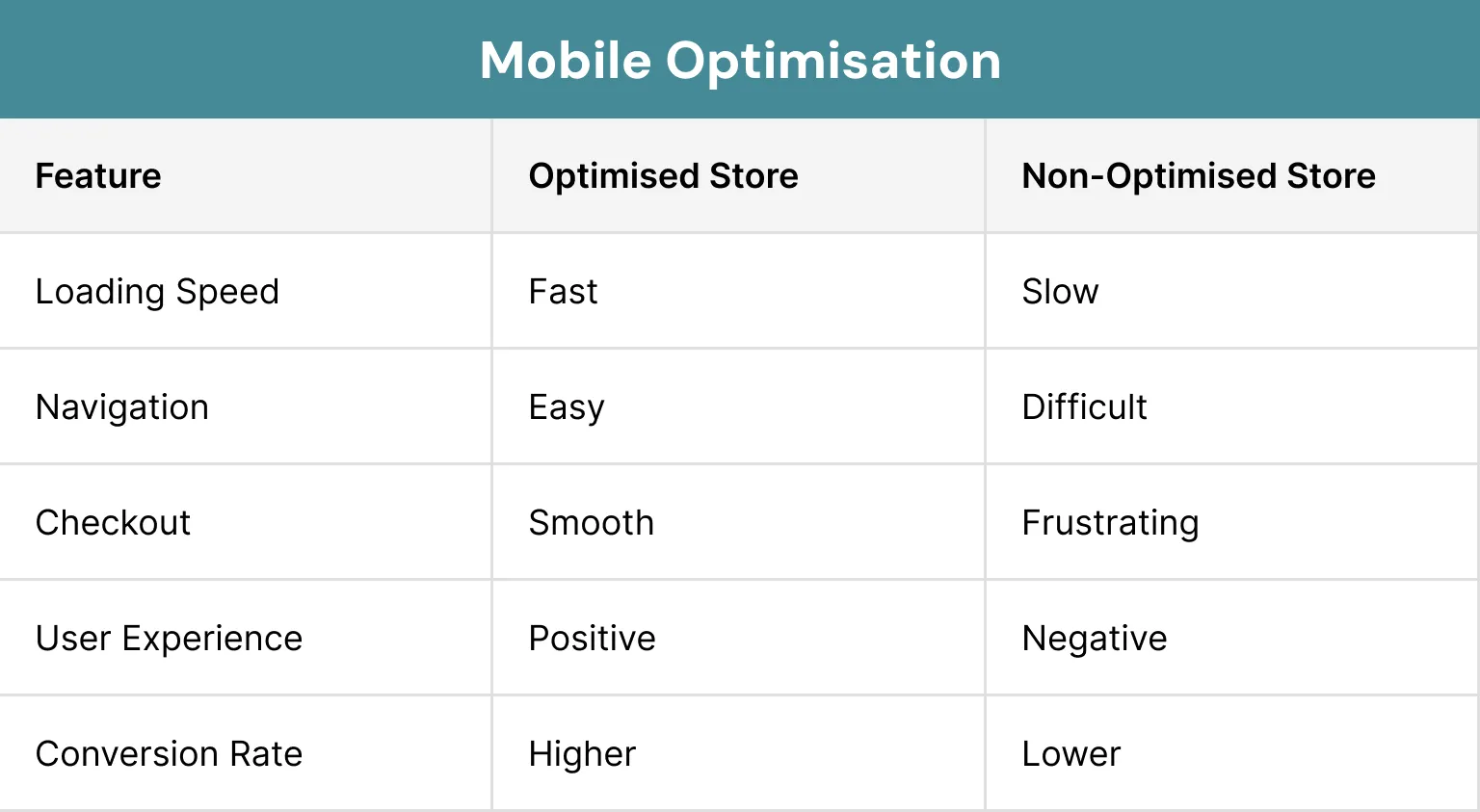
Mobile ecommerce optimisation is a key to your store’s success. It helps you to increase your sales and customer trust.1. Improved User Experience (UX)
A good UX helps you to encourage the visitors to stay longer and explore more products on your site. When pages load quickly and sites look easy to use, users feel comfortable when they are browsing your store.
Strong ecommerce mobile optimisation helps to remove barriers that make shopping difficult for visitors. Clear menus, readable text and touch-friendly buttons help users to find what they need.
“You’ve got to start with the customer experience and work backwards to the technology.”
— Steve Jobs
2. Reduced Bounce Rates
Visitors often leave websites that are slow or not easy to use. High bounce rates can signal poor UX and may affect the performance of your store.
With effective ecommerce mobile optimisation, your users are more likely to remain on the site.
3. Higher Conversion Rates
Conversion rates increase when your visitors can complete their purchases on your site without any extra steps. Every extra click can create friction.
When you work on this, you will see better results in sales. Your customers move smoothly from your product to the checkout page.
4. Better SEO and Search Visibility
Search engines like Google, favour those websites that deliver a strong mobile experience to their users. Mobile-friendly sites are easier for search engines to rank them.5. Increased Mobile Traffic
More people now browse and shop through their mobile devices than desktops. You must adapt to the changing behaviour of customers to stand out in the market.
Proper ecommerce mobile optimisation helps you to capture and retain this growing audience. It ensures that visitors have a positive impact from the first click of your site.
6. Cross-Device Consistency
Your visitors often move between the devices before making an order. They may start on a phone but finish on a laptop.
Strong ecommerce optimisation helps you to create a consistent experience across all devices. This helps to build trust and supports the journey of a customer.
7. Stronger Brand Image
Customers often judge a business based on its website. Good mobile experience site creates a positive impression. This helps you to create a stronger image of your brand.What Happens If You Ignore Mobile Optimisation?
Ignoring ecommerce mobile optimisation can create issues for you over time. Your site may become slow, difficult to use and also outdated.
A poor mobile experience can lead to frustrating visitors and cause them to leave your site without making an order. This can lead to lower sales and reduced trust in your brand.
As mobile shopping continues to grow, businesses that do not improve their mobile experience may fall behind.
Regular updates help you to keep your website fast and user-friendly.
Did You Know?
More than half of global online traffic now comes from mobile devices. This trend continues to grow each year.
Which Areas of Your Store Should You Optimise First?
Not every part of your store has the same impact on performance. Some areas directly influence customers trust and sales.
You should prioritise those improvements that affect the shopping journey the most. This approach gives you faster and better results.
1. Product Pages
Product pages of your site are key and the first point of engagement. They should load quickly and present details of the product in a more clear way.
High-quality images, short descriptions and visible call-to-action buttons support effective ecommerce optimisation and also improve trust of the customer. This helps you to increase your sales.
2. Checkout Flows
The checkout page is where many sales are won or lost. Complicated forms and extra steps can lead to lost sales.
Successful ecommerce mobile optimisation focuses on creating a fast and simple checkout page that encourages the sales.
Key Elements of Mobile Optimisation in 2026
There are some key elements of mobile optimisation in 2026 that you must have to work on. They help you to engage more with customers.1. Mobile-First Design
Mobile-first design means creating a good experience for mobile users. This helps you to achieve better results for your store and gain the trust of customers.
Modern ecommerce mobile optimisation strategies prioritise mobile users because they have large share of online shoppers.
2. Performance Optimisation
The speed of your website directly affects the trust of your user. Even small delays can effect your sales.
You can optimise the performance of your site by using compressed images, less code and good hosting solutions. This process helps you to gain more customers and their trust.
3. Touch-Friendly
Mobile users interact with your website by using their fingers. Elements like buttons and navigation on your site must be easy to tap.
Good ecommerce mobile optimisation ensures that users on your site can complete their actions without extra or wrong clicks.
4. Testing
Stores cannot improve what they do not measure. Testing helps you to identify the issues before they affect your customers.
Pro Tip:
Test your website on multiple devices every month. Small issues can become major conversion blockers if left unnoticed.
Best Practices for Mobile Optimisation
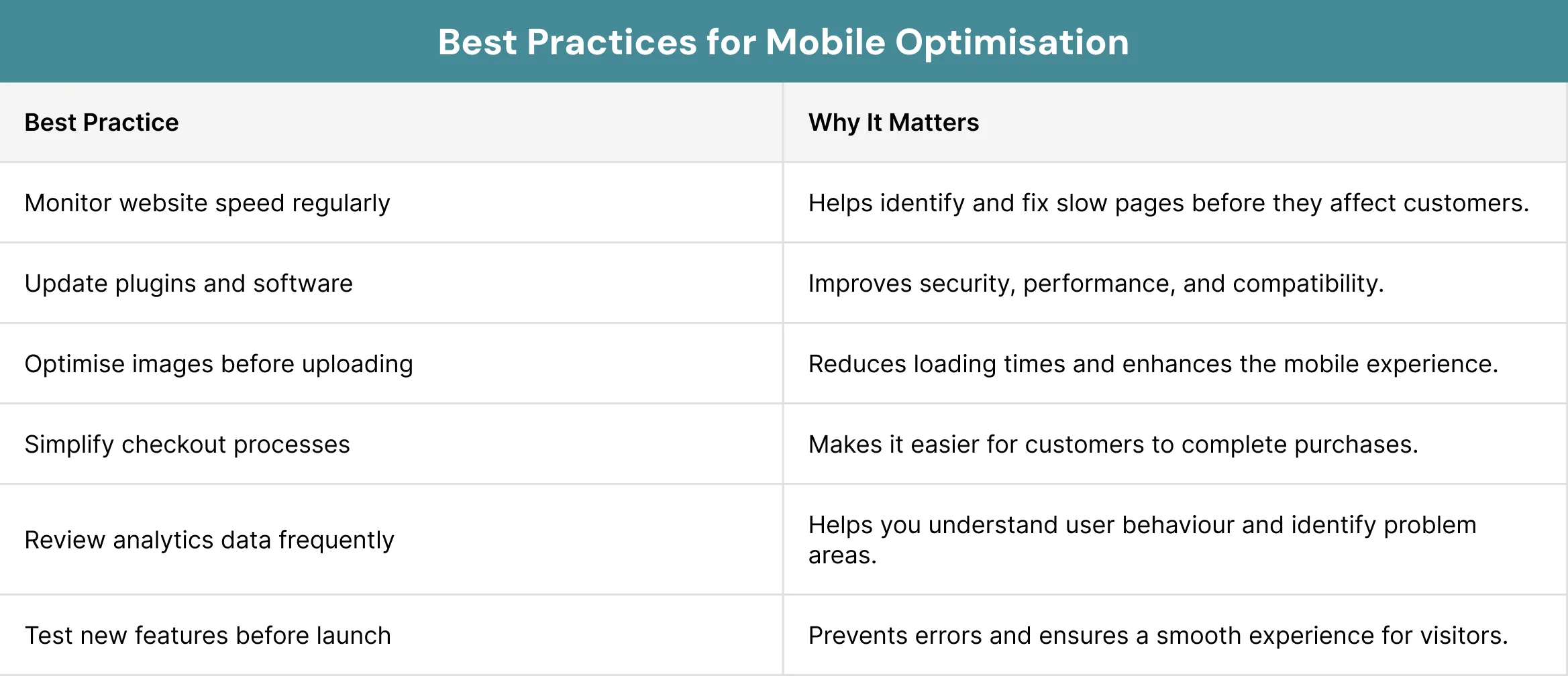
Mobile optimisation is not something you do once and forget. Your website needs regular updates to stay fast, secure and easy to use.
Small issues can grow into bigger problems if you ignored them for too long.
By updating your website on a regular basis, you can improve the trust of your customer and avoid expensive fixes in the future.
Good mobile habits also support you in long-term ecommerce optimisation and help your store to stay competitive.
The Future of Mobile E-commerce Optimisation
Technology is changing all the time. As customer needs change, you need to keep improving your websites. This helps you to provide a better UX and stay ahead of competitors.
In the future, ecommerce mobile optimisation will focus on making online shopping faster, easier and more personal.
Features such as AI and voice search are expected to become more common in future. Businesses that keep up with these changes will have a better chance of growth.
Case Study: Mobile E-commerce Optimisation
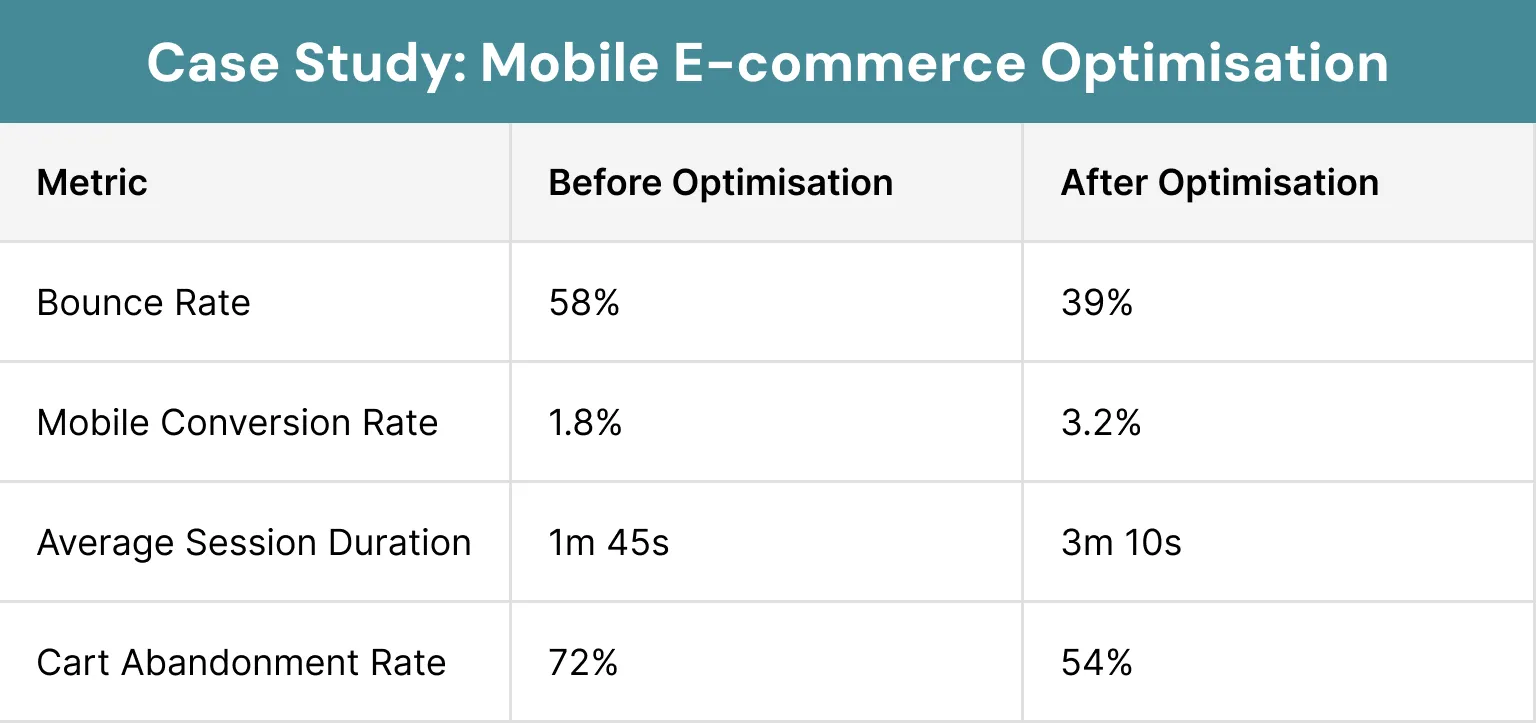
A clothing store found that many people were adding products to their carts on mobile phones but leaving the site without buying any product.
The store decided to improve its ecommerce mobile optimisation. It made the website faster, made the checkout process easier and also improved the menu.
After a few months, more users completed their purchases and fewer visitors left the website.
This shows that small changes can make a big difference and also increase the sales of your store.
Conclusion
Mobile shopping has become a big part of online shopping. If your website does not work well on mobile devices, then you can lose visitors, customers and sales also.
By investing in ecommerce mobile optimisation, you can make your site easier to use, help more people find your store online and get new customers.
A better mobile experience can also help you to build trust in your brand.
At Xoom Plus, we help you to optimise your online store, so you get more sales and better customer engagement.
How many sales could your business be missing because of a poor mobile experience?
Contact us now and let our experts help you create a faster, smoother and more profitable online store.
FAQs
Why is mobile ecommerce optimisation important in 2026?
Mobile shopping continues to grow every year; more customers now browse and buy products using their smartphones. Mobile ecommerce optimisation helps create a better user experience, improve conversions and reduce the chances of visitors leaving your website.
What are the key elements of a mobile-optimised ecommerce website?
A mobile-optimised ecommerce website should have a responsive design, fast loading speed, easy navigation, touch-friendly buttons and a simple checkout process. These features help customers shop more easily on mobile devices.
How can mobile optimisation improve online sales?
A fast and user-friendly mobile website makes it easier for customers to find products and complete purchases. This can reduce cart abandonment and increase the number of successful transactions.
What is conversion rate optimisation ecommerce, and why does it matter?
Conversion rate optimisation ecommerce is the process of improving an online store to encourage more visitors to take action, such as making a purchase or signing up for a newsletter. It matters because even small improvements can lead to higher sales and better returns from your website traffic.
How often should I review my mobile ecommerce website?
You should review your mobile website regularly to ensure it remains fast, secure and easy to use. Regular testing and updates can help identify issues early and keep the shopping experience smooth for your customers.