- July 21, 2026
- Categories: Web Solutions
Shopify SEO Tips to Increase Organic Traffic
Getting visitors to your Shopify store is not just about running paid ads. Long-term growth comes from search engine results when people are looking for the products you sell. This is where Shopify SEO tips can make a real difference. They help your store attract more visitors without paying for every click.
Research shows that organic search drives 53.3% of all website traffic, making it the largest source of visitors for most websites. Many Shopify store owners focus on adding products, but they overlook SEO. Even great products can be difficult to find if your website is not properly optimised. By following the right Shopify SEO tips, you can improve the visibility of your store.
Key Takeaways
- Learn Shopify SEO basics to increase organic traffic and reduce reliance on paid ads.
- Optimise your store with the right keywords, fast loading speed, strong site structure and quality backlinks.
- Keep content fresh by publishing helpful blogs, fixing SEO issues and encouraging customer reviews.
- Avoid common mistakes like duplicate content, slow pages, keyword stuffing and missing meta tags.
- Use SEO tools consistently and monitor performance for long-term growth.
Why SEO Matters for Shopify Stores?
Without SEO, a Shopify store is like a shop hidden on a quiet street. Your products may be excellent, but customers may never find them. Good SEO helps your store to appear in front of people who are actively searching for what you sell.“Focus on the user and all else will follow.”
— Larry Page, Co-founder of Google
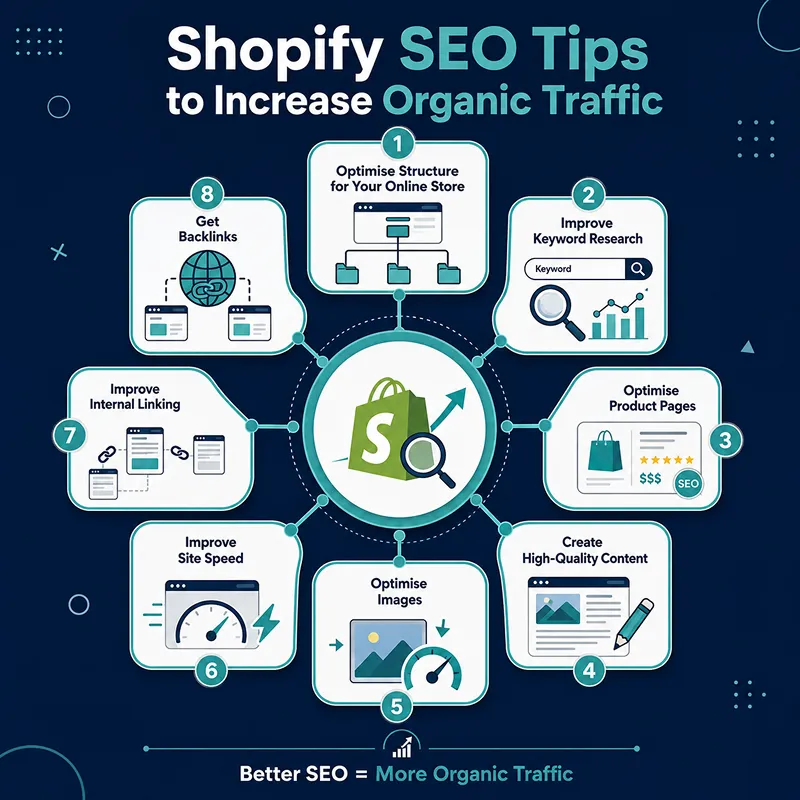
Top Shopify SEO Tips to Increase Organic Traffic
Below are some practical Shopify SEO tips to help you increase organic traffic.1. Optimise Structure for Your Online Store
A clear store structure helps both visitors and search engines to find your pages easily. When your categories and products are well organised, customers can reach them easily in fewer clicks.
Start by creating simple product categories that match the way customers search. Avoid placing products in too many collections. Keep your navigation menu clean and easy to use. Good SEO tips for Shopify always begin with a logical site structure.
Your URLs should also be short and descriptive. For example, a URL like “/collections/mens-trainers” is much easier to understand than one filled with random numbers. Clear URLs improve both user experience and SEO.
2. Research the Right Target Keywords
Keyword research helps you to understand what your customers are searching for online. Instead of guessing, you can create content around the real search terms. This increases the chances of your pages appearing in Google results. Effective Shopify SEO tips always start with choosing the right keywords.
Focus on keywords that match your products and customer intent. Long-tail keywords often have less competition and attract visitors who are ready to buy. For example, “women’s waterproof hiking boots” is more targeted than simply “boots”.
Place your main keyword naturally in page titles, headings, product descriptions and image alt text.
Places to Use Keywords
- Product titles
- Collection pages
- Product descriptions
- Blog articles
- Meta titles
- Meta descriptions
- Image alt text
- URLs
Did You Know?
Long-tail keywords often attract visitors who know exactly what they want. This can lead to higher conversion rates than broad keywords.
3. Improve the User Experience (UX)
User experience plays a key role in SEO. If visitors feel good using your website, they are more likely to stay longer and explore more pages. Search engines notice user experience and may reward your website with better rankings. Following Shopify SEO tips that improve usability benefits both users and your store.
Make your website easy to navigate. Visitors should be able to find your products quickly. Use clear menus, visible search options and simple category names to help them browse with ease. Your store should also have a clean design. Avoid poor layouts, pop-ups that block the screen and confusing navigation.
Always test your website on different devices. Your website should work on both desktop and mobile devices.
“Design is not just what it looks like and feels like. Design is how it works.”
— Steve Jobs
4. Boost the Speed of Your Website
The speed of a website is one of the most important ranking factors. Slow pages can frustrate visitors and cause them to leave your site before viewing your products. Large images are one of the biggest causes of slow loading times. You should compress your images before uploading them to the store.
Install only the apps you need on your Shopify store. While apps add useful features, too many of them may slow down the speed of your website. Use Shopify’s built-in performance features and monitor the speed of your website on a regular basis. Free tools such as Google PageSpeed Insights help you to identify the areas that need improvement.
Pro Tip:
A page that loads in under three seconds is more likely to keep visitors engaged and reduce bounce rates.
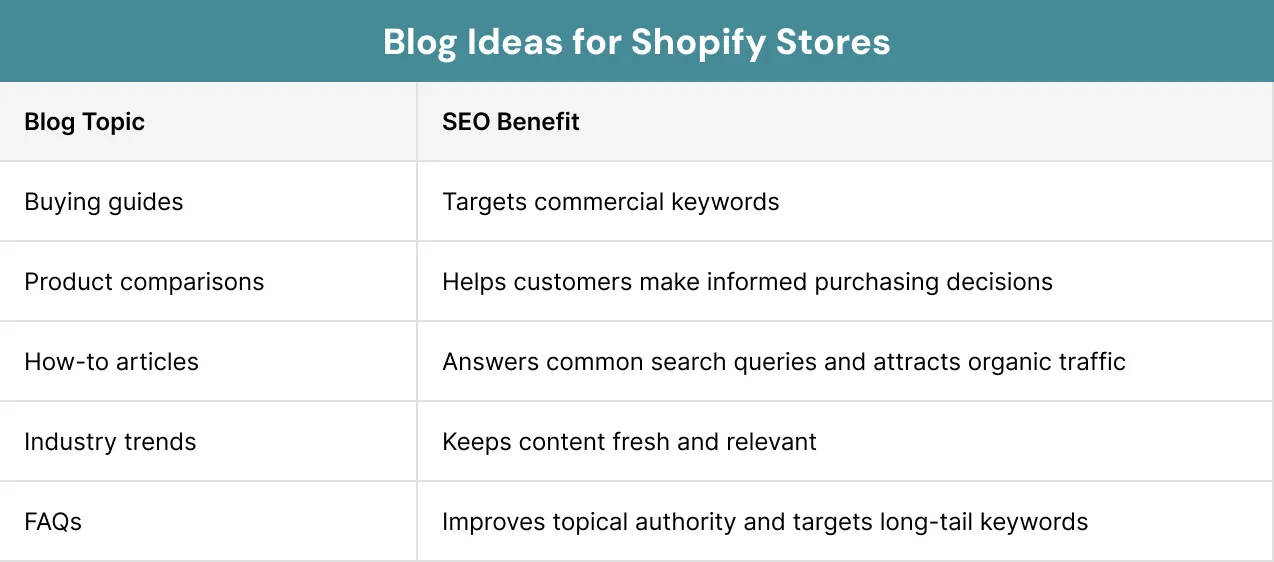
5. Write High-Quality Blog Content
A blog is one of the best ways to attract organic traffic and allows you to answer common customer questions. Publishing useful content is one of the most effective Shopify SEO tips for long-term growth. Write articles that solve real problems of your visitors. For example, if you sell skincare products, you can create guides on choosing the right moisturiser or building a daily skincare routine. Always focus on quality rather than quantity. A well-written article that answers a user’s question is far more valuable than short posts with little detail.Consistently following SEO tips for Shopify through content marketing can strengthen the authority of your website.“Content is king.” — Bill Gates
6. Optimise Your Listings
Your product and collection pages are often the first pages customers see from search results. They should provide clear details that help your visitors understand what you offer. Start with clear product titles that describe exactly what you are selling. Add your main keyword naturally. A descriptive title helps both customers and search engines to understand the page.
Write unique product descriptions instead of copying text from other websites. Explain the product’s features, benefits, sizes and materials. Use high-quality images with descriptive alt text. Alt text helps search engines to understand your images.
7. Write Engaging Page Titles and Meta Descriptions
Your page title and the meta description are usually the first things people see in Google search results. They influence whether someone clicks on your page or chooses another result. Among all Shopify SEO tips, this is one of the easiest ways to attract visitors.
Keep your page titles short, clear and relevant. Add your primary keyword naturally at the beginning of the title. Your meta description should encourage people to visit your page. Although meta descriptions are not a direct ranking factor, they can improve your click-through rate.
8. Get Backlinks
Backlinks are links from other websites that point to your Shopify store. Search engines often view these links as a sign that your content is useful. Getting quality backlinks is one of the most valuable Shopify SEO tips for improving search visibility.
You should focus on gaining links from relevant websites. You can achieve this by publishing helpful blog posts or creating useful guides. Avoid buying backlinks. Low-quality links can harm the reputation of your website and may lead to search engine penalties.
Safe Ways to Get Backlinks
- Publish helpful blog articles.
- Create original guides.
- Write guest posts for trusted websites.
- Encourage satisfied customers to mention your brand online.
Bonus SEO Tips for Shopify
Here are some bonus SEO tips for Shopify:1. SEO Audits
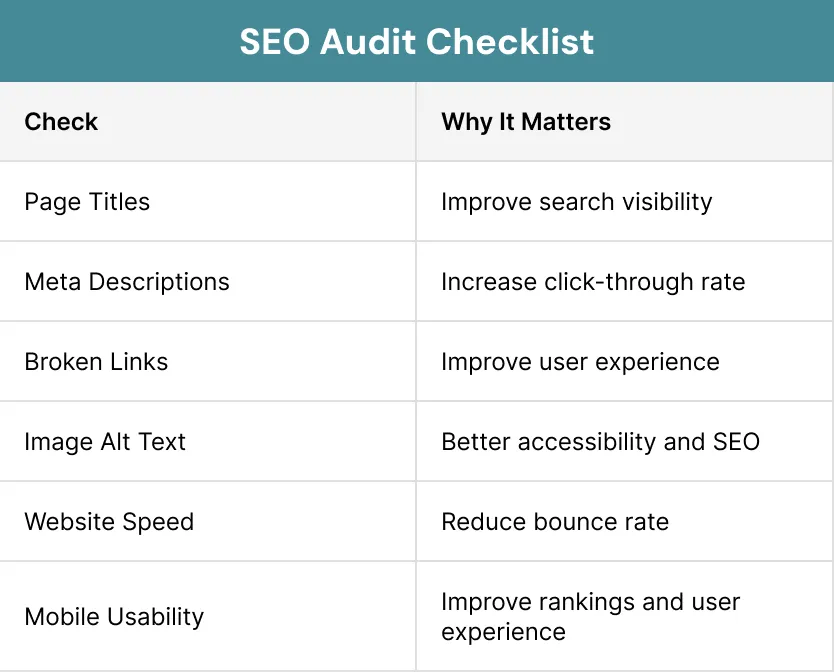
An SEO audit helps you understand how well your Shopify store is performing in search results. It shows what is working and what needs to change. Regular audits are an important part of following Shopify SEO tips because they help you fix issues before they affect your rankings.
You should start the audit by checking your page titles, meta descriptions and URLs. Make sure each page has unique and relevant details. You should also check for broken links, slow-loading pages, missing image alt text and indexing issues. Fixing these issues can help you improve both UX and search visibility.
2. Fixing Broken Links
Broken links lead your visitors to pages that no longer exist. They often appear after your products are removed or pages are renamed. They create a poor user experience. Checking for broken links should be a part of your regular SEO audit.
If customers click on a page that returns an error, they may leave your site without exploring further. This can increase your bounce rate. Use 301 redirects whenever you move or delete important pages. Redirects send your visitors to the most relevant page instead of showing an error. This also helps to preserve the SEO value of the original page.
3. Mobile Optimisation
Many people shop online using their phones. Your Shopify store should work smoothly on every screen size. Mobile-friendly websites provide a better user experience and often perform better in search results.
You should choose a responsive Shopify theme that adjusts to different devices. Make sure buttons are easy to tap and text is easy to read. Mobile optimisation is one of the most practical Shopify SEO tips because it improves both SEO and customer satisfaction.
Pro Tip:
Google mainly uses the mobile version of a website when deciding how it should rank in search results.
4. Product Reviews
Product reviews do more than build trust. They add fresh content to your product pages, which can support your SEO efforts. Reviews also help your customers to make informed buying decisions. You should encourage your customers to leave honest reviews after their purchase. Make the process simple by sending a follow-up email with a review request.
Respond politely to both positive and negative reviews. Thank customers for their feedback. Adding reviews is one of the simplest Shopify SEO tips because it improves the credibility while keeping your product pages active with new user-generated content.
5. Image Optimisation
You should use clear, high-quality images that are not too large, so your pages load faster. Give each image a descriptive file name and also add alt text that helps search engines to understand what the image shows. This can improve your Shopify SEO and make your store easier for everyone to use.Conclusion
Growing your Shopify store takes more than adding new products. Remember that SEO is an ongoing process rather than a one-time task. With the right Shopify SEO tips, you can improve visibility, attract qualified visitors and build long-term organic traffic.
Review your website regularly, fix issues as they appear and also keep your content fresh. Over time, these efforts can help your Shopify store to rank higher. At Xoom Plus, we offer customised Shopify SEO solutions designed to improve your rankings and take your Shopify store to the next level.
Want to grow your Shopify store?
Feel free to contact us today and let our SEO experts help you increase your organic traffic and online sales.
FAQs
What are Shopify store SEO tips?
Shopify SEO tips are best practices that help improve your store’s visibility in search engines. They include keyword research, optimising product pages, improving website speed, building backlinks and creating helpful content.
How long does Shopify SEO take to show results?
SEO is a long-term strategy. Many store owners start seeing improvements within three to six months, depending on competition, website quality and how consistently they apply SEO best practices.
Do I need SEO if I already run paid ads?
Yes. Paid ads stop bringing visitors when your budget ends, while SEO can continue driving organic traffic over time. Combining both strategies often produces the best results.
Can I do Shopify SEO without hiring an expert?
Yes. Many Shopify SEO improvements, such as writing unique product descriptions, optimising images and publishing helpful blog content, can be done without professional help. As your business grows, you may choose to work with an SEO specialist for more advanced optimisation.
Which Shopify SEO app is best for beginners?
Apps such as Sherpas: Smart SEO are suitable for beginners because they automate common SEO tasks. If you want more detailed analysis and reporting, SEO Metriks All-in-One SEO is another good option.