- August 12, 2026
- Categories: Web Solutions
Shopify vs WooCommerce: Which Platform Is Better for Ecommerce
Choosing the right platform for an ecommerce store is one of the most important decisions for any online business. The choice finally comes down to two options, Shopify or WooCommerce. In Shopify vs WooCommerce, you often look at cost, ease of use, design options, payment methods and long-term growth. Both platforms are trusted by millions of online stores, but they work in very different ways and meet different needs.
Shopify is an all-in-one hosted platform that handles hosting, security and updates for you. On other hand, WooCommerce is a plugin of WordPress that gives you full control over your store. If you are trying to decide between Shopify and Woocommerce, the best choice depends on your goals and budget.
Research shows that around 9 million brands use Shopify or WooCommerce to run their online business. That’s 4.8 million Shopify stores and 6.2 million WooCommerce stores. This guide will help you understand the pros and cons of each platform so you can make the best decision for your business.
Key Takeaways
- Shopify and WooCommerce are both powerful ecommerce platforms. Shopify is better for ease of use, while WooCommerce offers greater flexibility and customisation.
- Shopify is an all-in-one hosted solution with built-in hosting, security and maintenance, whereas WooCommerce is open source and gives you full control over your store and its features.
- Shopify is easier for beginners, while WooCommerce has a steeper learning curve but provides more freedom for custom development, SEO and plugin integration.
- Both platforms support multiple payment gateways and business growth, but WooCommerce offers greater flexibility in choosing hosting, payment providers and costs.
- The best choice depends on your business needs. Choose Shopify for simplicity and quick setup or WooCommerce if you need complete control, advanced customisation and long-term scalability.
What Is Shopify and WooCommerce?
Shopify is a cloud-based ecommerce platform that allows you to create and manage online stores without any technical expertise. It provides hosting, security and payment tools in one package. Many businesses choose Shopify because it is simple to use. You can build a store, add products and start selling within a short time. Shopify also includes built-in tools for payments, inventory, marketing and order management.
WooCommerce is a free ecommerce plugin that is built for WordPress websites. It turns a WordPress website into a fully functional online store. Since it is open source and users have full control over their store. One of the biggest reasons people compare Shopify vs WooCommerce is flexibility. WooCommerce allows you to customise almost every part of your online shop. This level of control is built for your unique needs.
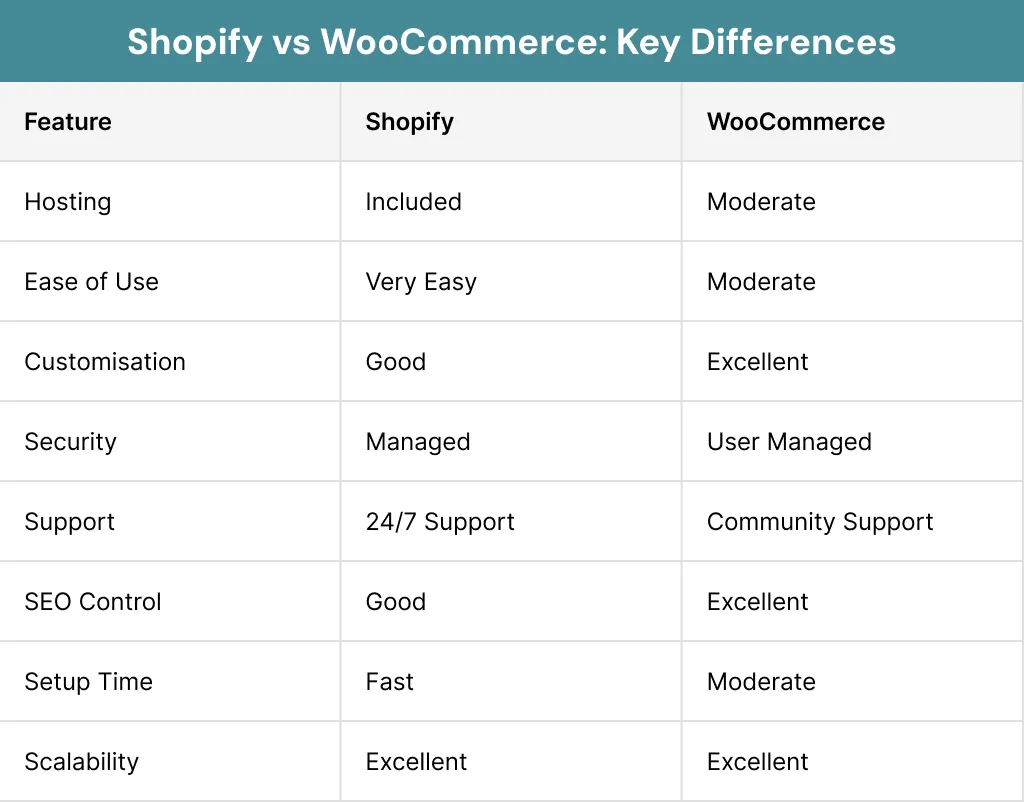
Before you choose WooCommerce or Shopify, you should know the key differences between the two.
Pro Tip:
Shopify is ideal if you want to focus on selling products instead of managing technical tasks.
Shopify vs WooCommerce: Which Platform Is Better for Ecommerce?
The biggest difference in Shopify vs WooCommerce is how the platforms serve their customers. Each platform has distinct options and features to best serve your business. Once you understand what each platform offers, you can pick the better option for your business. Neil Patel talks about the best way to choose the right platform for your business.“The best ecommerce platform is the one that fits your business goals, technical skills and long-term growth strategy; not simply the most popular option.”
Neil Patel, Digital Marketing Expert
1. Shopify vs WooCommerce: Pricing
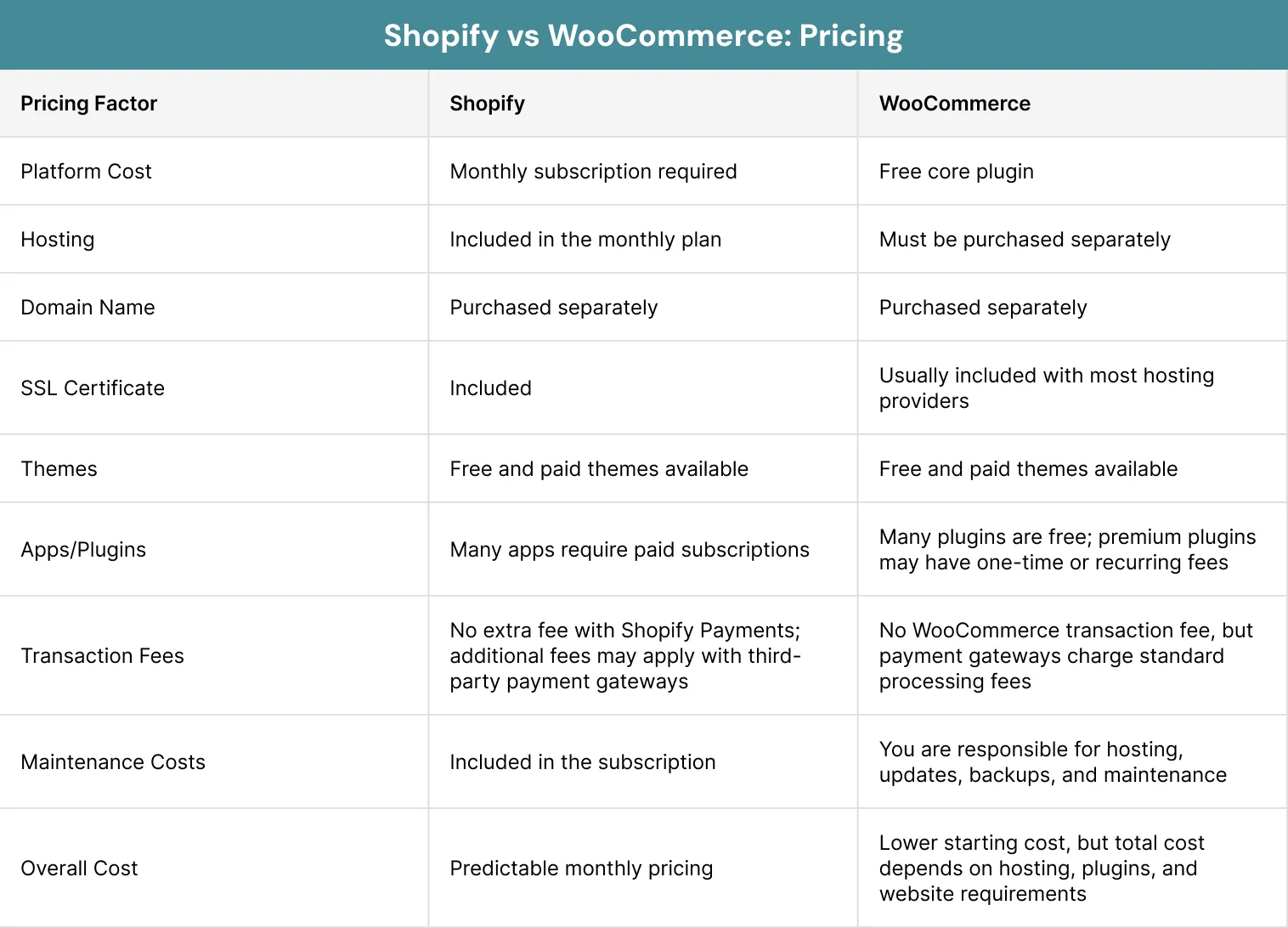
Cost is one of the first things businesses consider when comparing Shopify and WooCommerce. Shopify uses monthly plans, while WooCommerce itself is free. However, for WooCommerce you need to pay for web hosting, a domain name, security tools and premium plugins when you need.
Pro Tip:
Always estimate costs for at least one year before choosing your ecommerce platform.
2. Shopify vs WooCommerce: Ease of Use and Setup
Ease of use is one of the biggest reasons people compare Shopify or WooCommerce. A platform that is easy to manage can save your hours every week. Shopify is designed for users with little technical skills. WooCommerce offers more freedom in customisation but requires a greater knowledge of websites and WordPress. When you choose between Shopify or WooCommerce, think about how much time you want to spend on creating a store.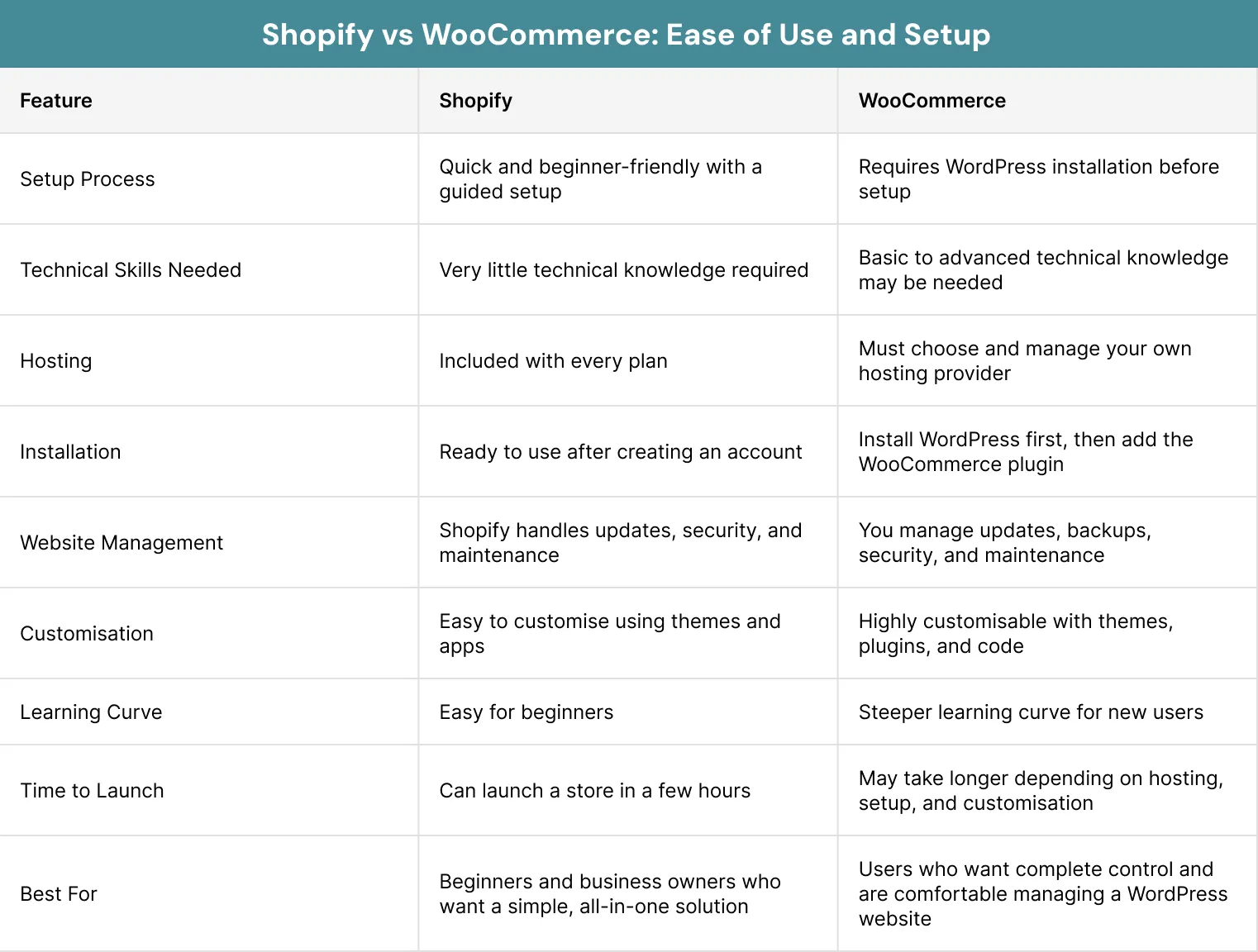
3. Website Design and Themes
The design of your website is the first impression visitors get of your business. Both platforms offer many themes and templates. Shopify focuses on ready-made themes, while WooCommerce offers great control on customisation. When you decide between Shopify or WooCommerce, you should consider how unique you want your store to look.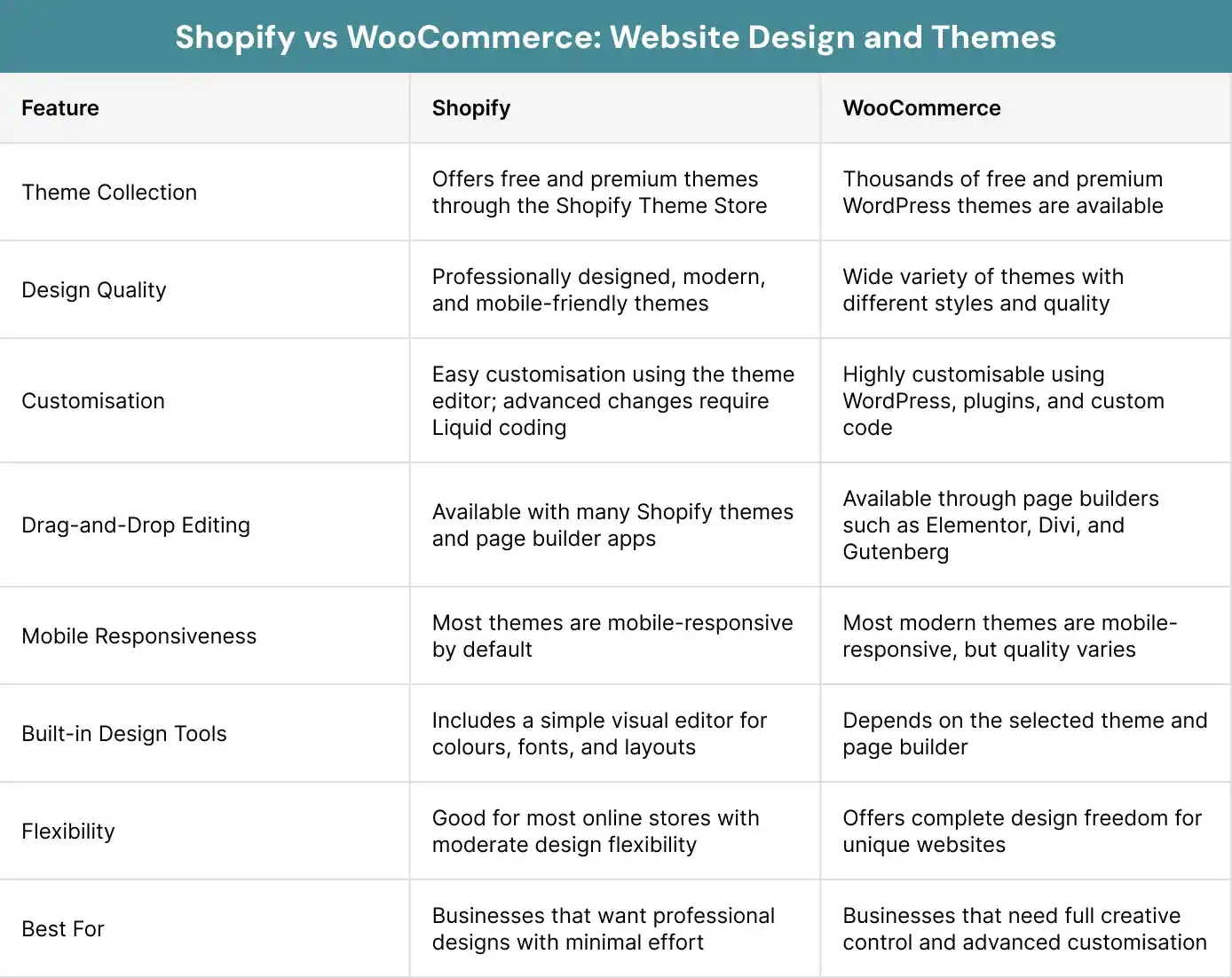
4. Customisation
Customisation is one of the biggest differences between Shopify vs WooCommerce. Some people need only basic changes, while others want to add unique features. Shopify offers a more controlled version that keeps things simple and easy to handle. WooCommerce gives you full access to code and structure of the platform to make every customisation you want.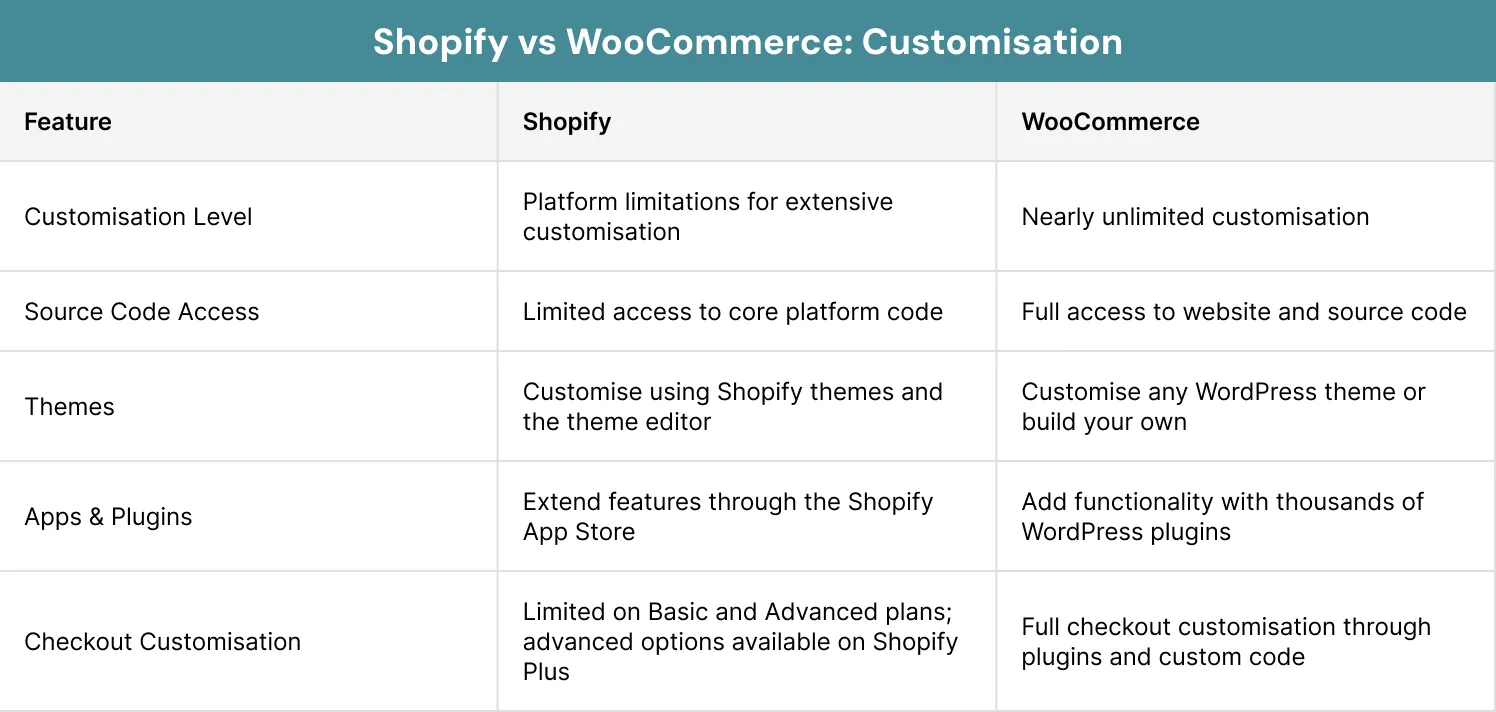
Pro Tip:
Only install apps or plugins you truly need. Too many can affect site speed and management.
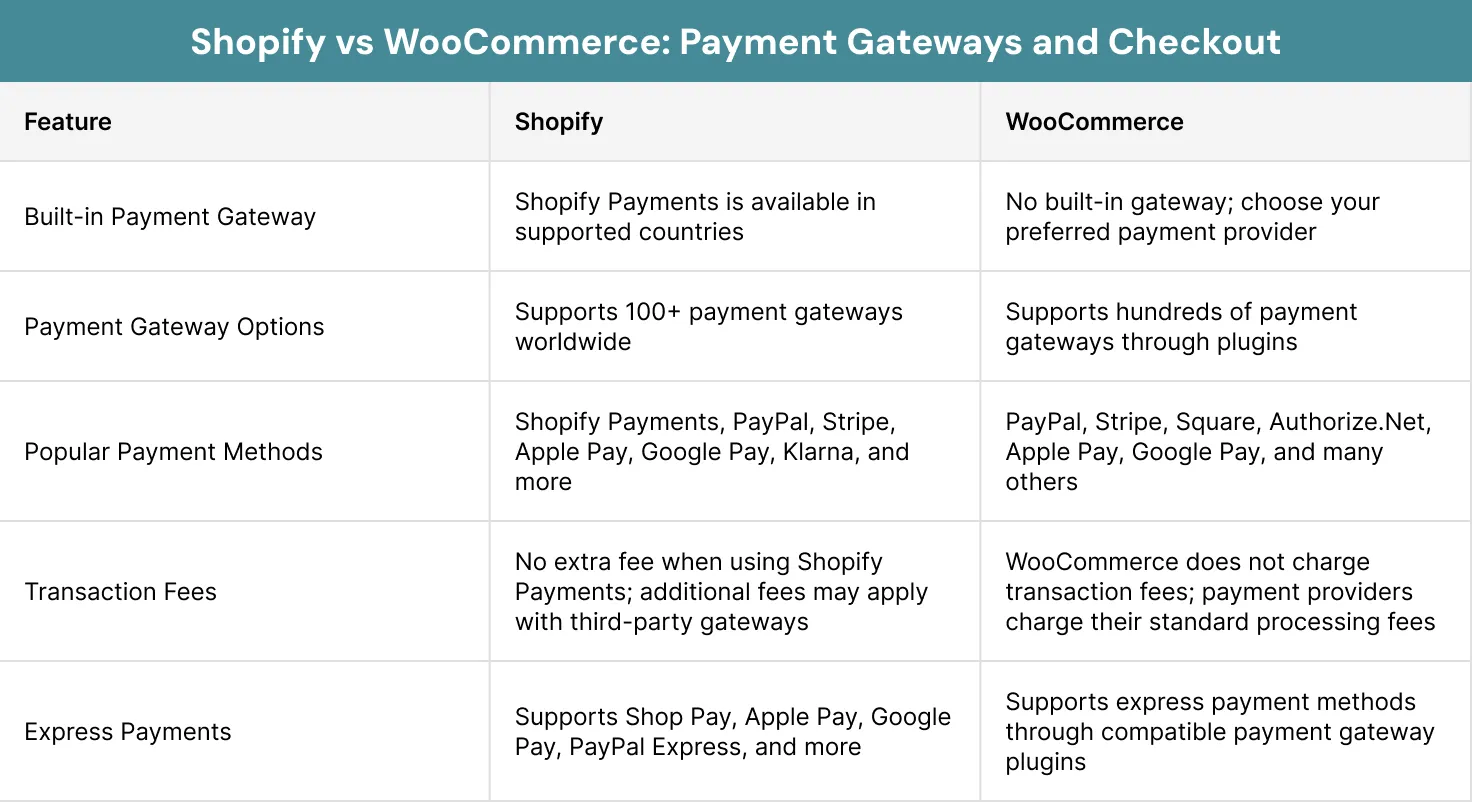
5. Payment Gateways and Checkout
A smooth checkout process helps to increase your sales. That is why payment methods are a key part of every Shopify vs WooCommerce comparison. Both platforms support major payment methods such as PayPal, Stripe, Apple Pay and Google Pay. They also provide their own payment solutions. When you choose between Shopify or WooCommerce you should look at their payment fees and checkout flexibility.
In the Shopify vs WooCommerce debate, Shopify Payments often wins for its ease of setup.
6. Shipping Options
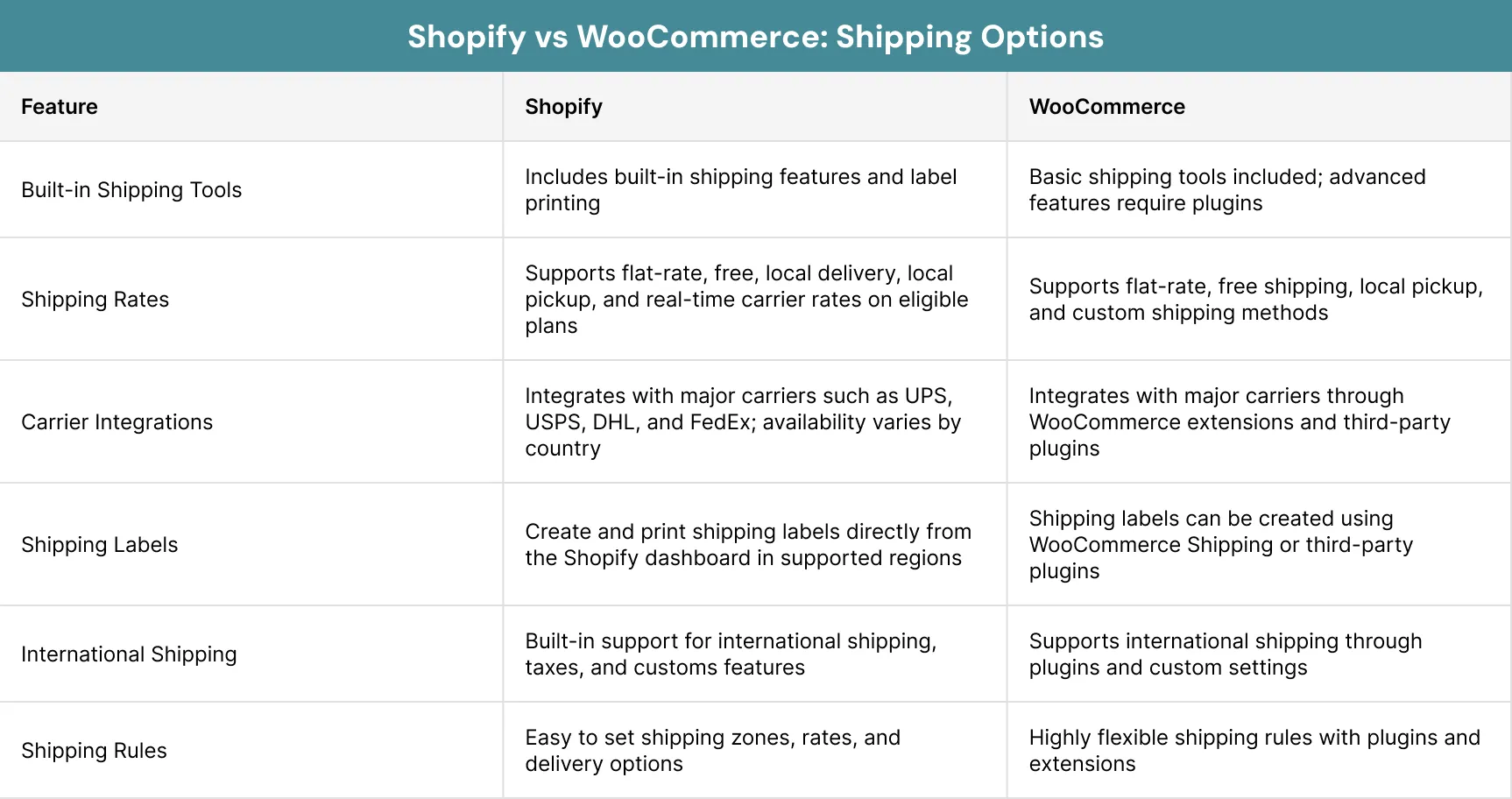
Shipping is a key part of any online store. It affects customer satisfaction levels and leads to repeat sales. This makes shipping another important factor in Shopify vs WooCommerce.
Shopify has shipping tools within the platform. You can print labels, compare shipping rates and also access discounted rates in supported regions. WooCommerce offers better shipping settings by the help of its own core system and plugins. You can create custom rules for shipping, connect carriers and also build next level shipping strategies in WooCommerce.
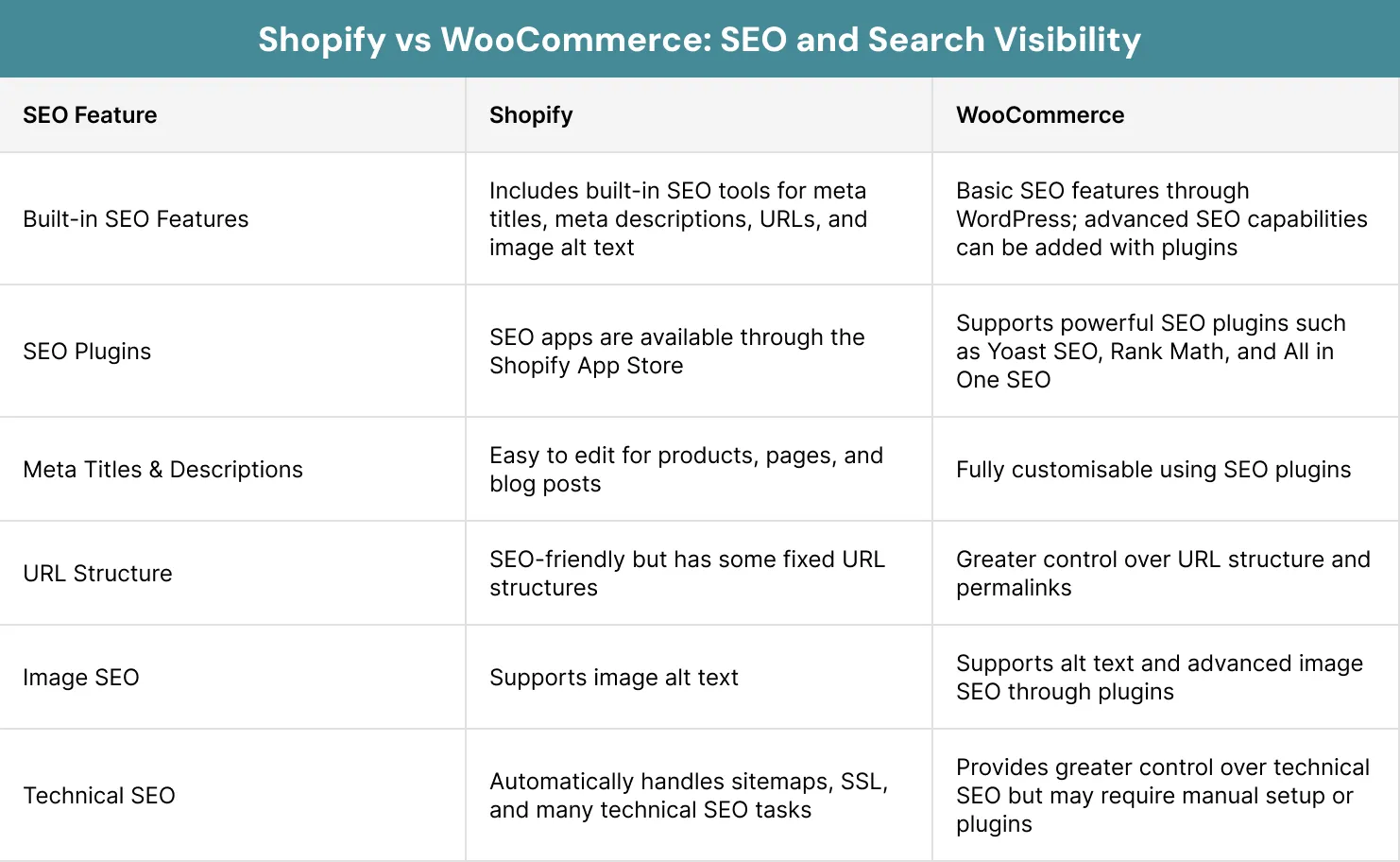
7. SEO and Search Visibility
SEO helps online stores to appear in search engine results. This is one of the most discussed areas in the Shopify vs WooCommerce debate. Both platforms support SEO, but they approach it in different ways. Shopify includes many built-in SEO features like meta titles, meta descriptions, URLs and alt text. WooCommerce works with popular SEO plugins such as Yoast SEO, Rank Math and All in One SEO to provide this service.
Businesses choosing between Shopify or WooCommerce should consider how much control they want over SEO.
8. Apps and Plugins
Apps and plugins help you to add extra features in your store without building them from scratch. This is a key area when comparing Shopify vs WooCommerce because both of them rely on third-party tools. Shopify uses apps while WooCommerce uses plugins. Both options help you to improve features like marketing, SEO, payments, shipping and customer service.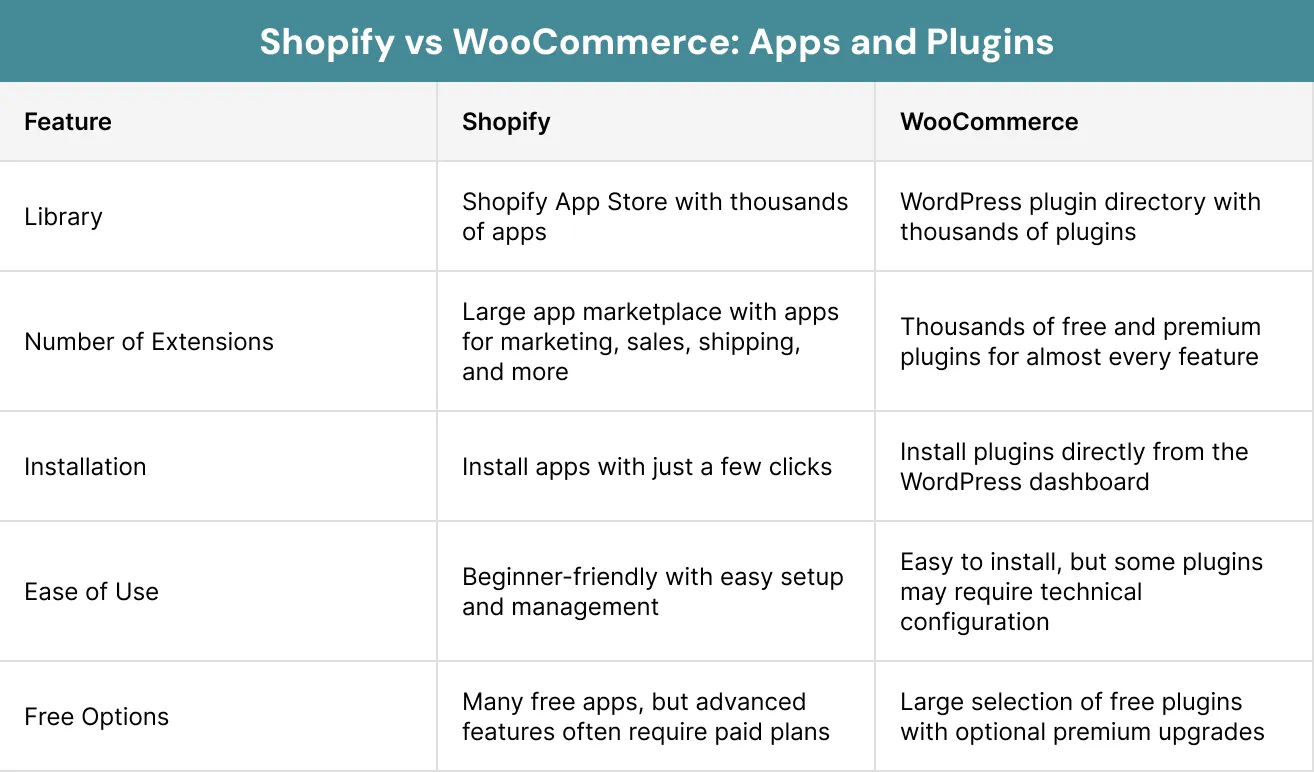
Pro Tip:
Always check reviews, support quality and update history before installing any plugin or app.
9. Shopify vs WooCommerce: Speed and Hosting
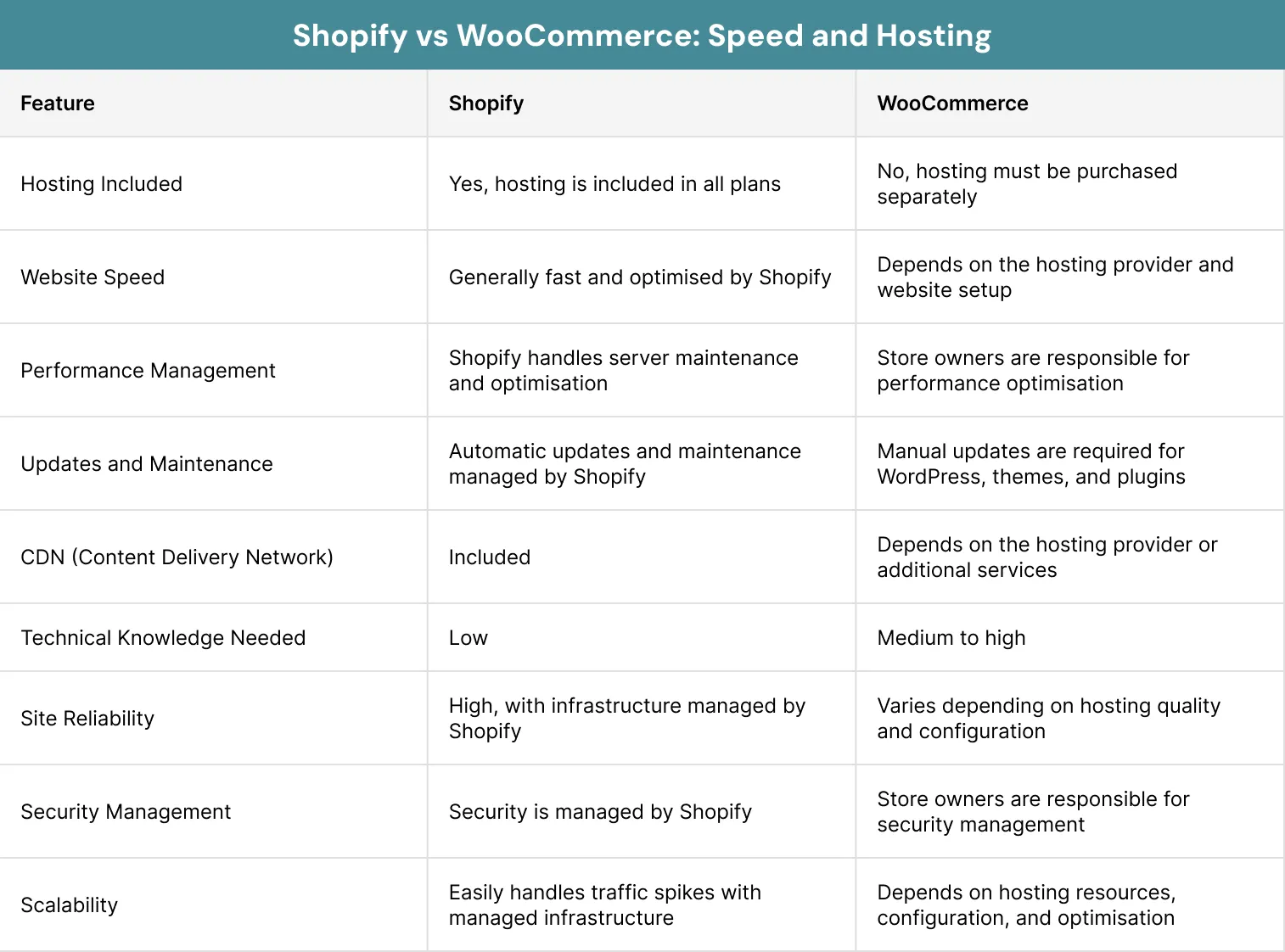
The speed of your website directly affects the customer satisfaction and your sales. This makes speed a major factor in Shopify vs WooCommerce. A fast website helps to improve user experience and also reduce the bounce rates. Customers are more likely to complete their purchases when your pages load quickly.
Shopify provides you managed hosting as part of its own service. It handles the tasks for you like server management, updates and also performance optimisation. This allows you to focus on selling products instead of managing these tasks.
WooCommerce does not include hosting, so it offers you to choose your own hosting provider. The quality of your hosting affects the speed, security and overall performance of your website. As your store grows, you have to upgrade your hosting plan to handle more visitors and orders.
10. Security
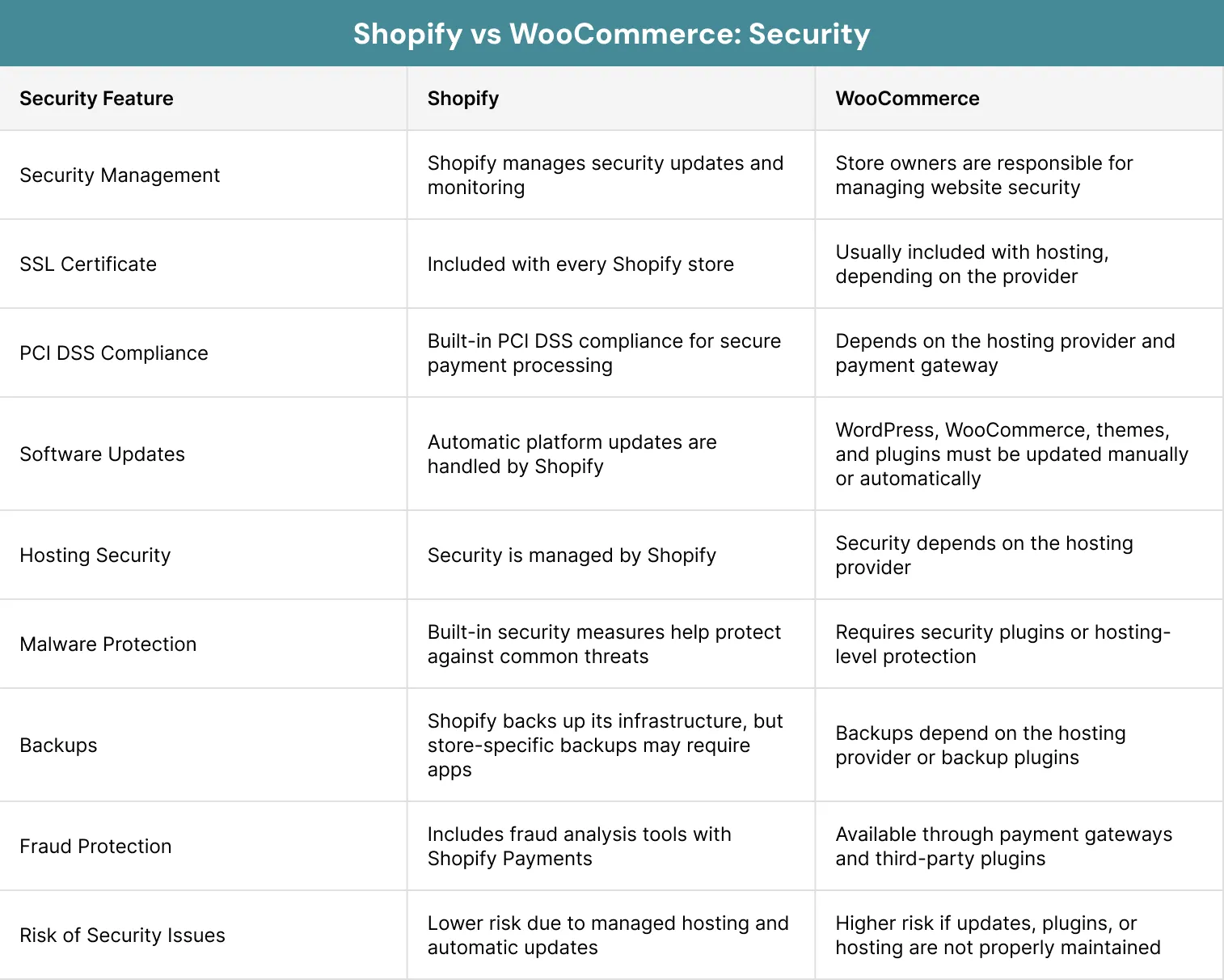
Security plays a key role in your website success. It helps to protect your store and data of your customer. Both platforms provide you secure online store experiences, but they approach the aspect of security in different ways. Shopify includes security features as part of its own hosted service. It manages the software updates, server security and protection against common threats. This helps to reduce the workload for store owners.
WooCommerce can be highly secure for your website when you maintain it in a proper way. You must manage the updates, backups and security plugins in the right way. This gives you more control but requires frequent attention.
For businesses asking Shopify or WooCommerce, WooCommerce can be just as secure when managed correctly.
11. Customer Support
Good customer support can save your time and also reduce stress. This makes support an important factor in Shopify vs WooCommerce discussion. Both platforms provide help resources, but the level of direct support is different from each other.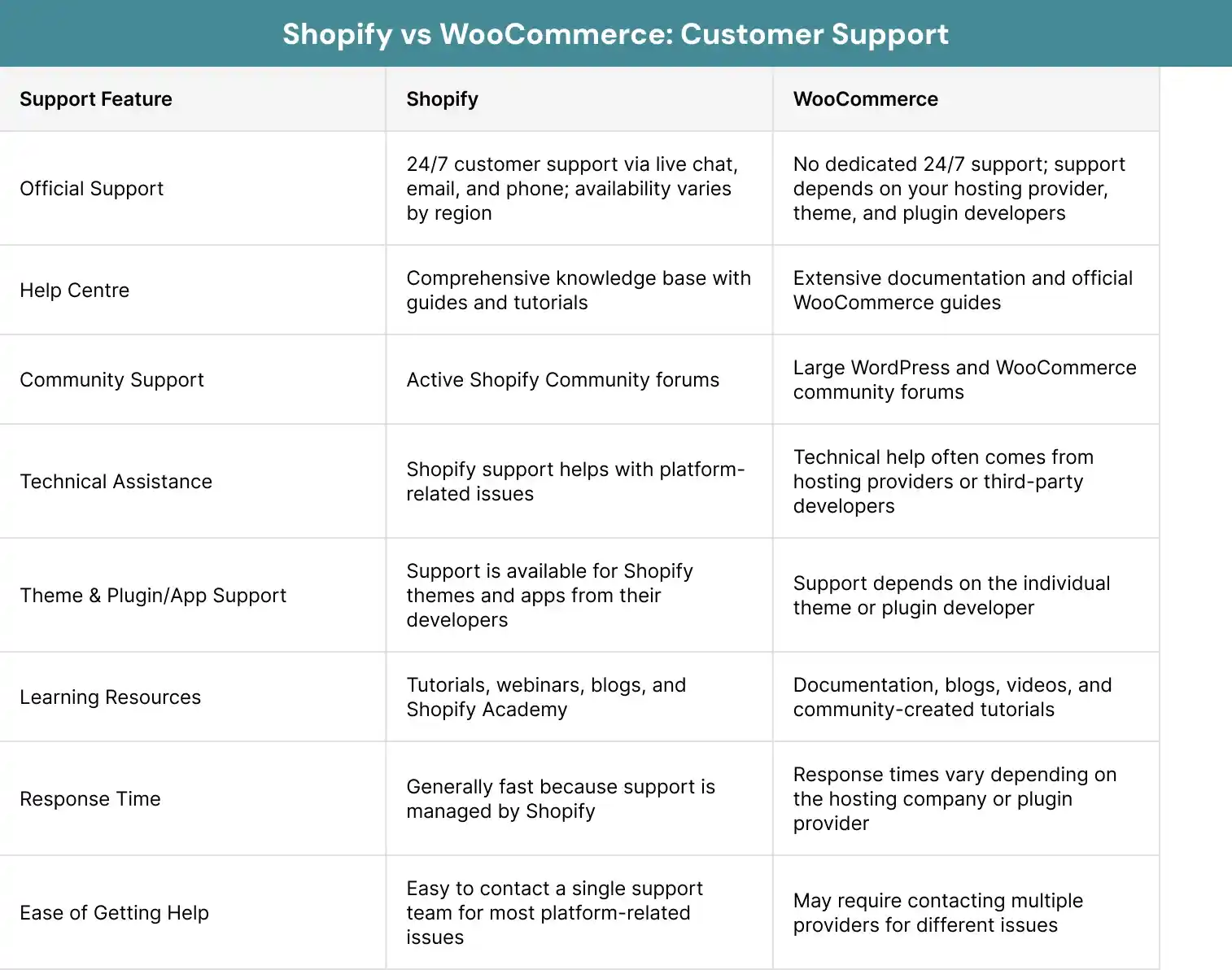
Which Platform Should You Choose?
The answer isn’t simple. It depends on the needs of your business. Choose Shopify if you want an all-in-one solution. It is ideal for beginners and businesses that want minimum costs but good results. Choose WooCommerce if you want complete control over your site and advanced customisation. This is why the WooCommerce vs Shopify discussion often comes down to convenience vs flexibility.Shopify vs WooCommerce: Case Study
A small handmade jewellery business wanted to start selling online. At first, the owner used Shopify because it was easy to set up for them. The store was launched within a few days and its owner could focus on marketing and sales.
Another similar brand chose WooCommerce because it already had a WordPress site and wanted greater creative control. This allowed the owner to create new designs and run SEO the way he wanted. This case study shows that Shopify works well for businesses that want simplicity, while WooCommerce is ideal for those who need greater flexibility and customisation.
Conclusion
The Shopify vs WooCommerce debate continues because both platforms are good for online stores. Shopify offers you easy setup and strong support. On the other side, WooCommerce offers you flexibility, ownership and advanced customisation.
When choosing between Shopify or WooCommerce you should focus on your goals and budget rather than looking for a single winner.
If you want a platform that works straight away, Shopify is a strong choice for you. If you want complete freedom over your online store then WooCommerce is best for you because it provides you better flexibility.
At Xoom Plus, our ecommerce experts help you choose the best website solutions, so you grow fast, sell smarter and create better customer experiences.
Want to build a faster, smarter and more profitable online store?
Contact us now and discover how we can help your business grow online.
FAQs
Is Shopify better than WooCommerce for beginners?
Yes, Shopify is generally easier for beginners because hosting, security and updates are included. This simplifies the Woocommerce vs Shopify decision for first-time store owners.
Shopify vs WooCommerce conversion rate, which platform converts better?
Shopify often has slightly higher average conversion rates due to its fast checkout process and built-in optimisation tools, but the actual conversion rate depends more on your website design, products, pricing and user experience than the platform itself.
Is WooCommerce better for SEO than Shopify?
WooCommerce offers more advanced SEO control through WordPress and SEO plugins. This is one reason many marketers prefer it in the WooCommerce vs Shopify comparison.
Can Shopify handle large ecommerce stores?
Yes. Shopify Plus is designed for enterprise businesses and can handle very large stores with high sales volumes.
Which platform is best for European SMEs?
Both platforms work well for European SMEs. Businesses deciding between Shopify or WooCommerce should focus on payment methods, shipping needs and technical requirements before making a choice.