
- August 3, 2026
- Categories: Web Solutions
Why Ecommerce Website Speed Matters for Online Sales
The success of your online store depends on many factors, but ecommerce website speed is one of the most important.
When people visit your website, they expect pages to load quickly. If they have to wait too long, they may leave before viewing your products.
A fast website helps customers to move easily from one page to another. It creates a smooth shopping experience and makes it easier for visitors to complete a purchase.
Research shows that 83% of people expect websites to load in 3 seconds or less. This is why many successful online stores invest in improving ecommerce website speed.
“Speed is a feature. If customers have to wait, they often leave.”
— Steve Souders, Web Performance Expert
Key Takeaways
- Ecommerce website speed directly affects online sales, customer satisfaction, and business growth.
- Fast-loading websites create a better user experience and encourage visitors to stay longer.
- Even a small delay in page loading can reduce conversions and increase bounce rates.
- Mobile shoppers expect quick-loading pages and are more likely to leave slow websites.
- Website speed plays an important role in SEO and can influence Google search rankings.
- Core Web Vitals such as LCP, INP and CLS help measure website performance and user experience.
- Slow checkout pages can lead to higher shopping cart abandonment and lost revenue.
- Faster websites build customer trust and improve the chances of repeat purchases.
- Image optimisation, caching, code minification, and CDNs are effective ways to improve performance.
- Choosing reliable hosting is essential for maintaining strong website speed and stability.
- Regular speed testing helps identify issues before they affect customer experience and sales.
- Investing in ecommerce website speed is one of the most effective ways to increase conversions and stay ahead of competitors.
What is Ecommerce Website Speed?
It refers to how quickly an online store loads and responds when someone visits it. It includes product pages, category pages, shopping carts and checkout pages.
A fast website allows customers to browse your products without any delays. They can quickly find what they need and continue shopping with confidence. This helps to improve their overall buying experience.
When an online store loads slowly, users may lose their interest. They may leave your website before viewing the products or completing a purchase.
Why Website Speed Is More Important Than Ever?
Online shopping has become part of daily life. People now expect websites to work instantly, whether they are browsing products or making payments.
A slow website makes customers feel frustrated. Many visitors will leave if pages take too long to load. Good ecommerce website speed helps you to meet modern customer expectations.
Fast websites also improve the confidence of a customer. Visitors are more likely to trust a site that feels smooth.
1. Rising Customer Expectations
Internet users are now used to fast apps and websites. They expect the same speed from every online store they visit.
If your website takes several seconds to load, many visitors will not wait. They often return to the search results and choose another option.
This means you must focus on speed to stay competitive and keep customers interested.
Did You Know?
Many users decide whether to stay on a website within the first few seconds of visiting it.
2. Mobile Shopping and Speed Demands
More people now shop using mobile phones than desktop computers. Mobile users often browse while they are travelling, working or relaxing.
Because mobile users are often busy, they have less patience for slow websites. Fast loading pages help keep them engaged and improve conversions.
Strong ecommerce website speed on mobile devices is now key for online stores that want to grow their sales.
How Website Speed Affects Online Sales?
Website speed has a direct effect on revenue. Faster websites make it easier for customers to browse products and complete purchases.
Every delay creates a barrier between the customer and the checkout page. Small delays may seem minor at first, but they can have a large effect on your sales.
Improving ecommerce website speed often leads to higher conversion rates and better customer satisfaction.
How Slow Pages Reduce Conversions?
When visitors wait too long for pages to load, they may leave your site without taking any action. This reduces the conversion rates of your website.
Slow pages interrupt the shopping journey of a customer. Customers lose focus and may decide to visit your competitor’s website.
The Cost of Every Extra Second
Every extra second of waiting can reduce the chance of a sale. A delay that first seems small can have a large impact over time.
For stores with high traffic, even a slight slowdown can lead to significant revenue loss each month.
Pro Tip:
Test your website speed every month and fix issues before they affect customer experience.
Website Speed and Lost Sales at Checkout
Checkout page is a major challenge for ecommerce businesses. Customers often leave a site before completing their purchases.
During the checkout, slow loading times can make visitors hesitate. They may worry that something has gone wrong.
Strong ecommerce website speed helps you to create a smoother checkout process and encourages customers to complete their orders.
Checkout Delays That Kill Sales
Checkout is the most important stage of the journey of a customer. Delays during the payment process can cause customers to leave your site.
If the checkout process feels slow or confusing, even interested buyers may not buy your products and it kills your sales.
Ecommerce Website Speed and Online Sales
Here are some ecommerce website speed statistics following: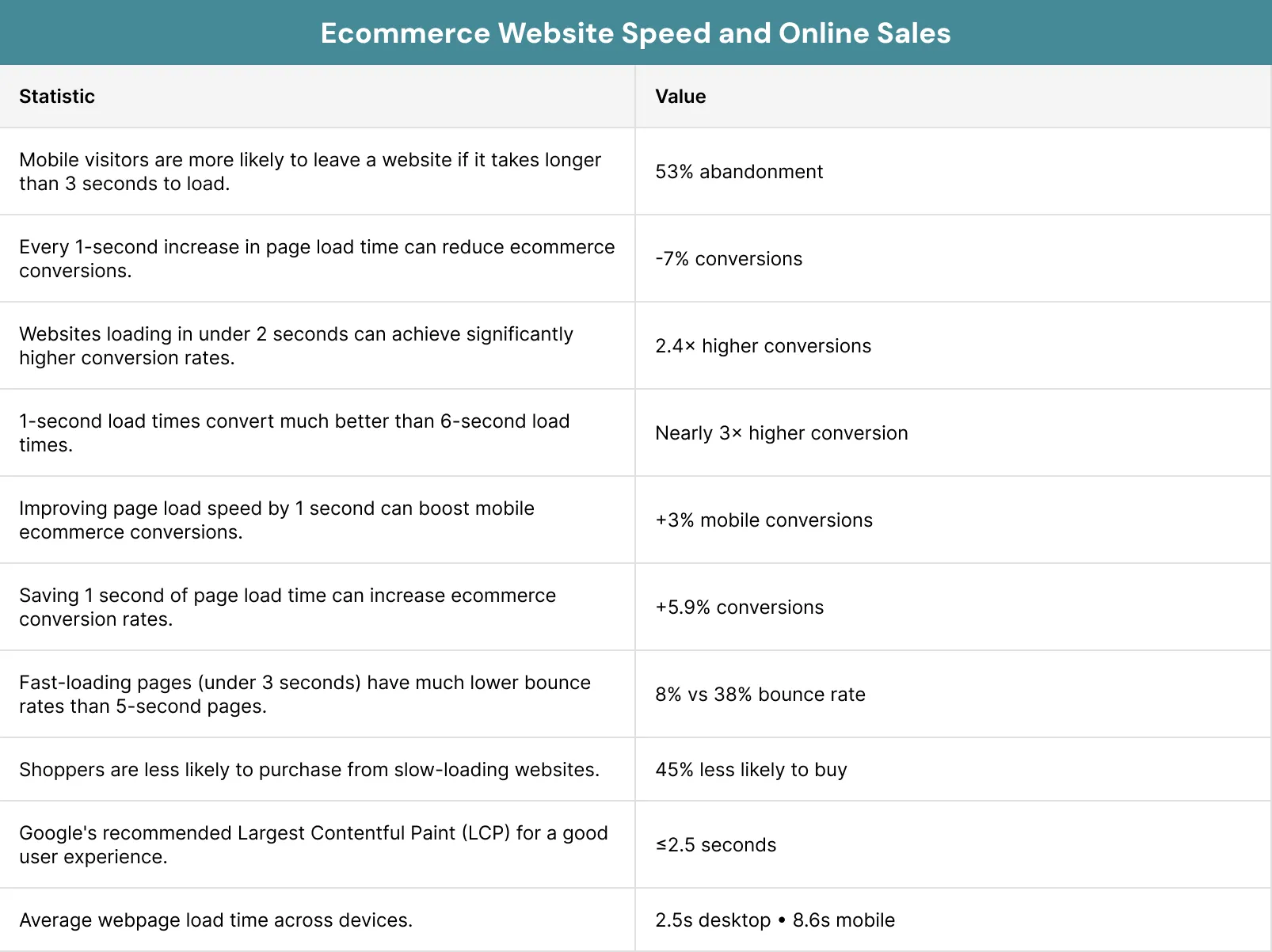
How Website Speed Is Measured?
You can measure the speed of your website by using different performance metrics. These metrics help you to understand how fast your pages load for users.
Tools such as Google PageSpeed Insights and Lighthouse provide useful speed reports. They show areas that need improvement and help you to make better decisions.
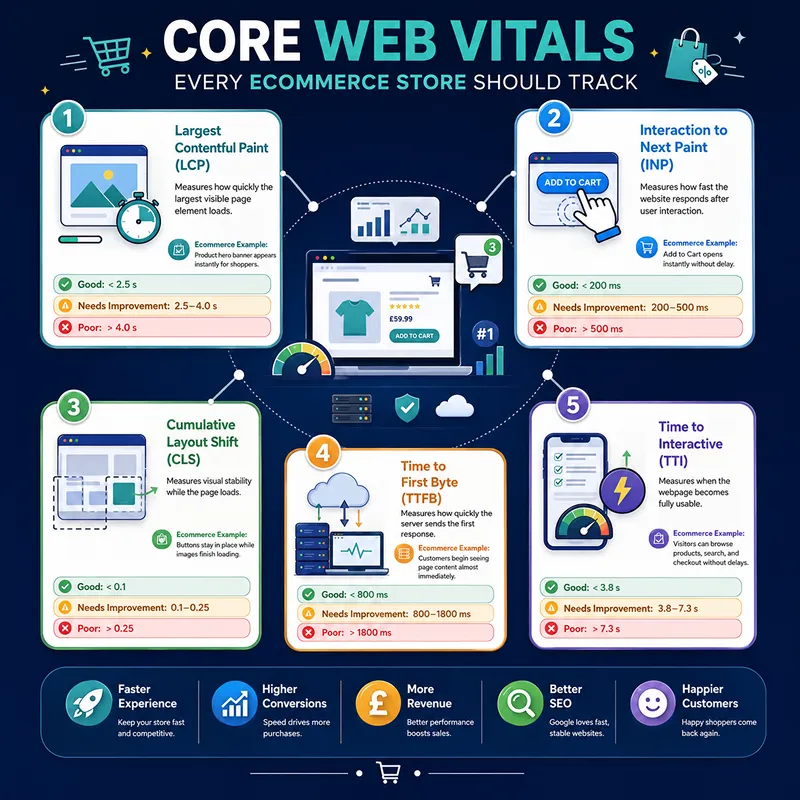
Core Web Vitals Every Ecommerce Store Should Track
Core web vitals are those metrics that are used by Google to measure the user experience. They focus on loading speed, responsiveness and visual stability.
These metrics help you to understand how real users experience your pages. Better scores of these metrics often lead to stronger website performance.
1. Largest Contentful Paint (LCP)
LCP measures how long it takes for the largest visible element on a page to load. This could be a banner image, product image or large block of text.
A good LCP score helps visitors to see important content quickly. This creates a positive first impression and reduces waiting time.
Improving LCP is one of the fastest ways to enhance ecommerce website speed.
2. Interaction to Next Paint (INP)
INP measures how quickly a website reacts when users click, tap or interact with a page.
Customers expect instant responses when they add products to the carts or apply filters. Delays can make a website feel slow.
3. Cumulative Layout Shift (CLS)
CLS measures how much page content shifts while loading. Unexpected movement can be frustrating for users.
For example, a customer may try to click a button, but the page shifts and they click something else instead.
Reducing CLS improves the usability and supports a more stable website speed experience.
4. Time to First Byte (TTFB)
TTFB metric measures how quickly a server responds after receiving a request from a visitor’s browser.
A fast server response creates a strong foundation for website performance. Slow server responses can affect every page on the site.
5. Time to Interactive (TTI)
TTI measures how long it takes before users can fully interact with a webpage.
Sometimes a page looks loaded but buttons and menus do not work immediately. This can create confusion for visitors.
A lower TTI improves ecommerce website speed and helps customers to interact with the site without delays.
How to Improve Ecommerce Website Speed?
Many problems that are related to website speed can be fixed with the help of simple improvements. Small changes often create noticeable gains in your site’s performance.
You should focus on both technical improvements and user experience. Together, these changes help to improve the ecommerce website speed.
1. Optimise Images and Media
Images are often the largest files on an ecommerce website. Large files can slow down the loading times of a page.
Compressing images and using modern formats reduce the size of the file while keeping the image in high quality.
2. Use a Content Delivery Network (CDN)
A CDN stores the content of a website on multiple servers located around the world.
When visitors access your website, content is delivered from the nearest server. This reduces the loading times and also improves the performance of your website.
Using a CDN is a proven way to enhance the ecommerce website speed for global customers.
3. Minify Code
Website code often contains unnecessary spaces and files that increase loading times.
Minifying code removes these extra elements. While caching stores files so your returning visitors can load pages more quickly.
4. Choose The Right Hosting
Your hosting provider has a major impact on the speed of a website. Even a well-designed website slows down because of poor hosting.
Reliable hosting services provide you faster servers, better uptime and stronger security as well.
Choosing quality hosting is one of the most effective ways to improve ecommerce website speed.
Pro Tip:
Review your hosting plan every year. As your store grows, your hosting needs may also increase.
Case Study: Faster Ecommerce Website Increased the Conversions
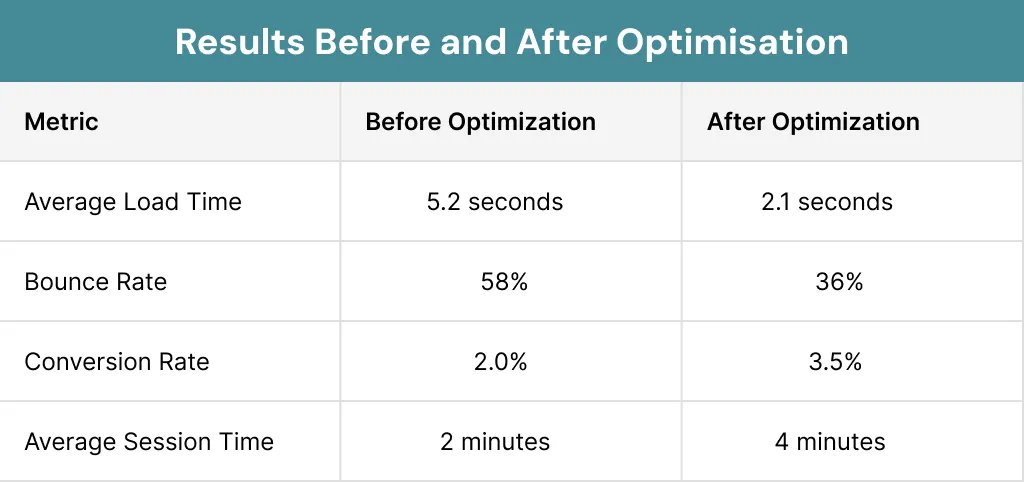
A fashion retailer noticed that visitors were leaving their website before completing purchases. They noticed that their product pages were taking more than five seconds to load.
The company decided to optimise images, enable caching and also upgrade its hosting service. They also improved their core web vitals scores.
Within three months, the results were clear. Their website became faster than ever and it also encouraged visitors to stay longer and browse more products.
Conclusion
Website speed is one of the most important factors in the success of ecommerce. It affects the user experience, search visibility, customer trust and conversion rates.
A fast website helps visitors to find products quickly and complete purchases without any issue. It also supports stronger SEO performance and customer loyalty.
Businesses that invest in ecommerce website speed are more likely to increase sales and stay ahead of competitors in a crowded online market.
At Xoom Plus, we help ecommerce businesses to identify exactly what’s slowing down their website and fix it fast.
Not sure why your website feels slow?
Contact us and our team optimises every part of your site, from images to hosting, so customers never have to wait.
FAQs
What is a good ecommerce website speed?
A good ecommerce website should ideally load within two to three seconds. Faster websites generally provide a better user experience and higher conversion rates.
Does ecommerce website speed affect SEO?
Yes. Search engines use page experience signals, including speed, when ranking websites. Faster websites often perform better in search results.
How slow website speed affects your ecommerce sales?
A slow website increases bounce rates and cart abandonment, frustrates shoppers and ultimately leads to lost sales and lower search engine rankings.
What is the easiest way to improve website speed?
Image optimisation is often the quickest improvement. Compressing images can significantly reduce loading times.
How often should website speed be tested?
Website speed should be reviewed at least once a month and after any major website updates or design changes.